



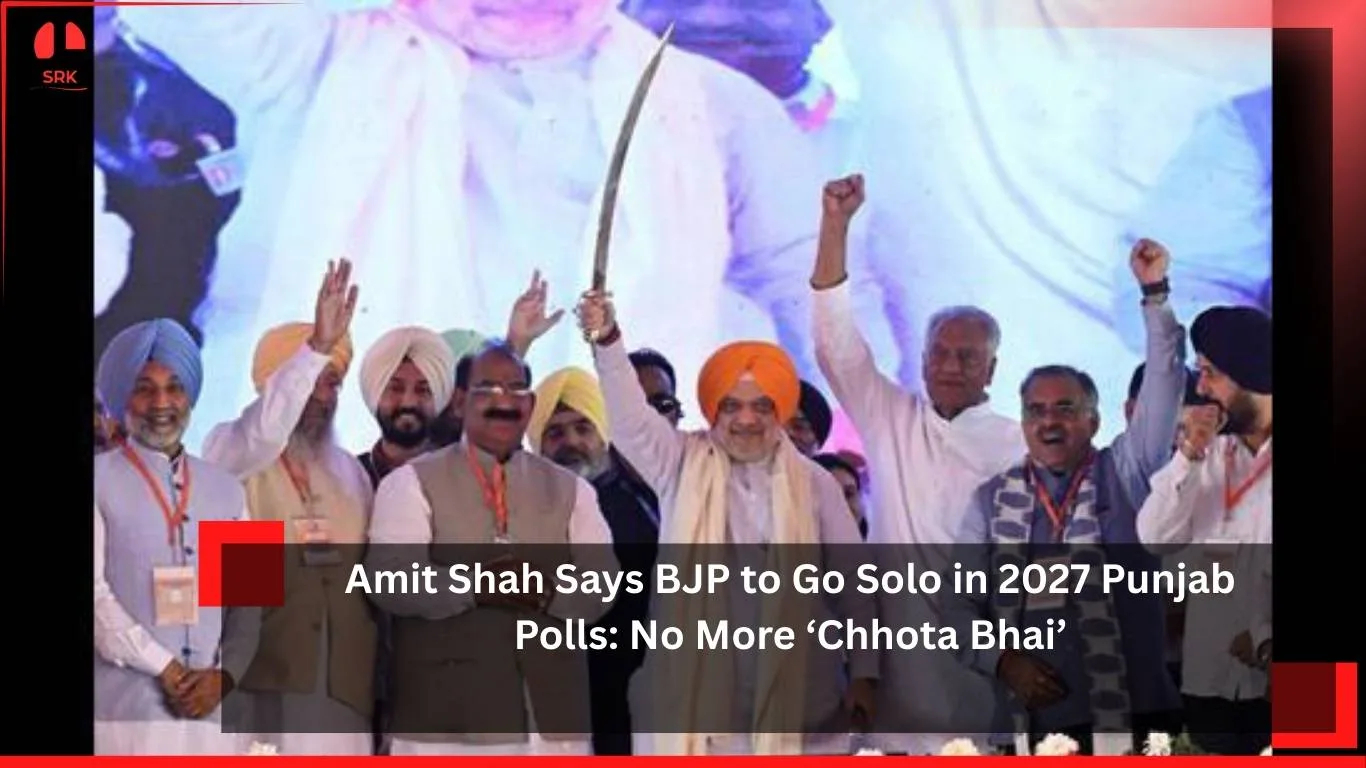
Union Home Minister Amit Shah has made a decisive announcement regarding the Bharatiya Janata Party’s (BJP) strategy for the upcoming 2027 Punjab Assembly elections. Declaring that the BJP will contest alone, Shah emphasized that the party will no longer play the role of “chhota bhai” (junior partner) in alliances. This statement marks a significant shift in Punjab’s political landscape, where coalition politics has historically shaped electoral outcomes.
Background
Punjab’s politics has long been dominated by regional parties, particularly the Shiromani Akali Dal (SAD), which has often allied with the BJP. However, recent years have seen strains in this partnership, especially after differences over farm laws and governance issues. Shah’s announcement signals the BJP’s intent to establish itself as an independent force in Punjab, aiming to expand its base beyond traditional urban and Hindu-majority constituencies.
Key Highlights of Shah’s Statement
- Solo Contest: BJP will contest all seats independently in 2027.
- End of Junior Role: The party will no longer accept the “chhota bhai” status in alliances.
- Focus on Growth: Shah emphasized strengthening grassroots presence in Punjab.
- Targeting Farmers and Youth: Outreach programs will focus on agriculture, employment, and development.
- Cultural Connect: BJP aims to highlight Punjab’s role in India’s national identity.
Comparative Analysis of Political Strategies
| Party | Strategy for 2027 Elections | Strengths | Challenges |
|---|---|---|---|
| BJP | Contest solo, expand base | National presence, resources | Limited rural penetration |
| Shiromani Akali Dal | Regional identity, Sikh issues | Strong rural base | Declining urban support |
| Congress | Traditional rival, welfare promises | Legacy presence | Internal factionalism |
| AAP | Governance model, youth appeal | Recent success in Delhi & Punjab | Sustaining momentum |
Pivot Analysis of Themes
| Theme | Frequency in Coverage | Impact on Public Opinion |
|---|---|---|
| BJP’s solo strategy | High | Seen as bold and ambitious |
| End of alliances | Medium | Mixed reactions |
| Farmer outreach | High | Crucial for rural voters |
| Youth engagement | Medium | Positive resonance |
Public and Media Reaction
The announcement has sparked widespread debate:
- Supporters: View it as a sign of BJP’s confidence and growth.
- Critics: Argue that Punjab’s political dynamics make solo contests risky.
- Media Analysts: Highlight the potential reshaping of alliances and voter behavior.
- Social Media: Discussions around “no more chhota bhai” trended across platforms.
Strategic Implications
- For BJP: Opportunity to redefine its role in Punjab politics and expand its voter base.
- For SAD: Loss of a traditional ally may weaken its electoral prospects.
- For Congress and AAP: Potential to capitalize on fragmented opposition.
- For Punjab’s Voters: Greater choice and competition among parties.
Challenges Ahead
- Rural Penetration: BJP must strengthen its presence in Punjab’s agrarian belt.
- Cultural Sensitivity: Balancing national agenda with Punjab’s unique identity.
- Alliance Fallout: Managing the political consequences of ending ties with SAD.
- Electoral Groundwork: Building grassroots networks in a traditionally tough state.
Conclusion
Amit Shah’s declaration that the BJP will contest the 2027 Punjab elections alone marks a turning point in the state’s political narrative. By rejecting the “chhota bhai” role, the BJP signals its ambition to emerge as a dominant force in Punjab. The move sets the stage for a highly competitive election, where traditional alliances may give way to new political equations.
Disclaimer
This article is a journalistic analysis of Amit Shah’s statement on BJP’s strategy for the 2027 Punjab elections. It is intended for informational purposes only and does not endorse or oppose any political party or leader. Readers are encouraged to consider multiple perspectives before forming conclusions.