





In a landmark move to position Andhra Pradesh as the “Eastern Gateway” of India’s maritime trade, the Andhra Pradesh Maritime Board (APMB) has signed a ₹9,000 crore Memorandum of Understanding (MoU) with APM Terminals, a subsidiary of global shipping giant A.P. Moller-Maersk. The agreement, signed in the presence of Chief Minister N. Chandrababu Naidu, marks a strategic leap in the state’s ambition to become a logistics powerhouse and a key player in global port operations.
The pact will facilitate the development of three major seaports—Ramayapatnam, Machilipatnam, and Mulapeta—with modern terminals, advanced cargo-handling systems, and integrated logistics infrastructure. The initiative is expected to generate over 10,000 direct jobs and catalyze economic growth across coastal and hinterland regions.
🧭 Strategic Vision: Andhra Pradesh as India’s Eastern Gateway
Chief Minister Naidu emphasized that the state’s long coastline of over 1,000 km offers immense potential for port-led development. He directed officials to ensure that a port or harbor is developed every 50 km along the coast, creating a dense network of maritime hubs.
| Strategic Objective | Implementation Plan | Expected Impact |
|---|---|---|
| Develop AP as Eastern Gateway | Build ports at Ramayapatnam, Machilipatnam, Mulapeta | Boost trade, attract global investment |
| Integrated Logistics Ecosystem | Road, rail, air, and inland waterway connectivity | Reduce cargo costs, improve efficiency |
| Employment Generation | 10,000 direct jobs through port development | Rural upliftment, skill development |
| Regional Trade Facilitation | Serve Telangana, Chhattisgarh, Maharashtra, Odisha | Strengthen inter-state commerce |
The Chief Minister also urged APM Terminals to prepare a comprehensive logistics blueprint that includes multimodal transport corridors and last-mile connectivity.
📊 Port Development Overview
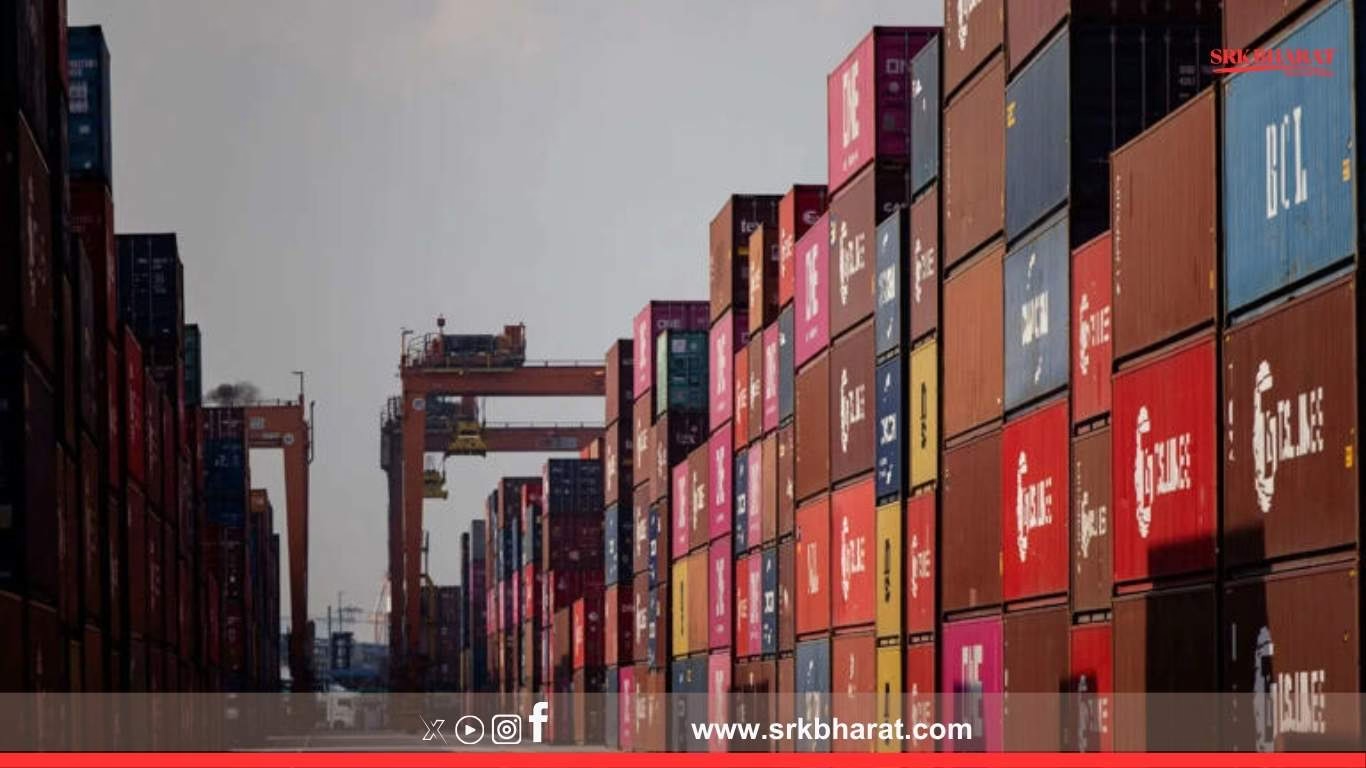
The three ports identified under the MoU are strategically located to serve both domestic and international trade routes. Each port will be equipped with cutting-edge infrastructure to handle containerized cargo, bulk commodities, and specialized freight.
| Port Name | Location | Development Scope | Strategic Importance |
|---|---|---|---|
| Ramayapatnam | Prakasam District | Deep-water terminal, container handling | Gateway for southern hinterland |
| Machilipatnam | Krishna District | Bulk cargo terminal, warehousing | Historic port, revival of trade legacy |
| Mulapeta | Srikakulam District | Multi-purpose terminal, logistics park | Northern AP access, cross-border trade |
The ports will be developed in phases, with initial investments focused on dredging, terminal construction, and digital port management systems.
🧠 APM Terminals’ Role and Global Expertise
APM Terminals, part of the Maersk Group, brings decades of global experience in port operations, logistics, and supply chain management. The company will oversee the design, construction, and operation of the terminals, ensuring international standards in safety, efficiency, and sustainability.
| APM Terminals Contribution | Description |
|---|---|
| Infrastructure Development | Terminal design, cargo handling systems |
| Operational Management | Port operations, workforce training |
| Technology Integration | Smart port systems, digital tracking |
| Sustainability Practices | Green logistics, energy-efficient terminals |
The partnership is expected to attract further foreign direct investment (FDI) and position Andhra Pradesh as a preferred destination for global shipping lines.
🔍 Economic and Employment Impact
The ₹9,000 crore investment will have a multiplier effect on the state’s economy, especially in coastal districts. The government estimates that the project will generate 10,000 direct jobs and thousands more through ancillary industries such as transport, warehousing, and ship repair.
| Sector | Direct Impact | Indirect Impact |
|---|---|---|
| Port Operations | 10,000 jobs | Skill development, local hiring |
| Logistics and Transport | Infrastructure boost | Trucking, rail freight, warehousing |
| MSMEs and Trade | Export facilitation | Market access, cost reduction |
| Tourism and Hospitality | Coastal development | Cruise terminals, local tourism |
The initiative aligns with the state’s broader economic vision of inclusive growth and industrial diversification.
🧠 Connectivity and Regional Integration
To maximize the utility of the ports, the government is working on an integrated logistics plan that connects the ports to major industrial corridors and inland markets. This includes:
- Rail links to industrial hubs in Telangana and Chhattisgarh
- Road connectivity to Maharashtra and Odisha
- Inland waterway access via National Waterway 4
- Air cargo terminals for high-value goods
| Mode of Transport | Connectivity Plan | Benefit to Trade Network |
|---|---|---|
| Rail | Dedicated freight corridors | Faster cargo movement |
| Road | Four-lane highways to hinterland | Reduced transit time |
| Inland Waterways | Link to Krishna and Godavari rivers | Eco-friendly bulk transport |
| Air | Cargo terminals at Vizag, Vijayawada | High-value, time-sensitive goods |
The logistics plan will be developed in consultation with APM Terminals and other stakeholders to ensure seamless integration.
🧠 Policy Support and Governance
The Andhra Pradesh Maritime Board will act as the nodal agency for project implementation, regulatory approvals, and stakeholder coordination. The board will also facilitate land acquisition, environmental clearances, and community engagement.
| Governance Mechanism | Role in Project Execution |
|---|---|
| Andhra Pradesh Maritime Board | Regulatory oversight, coordination |
| Industries Department | Investment facilitation, policy support |
| Local Governments | Land and labor mobilization |
| Environmental Agencies | Compliance and sustainability review |
The government has assured transparency and efficiency in project execution, with regular monitoring and public updates.
🧠 Expert Commentary and Strategic Outlook
Industry experts have hailed the MoU as a transformative step for India’s maritime sector. Dr. Ranjana Baruah, a logistics policy analyst, said:
“This partnership has the potential to redefine port-led development in India. Andhra Pradesh is leveraging its geographic advantage with global expertise.”
Shipping consultant Rakesh Dutta added:
“APM Terminals’ involvement ensures world-class infrastructure. The challenge will be in execution and integration with domestic logistics.”
These insights underscore the strategic importance of the pact in shaping India’s future trade architecture.
📌 Conclusion
The ₹9,000 crore agreement between the Andhra Pradesh Maritime Board and APM Terminals marks a pivotal moment in the state’s journey toward becoming a maritime and logistics hub. With a clear vision, global partnership, and robust infrastructure plan, Andhra Pradesh is poised to unlock new economic opportunities and redefine its role in India’s trade ecosystem.
As the ports take shape, the focus will remain on inclusive development, regional integration, and sustainable growth—anchored by the waves of transformation along the state’s coastline.
—
Disclaimer: This article is based on publicly available government statements and media reports as of August 21, 2025. It is intended for informational purposes only and does not constitute investment or policy advice.