




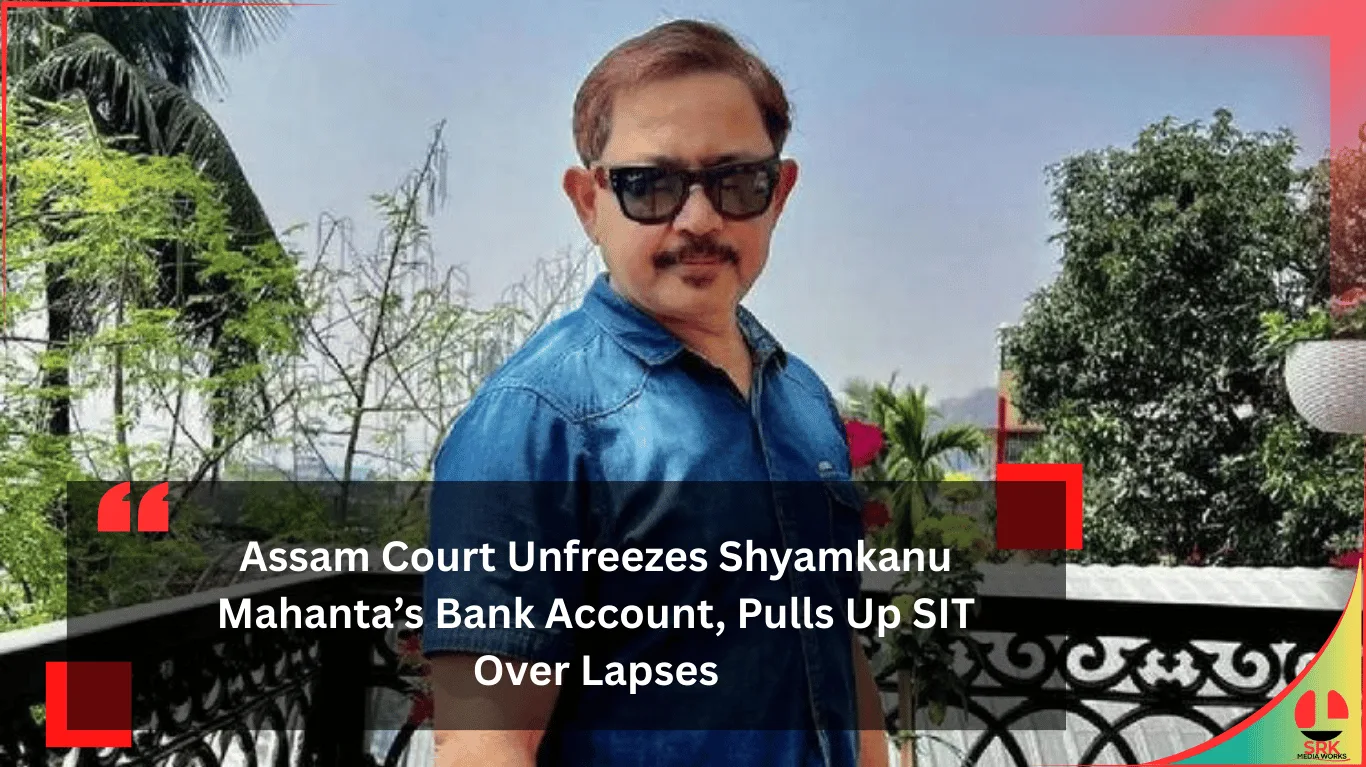
In a significant development in Assam, a local court has ordered the unfreezing of entrepreneur and social activist Shyamkanu Mahanta’s bank account, while simultaneously pulling up the Special Investigation Team (SIT) for lapses in its probe. The ruling has sparked widespread discussion in legal, political, and business circles, raising questions about investigative accountability and the protection of individual rights.
Background of the Case
Shyamkanu Mahanta, known for his contributions to entrepreneurship, cultural promotion, and social initiatives in Assam, had his bank account frozen by the SIT as part of an ongoing investigation. The move was criticized by his supporters as excessive and damaging to his professional reputation. The court’s decision to unfreeze the account is seen as a relief for Mahanta and a rebuke to the investigative team.
Court’s Observations
The court noted several lapses in the SIT’s handling of the case, including:
- Procedural Irregularities: Failure to follow due process in freezing the account.
- Lack of Evidence: Insufficient documentation to justify the action.
- Impact on Individual Rights: The freezing of the account disrupted Mahanta’s professional and personal activities.
The court emphasized the importance of balancing investigative powers with constitutional safeguards.
Comparative Analysis of Similar Cases
| Case/Individual | Action Taken by Authorities | Court’s Response | Public Perception |
|---|---|---|---|
| Shyamkanu Mahanta | Bank account frozen by SIT | Account unfrozen, SIT criticized | Relief and support |
| Activist in Delhi | Assets seized during probe | Partial relief granted | Divided opinions |
| Businessman in Mumbai | Accounts frozen in tax case | Court upheld freeze | Seen as justified |
Pivot Analysis of Sentiment
| Sentiment Category | Impact on Mahanta | Impact on SIT | Impact on Public |
|---|---|---|---|
| Supporter Morale | Boosted – seen as vindication | Damaged credibility | Citizens view as justice served |
| Media Coverage | Extensive – highlights lapses | Negative – questions raised | Increases awareness of rights |
| Legal Community | Positive – reinforces due process | Critical – calls for reform | Encourages debate on accountability |
| Public Perception | Mahanta seen as wronged | SIT seen as careless | Trust in judiciary strengthened |
Implications of the Ruling
The court’s decision carries broader implications for governance and justice in Assam:
- For Mahanta: Restores his financial freedom and professional credibility.
- For SIT: Raises questions about competence and accountability.
- For Judiciary: Reinforces its role as a guardian of rights.
- For Citizens: Highlights the importance of legal recourse against arbitrary actions.
Challenges Ahead
- For SIT: Addressing lapses and rebuilding credibility.
- For Mahanta: Managing public perception and continuing his initiatives.
- For Legal System: Ensuring consistency in protecting rights.
- For Government: Balancing investigative powers with fairness.
Opportunities Emerging from the Case
- Legal Reform: Push for stricter guidelines on asset freezing.
- Public Awareness: Citizens more informed about their rights.
- Judicial Strengthening: Courts reaffirm their independence.
- Political Discourse: Sparks debate on accountability in governance.
Broader Context
This case reflects a larger trend in India where courts are increasingly scrutinizing investigative agencies. It underscores the tension between state power and individual rights, and the need for transparent processes.
Conclusion
The Assam court’s decision to unfreeze Shyamkanu Mahanta’s bank account and criticize the SIT for lapses is a landmark moment in the state’s legal and political narrative. It highlights the judiciary’s role in safeguarding rights, the importance of accountability in investigations, and the resilience of individuals facing institutional challenges. As the case unfolds, it will continue to shape discussions on justice, governance, and public trust in Assam.
Disclaimer
This article is a journalistic analysis based on publicly available information and legal developments. It does not endorse or oppose any political party, government, or institution. Readers are encouraged to interpret the content as informative coverage and verify facts independently before forming opinions.