





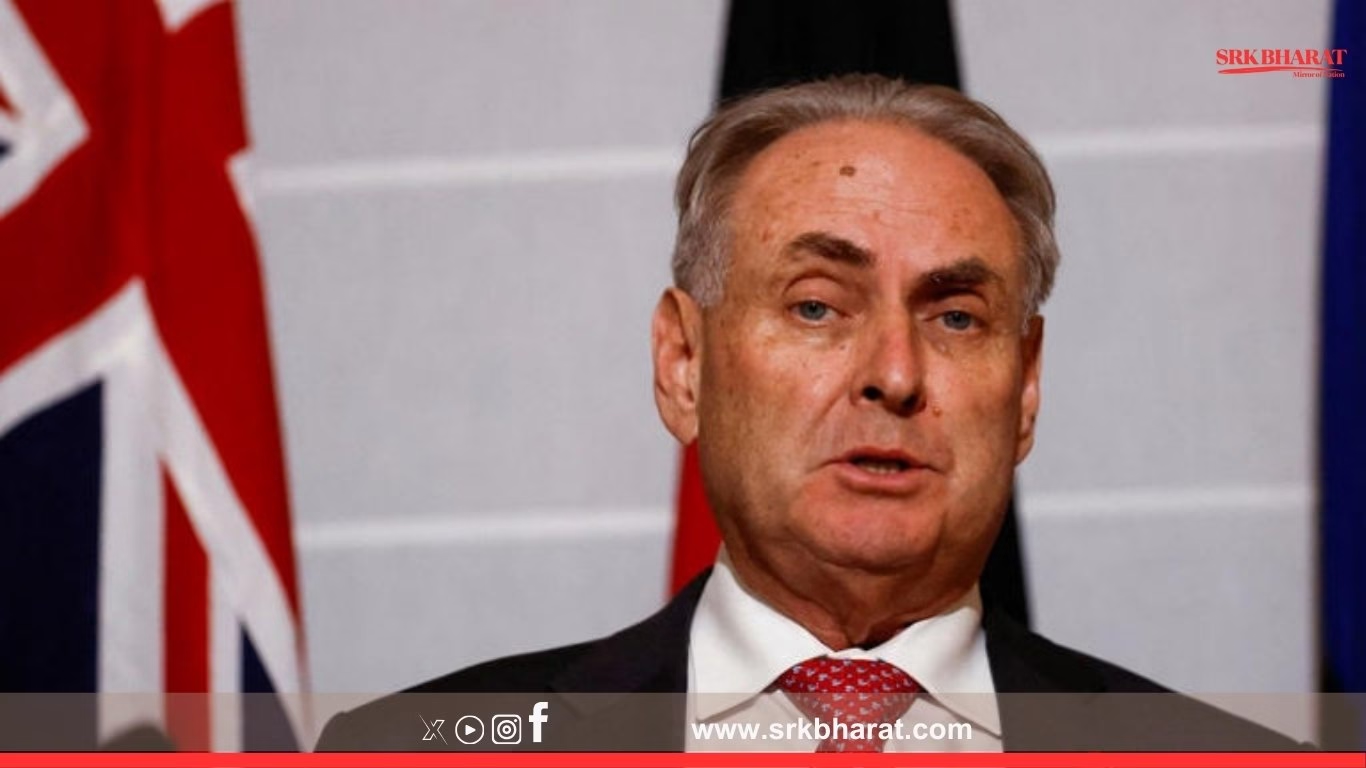
In a significant diplomatic and trade development, Australia has voiced its support for India in the wake of the US imposing a 50% tariff on Indian exports, underscoring that it does not endorse unilateral tariffs that could disrupt global trade dynamics. Australian Foreign Minister Penny Wong emphasized that tariffs are not the solution to trade disputes and reaffirmed the country’s commitment to free and fair trade principles.
The statement comes amid rising tensions between India and the United States over trade policies, with the US citing trade imbalances and other grievances as reasons for implementing steep tariffs on Indian goods, including cotton, textiles, and other key export commodities.
Australia’s Position on US Tariffs
Australia’s backing of India signals a broader alignment of like-minded economies against protectionist measures. Minister Penny Wong stated that:
- Australia does not support tariffs on Indian exports.
- Tariffs undermine global supply chains and economic stability.
- Countries must seek dialogue and multilateral mechanisms to resolve trade issues.
This diplomatic stance is particularly relevant as India navigates economic challenges posed by the sudden imposition of tariffs by one of its largest trading partners.
Impact of US 50% Tariff on India
The US tariffs, effective from September 2025, impose a 50% duty on specific Indian exports, primarily targeting cotton and textiles. Economic analysts suggest that the move could have several implications:
| Aspect | Impact |
|---|---|
| Export Revenue | Potential decline in US-bound shipments |
| Cotton & Textile Sector | Severe disruption in orders and pricing |
| Small and Medium Enterprises (SMEs) | Cash flow pressures due to reduced competitiveness |
| Trade Deficit | Short-term moderation, but long-term trade negotiations required |
India has expressed its concerns through diplomatic channels and continues to hope for negotiations to resolve the tariff issue, indicating a preference for dialogue over confrontation.
Australia-India Economic Cooperation
Australia’s statement supporting India strengthens bilateral trade and investment ties between the two countries. Key points include:
- Both nations are part of global supply chains for mining, agriculture, energy, and technology.
- Australia is increasingly seen as a partner for Indian raw materials, education, and high-tech exports.
- Diplomatic support signals alignment in global trade norms and mutual economic interests.
Global Trade Context
The Australian stance against unilateral tariffs reflects a broader concern in the global trade ecosystem. Economists argue that protectionist measures like the US 50% tariff can trigger:
- Retaliatory tariffs from affected nations.
- Supply chain disruptions, impacting not just exporters but downstream industries globally.
- Inflationary pressures due to increased import costs.
- Investor uncertainty, affecting FDI flows.
Australia’s support emphasizes multilateralism, promoting resolution through World Trade Organization (WTO) frameworks and bilateral negotiations rather than abrupt policy impositions.
India’s Response and Strategic Measures
India has been proactive in mitigating the impact of US tariffs:
- Cotton Import Duty Exemption: To stabilize domestic prices and maintain raw material supply for exporters.
- Engagement with Multilateral Institutions: Strengthening WTO appeals and trade dispute mechanisms.
- Diversification of Export Markets: Expanding trade relations with EU, Middle East, and Southeast Asia.
- Domestic Support Measures: Tax relief, incentives, and financial packages for affected exporters.
Indian officials maintain that they are “hopeful to get back on the negotiation table soon,” signaling willingness to engage diplomatically for a sustainable resolution.
Economic Implications for Key Sectors
| Sector | Potential Impact | Government Measures |
|---|---|---|
| Cotton & Textiles | Reduced US demand, price pressures | Duty exemptions, export incentives |
| Pharmaceuticals | Limited exposure to tariffs; potential supply chain impact | PLI schemes, export facilitation |
| Electronics & Engineering Goods | Moderate impact | Diversification of export destinations |
| SMEs & MSMEs | Cash flow and competitiveness challenges | Financial aid, subsidies, credit support |
The government’s proactive steps aim to ensure that the tariffs do not cripple critical sectors or disrupt employment.
Expert Opinions
Trade experts have weighed in on the Australia-India stance and US tariff impact:
- Trade Analyst: “Australia’s support reinforces India’s position in global trade negotiations and highlights shared concerns over unilateral trade actions.”
- Economist: “Diversifying export markets and strengthening domestic supply chains are crucial for mitigating the adverse impact of US tariffs.”
- Policy Expert: “India’s approach is balanced—leveraging diplomacy, domestic incentives, and multilateral mechanisms to safeguard its exporters.”
Strategic Implications
- Geopolitical Alignment: Australia’s support could influence other countries to voice concerns against protectionist measures.
- Supply Chain Resilience: India’s focus on alternative markets may accelerate regional trade integration with ASEAN, Europe, and Africa.
- Investment Climate: Assurance of diplomatic backing can boost investor confidence despite short-term trade disruptions.
Future Outlook
While the immediate effects of the US tariff are significant, India’s economic fundamentals remain strong. Analysts predict:
- Short-term export adjustments to US markets.
- Acceleration in diversification strategies to reduce dependency on single markets.
- Strengthening of India-Australia trade relations, potentially leading to bilateral agreements on manufacturing, energy, and technology.
The backing from Australia is likely to enhance India’s bargaining power in ongoing discussions with the US and other trading partners.
Conclusion
Australia’s unequivocal support for India against the 50% US tariffs underscores a growing consensus against unilateral protectionist measures. With the Indian government taking proactive measures, coupled with diplomatic backing from key allies like Australia, India is positioning itself to navigate the current trade turbulence effectively.
This episode highlights the importance of multilateralism, diversified trade relations, and robust domestic policy frameworks in sustaining economic growth in a volatile global trade environment.
Disclaimer: This article is for informational purposes only and does not constitute financial, legal, or trade advice. Readers are advised to consult professional advisors before making decisions based on trade policy developments.