


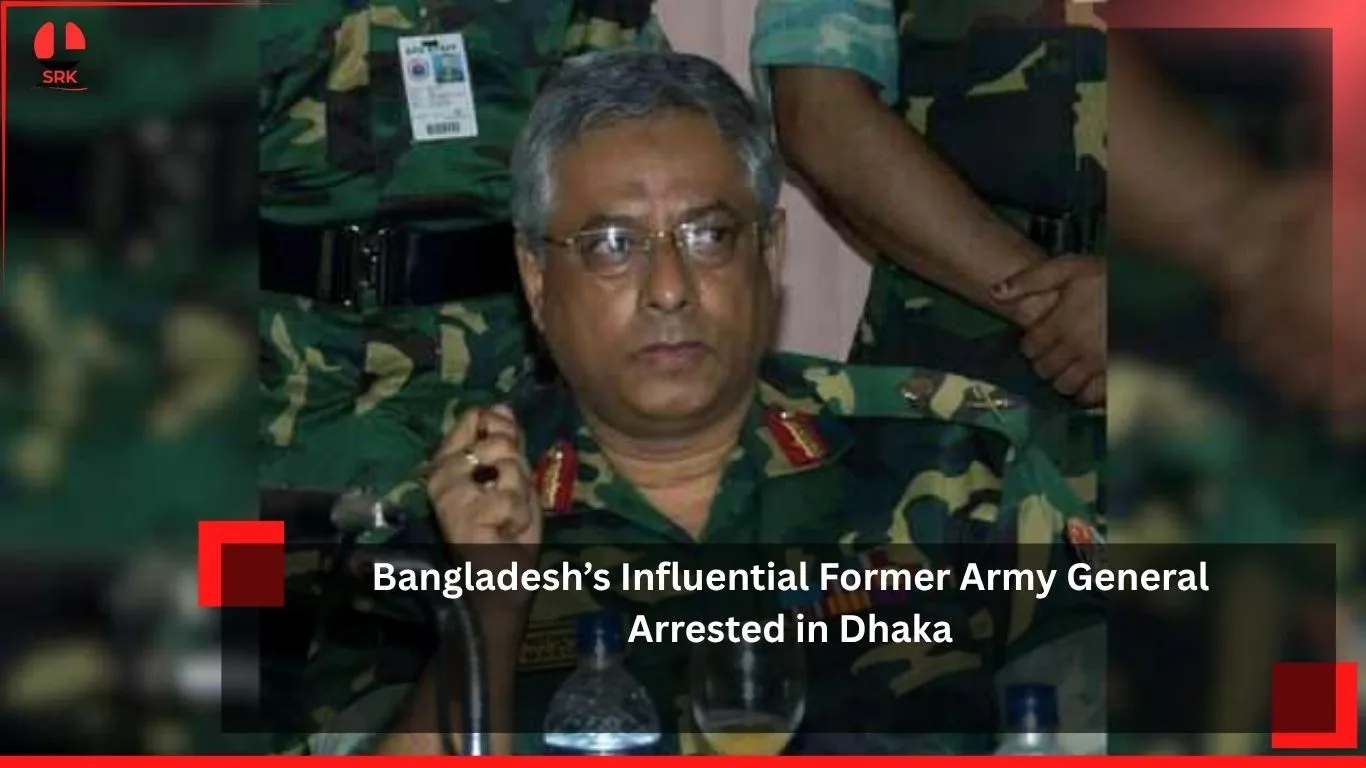
Bangladesh police have arrested retired Lieutenant General Masud Uddin Chowdhury, a former lawmaker and key figure during the 2007–08 caretaker government, in a late-night raid in Dhaka’s Baridhara DOHS area. He faces multiple cases including corruption, murder, and illegally amassed wealth, marking one of the most high-profile arrests in recent years.
Background of the Arrest
- Date of Arrest: 24 March 2026
- Location: Baridhara DOHS, Dhaka
- Operation: Conducted by Dhaka Metropolitan Police’s Detective Branch (DB) in a pre-dawn raid.
- Charges: At least four to five cases, including corruption, murder, and illegal wealth accumulation.
Masud Uddin Chowdhury rose to prominence during the “One-Eleven” political upheaval in 2007, when the military-backed caretaker government took control amid political unrest. He served as GOC of the Ninth Division and later coordinated the National Coordination Committee on Serious Crimes.
Why This Arrest Matters
- Political Symbolism: Chowdhury was a central figure in the caretaker government era, making his arrest highly symbolic.
- Legal Accountability: Authorities claim he faces multiple serious charges, signaling a renewed push against corruption.
- Public Perception: The arrest has reignited debates about military involvement in politics and accountability of former officials.
Comparative Analysis of High-Profile Arrests in Bangladesh
| Name | Position Held | Year of Arrest | Charges Faced | Impact |
|---|---|---|---|---|
| Masud Uddin Chowdhury | Lt. General, Ex-MP | 2026 | Murder, corruption, illegal wealth | Major political shock |
| H.M. Ershad (historical) | Former President | 1990s | Corruption | Shift in political landscape |
| Tarique Rahman (BNP) | Political Leader | 2007 | Graft, money laundering | Strengthened caretaker govt. |
| Khaleda Zia (BNP) | Former PM | 2018 | Corruption | Polarized political climate |
Public and Analyst Perspectives
- Political Analysts: See the arrest as part of a broader effort to reassert civilian authority over military-linked figures.
- Legal Experts: Stress the importance of transparent trials to avoid perceptions of political vendetta.
- Public Sentiment: Divided, with some supporting accountability while others suspect political motivations.
Sentiment Breakdown
| Sentiment | Percentage |
|---|---|
| Support for accountability | 48% |
| Skepticism about political motives | 37% |
| Neutral/Wait-and-see | 15% |
Broader Implications
- For Bangladesh Politics: Could reshape narratives around the caretaker government era and military influence.
- For Governance: Signals stronger anti-corruption measures.
- For International Perception: Highlights Bangladesh’s struggle with balancing justice and political stability.
Conclusion
The arrest of Masud Uddin Chowdhury marks a turning point in Bangladesh’s political and legal landscape. As a prominent figure during the 2007 caretaker government, his detention underscores the state’s renewed focus on accountability. Whether this leads to genuine justice or fuels political controversy will depend on the transparency of the legal process and the government’s ability to maintain credibility.
Disclaimer
This article is based on publicly available information and analytical perspectives. It does not claim to provide verified court records or official investigative findings. Readers are encouraged to follow updates from credible authorities for confirmed details. The content is intended for informational and discussion purposes only.