
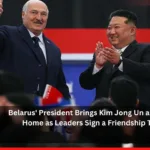

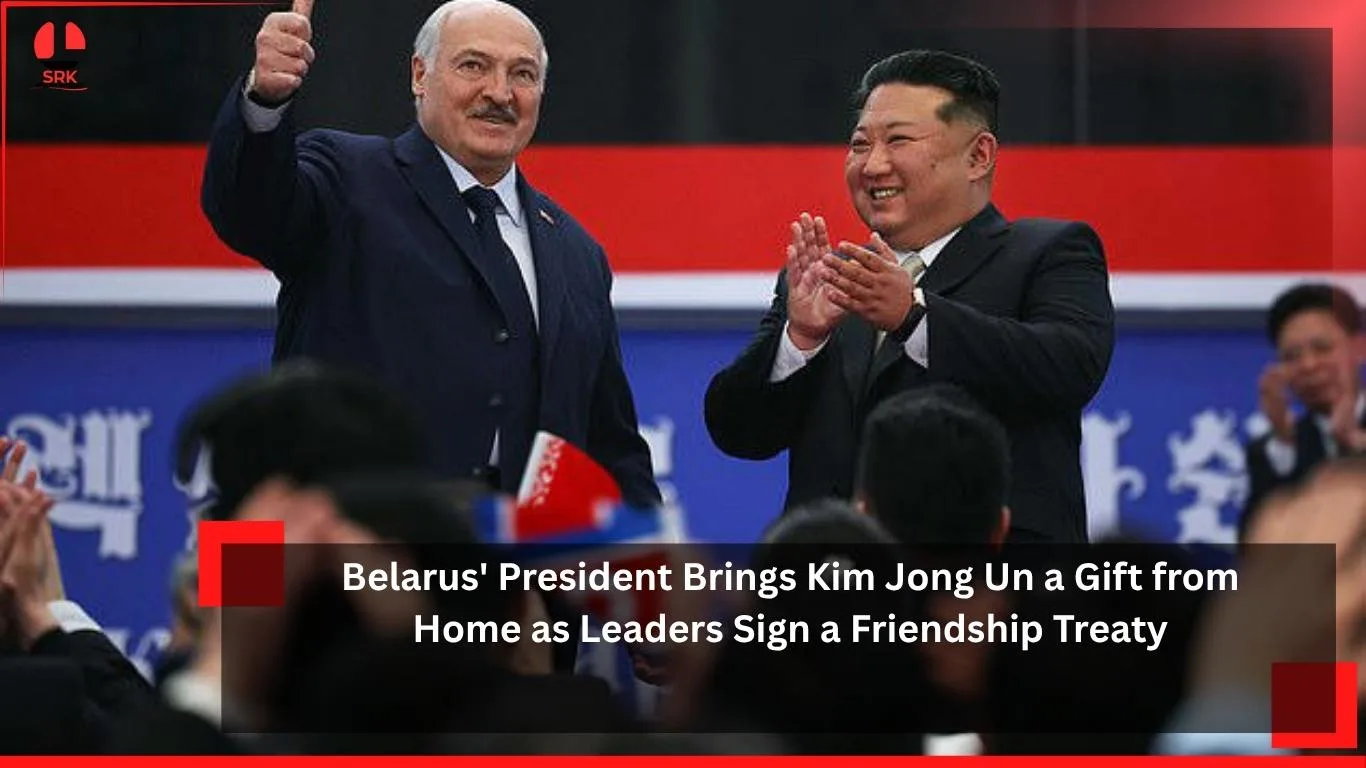
In a symbolic display of diplomacy, Belarusian President Alexander Lukashenko presented North Korean leader Kim Jong Un with a gift from his homeland during a high-profile meeting that culminated in the signing of a friendship treaty. The gesture, rich in cultural meaning, underscored the strengthening ties between Minsk and Pyongyang at a time of shifting global alliances.
Background of the Meeting
The meeting between Lukashenko and Kim Jong Un was held in Pyongyang, where both leaders emphasized the importance of mutual respect, cooperation, and solidarity. The friendship treaty signed during the visit is expected to deepen political, economic, and cultural relations between Belarus and North Korea.
The gift, described as a token of Belarusian heritage, was symbolic of Lukashenko’s intent to build personal rapport with Kim while reinforcing the broader diplomatic message of unity.
Key Highlights of the Treaty and Gift Exchange
- Friendship Treaty Signed: Formalizes cooperation in political, economic, and cultural spheres.
- Gift from Belarus: A symbolic gesture representing Belarusian culture and goodwill.
- Diplomatic Messaging: Both leaders emphasized independence from Western influence.
- Global Context: The treaty comes amid heightened tensions in global geopolitics, with both nations seeking stronger partnerships outside Western alliances.
Comparative Analysis of Belarus-North Korea Relations
| Aspect | Belarus’ Position | North Korea’s Position | Joint Outcome |
|---|---|---|---|
| Political Cooperation | Seeks allies beyond Europe | Seeks recognition and support | Strengthened diplomatic ties |
| Economic Engagement | Limited but symbolic trade | Desire for diversified partnerships | Potential for small-scale cooperation |
| Cultural Exchange | Gift symbolizes heritage | Welcomes cultural diplomacy | Enhanced people-to-people ties |
| Strategic Messaging | Independence from Western influence | Resistance to sanctions and isolation | Shared narrative of sovereignty |
Pivot Analysis: Symbolism vs Strategic Outcomes
| Symbolic Gesture | Strategic Outcome | Expected Impact |
|---|---|---|
| Gift from Belarus | Builds personal rapport | Strengthens leader-to-leader trust |
| Treaty signing | Formalizes cooperation | Institutionalizes bilateral relations |
| Cultural diplomacy | Enhances mutual respect | Encourages future exchanges |
| Shared sovereignty narrative | Counters Western narratives | Reinforces global positioning |
Implications of the Treaty
- Strengthened Bilateral Relations: The treaty formalizes cooperation and signals long-term engagement.
- Global Messaging: Both nations project independence from Western influence.
- Economic Potential: While limited, the treaty opens avenues for symbolic trade and cooperation.
- Cultural Diplomacy: The gift exchange highlights the role of cultural gestures in international relations.
Reactions
- Belarus: Officials framed the treaty as a step toward diversifying alliances.
- North Korea: State media celebrated the gift and treaty as proof of international solidarity.
- Global Analysts: Viewed the development as symbolic but significant in the context of global geopolitics.
- Public Sentiment: Mixed reactions, with some praising the gesture while others questioned its practical impact.
Historical Context
Belarus and North Korea have maintained limited but consistent diplomatic relations over the years. Both nations share a history of resisting Western sanctions and seeking alternative partnerships. The friendship treaty builds on this foundation, adding a layer of cultural diplomacy through Lukashenko’s gift.
Challenges Ahead
- Economic Limitations: Both nations face sanctions and limited global trade opportunities.
- Global Perception: The treaty may be viewed skeptically by Western powers.
- Sustaining Cooperation: Ensuring that symbolic gestures translate into tangible outcomes.
- Balancing Alliances: Belarus must navigate its ties with Russia while engaging with North Korea.
Conclusion
The signing of a friendship treaty between Belarus and North Korea, accompanied by Lukashenko’s gift to Kim Jong Un, marks a symbolic yet strategically important moment in global diplomacy. While the practical impact of the treaty may be limited, the gesture underscores the role of cultural diplomacy in building trust and reinforcing narratives of sovereignty. As global alliances continue to shift, such symbolic acts highlight the importance of personal rapport and shared messaging in international relations.
Disclaimer
This article is based on publicly available reports and expert commentary. It does not represent official government statements or insider accounts. Readers should interpret the content as journalistic analysis, recognizing that diplomatic developments are fluid and subject to change.