

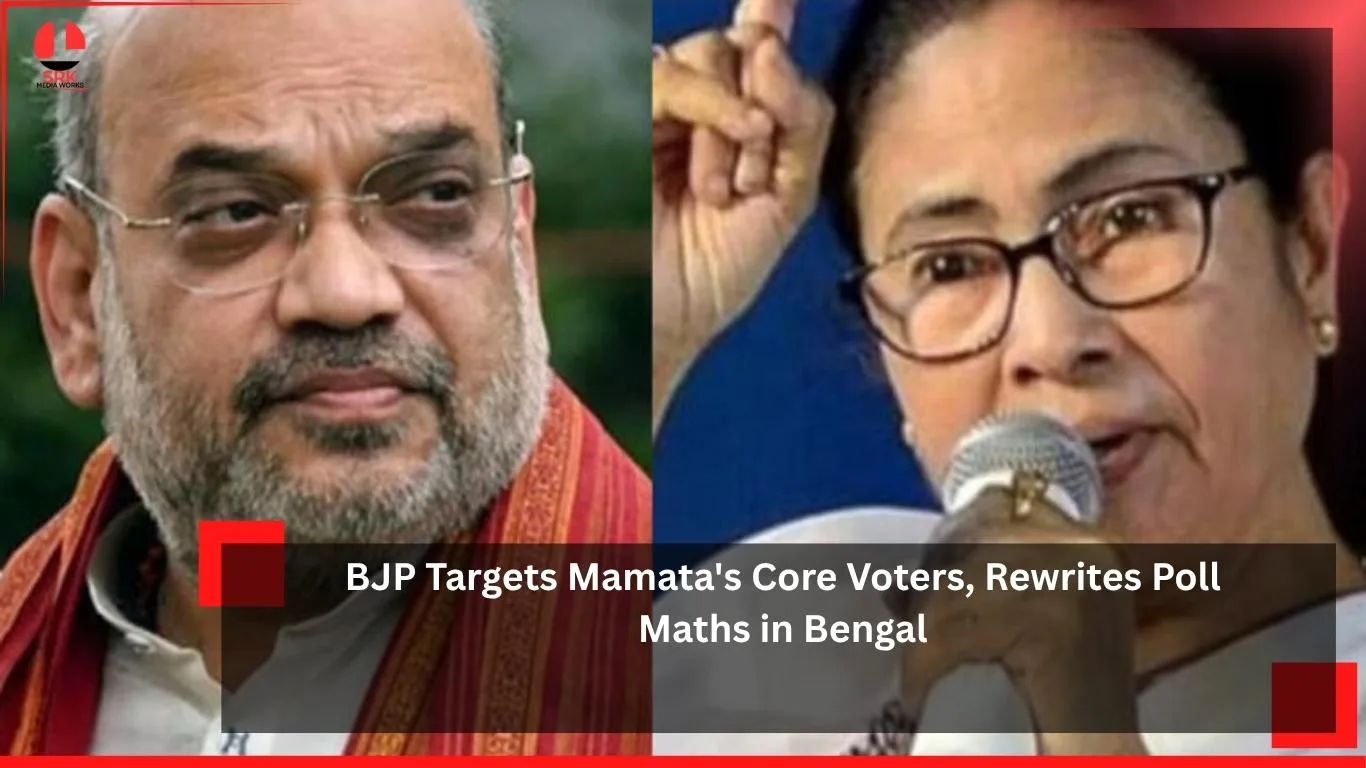
The Bharatiya Janata Party (BJP) has sharpened its electoral strategy in West Bengal, aiming directly at the core voter base of Chief Minister Mamata Banerjee and her party, the Trinamool Congress (TMC). With civic and assembly polls looming, BJP’s recalibrated approach seeks to disrupt traditional vote banks and rewrite the political arithmetic in the state.
BJP’s Strategy Shift
The BJP has identified key voter segments that have historically supported Mamata Banerjee, including rural women, minority communities, and economically weaker sections. By tailoring welfare promises, grassroots outreach, and targeted campaigns, the party hopes to erode TMC’s dominance in these constituencies.
Key elements of BJP’s strategy include:
- Expanding welfare schemes to rural households.
- Highlighting corruption allegations against TMC leaders.
- Strengthening booth-level organization.
- Leveraging central government initiatives to appeal to marginalized voters.
Mamata’s Core Voter Base
Mamata Banerjee’s political strength has traditionally rested on her ability to mobilize women voters, rural communities, and minority groups. Her welfare programs, such as Kanyashree and Sabooj Sathi, have cemented loyalty among these groups.
However, BJP’s aggressive outreach threatens to chip away at this base, particularly in districts where anti-incumbency sentiments are rising.
Comparative Analysis of Voter Segments
| Voter Segment | Traditional Alignment | BJP’s Targeting Strategy | Potential Impact |
|---|---|---|---|
| Rural Women | Strongly with TMC | Welfare schemes, safety promises | Possible erosion of loyalty |
| Minority Groups | TMC stronghold | Outreach via local leaders | Limited but symbolic gains |
| Youth | Mixed, leaning TMC | Employment, digital campaigns | Could swing towards BJP |
| Urban Middle Class | Divided | Nationalism, economic reforms | Consolidation of BJP support |
This analysis shows how BJP is attempting to penetrate Mamata’s strongholds by reshaping narratives and promises.
Pivot Analysis: Changing Poll Maths
| Dimension | Before BJP’s Strategy Shift | After BJP’s Strategy Shift | Implications |
|---|---|---|---|
| TMC’s Core Base | Stable, loyal | Under challenge | Rising uncertainty |
| BJP’s Position | Strong in select districts | Expanding into new voter bases | Increased competitiveness |
| Electoral Atmosphere | Predictable | Fluid, volatile | Higher stakes |
| Campaign Dynamics | TMC-centric | BJP vs TMC direct clash | Intensified rivalry |
The pivot analysis highlights how BJP’s recalibration could alter Bengal’s electoral landscape.
Grassroots Campaigns
BJP has intensified its presence in rural Bengal, focusing on booth-level committees and local influencers. The party’s emphasis on direct communication with voters is designed to counter TMC’s established networks.
TMC’s Counter Strategy
Mamata Banerjee has responded by reinforcing her welfare programs and emphasizing her image as a grassroots leader. TMC cadres have been mobilized to counter BJP’s narrative, particularly in rural and semi-urban areas.
Public Perception
The public discourse reflects heightened polarization. While BJP’s supporters hail the strategy as a necessary disruption, TMC loyalists view it as an opportunistic attempt to dismantle Bengal’s social fabric.
Possible Outcomes
- BJP Gains Ground: Targeted campaigns succeed in eroding TMC’s voter base.
- TMC Retains Core: Welfare programs and grassroots mobilization hold strong.
- Fragmented Mandate: Both parties gain and lose in different segments, leading to unpredictable results.
- Heightened Polarization: Campaigns deepen divides, reshaping Bengal’s political culture.
Conclusion
The BJP’s decision to target Mamata Banerjee’s core voters marks a significant shift in Bengal’s electoral dynamics. By rewriting poll maths, the party aims to challenge TMC’s dominance and expand its footprint in the state. Whether this strategy succeeds will depend on how effectively BJP can convert outreach into votes and how resilient Mamata’s voter base remains under pressure.
Disclaimer: This article is based on political developments and analytical perspectives. It does not endorse any political party or leader. The content is intended for informational purposes only, highlighting electoral strategies and their potential implications. Readers should interpret the situation within the broader framework of Indian politics.