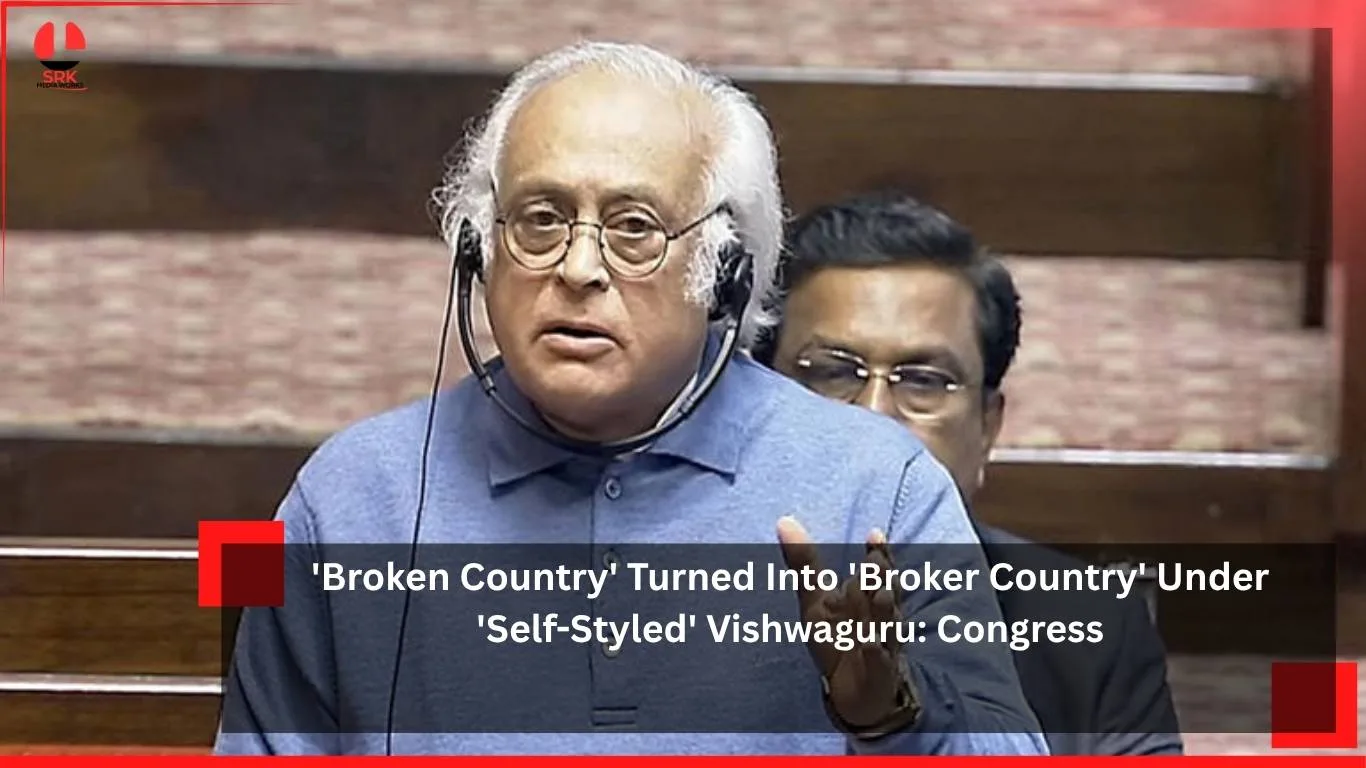
The Congress party has launched a scathing attack on the Centre, accusing the government of transforming India from a “broken country” into a “broker country” under what it termed a “self-styled Vishwaguru.” The remarks came in response to the government’s foreign policy approach and its handling of international mediation efforts, sparking a heated debate in political circles.
Congress’s Criticism
- “Broker Country” Allegation: Congress leaders argued that India’s foreign policy has shifted from being a sovereign voice to acting as a broker in global disputes.
- Targeting Leadership: The reference to “self-styled Vishwaguru” was aimed at the Prime Minister, accusing him of prioritizing image-building over substantive policy.
- Domestic Concerns: Congress claimed that while the government projects India as a global leader, domestic issues such as unemployment, inflation, and inequality remain unresolved.
Background of the Debate
- India’s Global Role: In recent years, India has positioned itself as a mediator in international conflicts, including Middle East tensions.
- Congress’s Stand: The opposition argues that India should focus on strengthening its internal economy and social justice rather than seeking to broker peace abroad.
- Political Context: The remarks come ahead of crucial elections, where foreign policy and domestic governance are both key issues.
Comparative Analysis of India’s Global Role
| Period | India’s Position | Global Perception | Outcome |
|---|---|---|---|
| Pre-2014 | Non-aligned, cautious diplomacy | Neutral mediator | Stable but limited influence |
| 2014–2020 | Assertive global outreach | Emerging power | Mixed results |
| 2020–2026 | Broker in global conflicts | Divisive perception | Criticism from opposition |
Sector-Wise Impact of the “Broker Country” Narrative
| Sector | Impact | Outlook |
|---|---|---|
| Diplomacy | Questions over credibility | Fragile alliances |
| Domestic Politics | Opposition gains narrative | Heated debates |
| Economy | Focus diverted from internal issues | Slower reforms |
| Public Opinion | Divided views | Increased polarization |
| Media | Intense coverage | Spotlight on leadership |
Why the Debate Matters
- Foreign Policy Identity: India’s role as a “broker” raises questions about its long-term diplomatic strategy.
- Domestic Governance: Critics argue that global mediation distracts from pressing internal challenges.
- Political Ramifications: The narrative could influence voter sentiment ahead of elections.
- Global Perception: India’s credibility as a neutral player may be affected by opposition criticism.
Challenges Ahead
- Balancing Global and Domestic Priorities: India must manage its international ambitions while addressing internal issues.
- Alliance Management: Maintaining credibility with global partners while facing domestic criticism is complex.
- Opposition Pressure: Congress and other parties will continue to highlight contradictions in foreign policy.
- Public Sentiment: The government must convince citizens that global outreach benefits domestic growth.
Long-Term Implications
- Foreign Policy Reassessment: India may need to redefine its role in global conflicts.
- Domestic Political Strategy: The “broker country” narrative could become a central theme in opposition campaigns.
- Global Standing: India’s credibility as a mediator may be tested in future conflicts.
- Public Trust: Citizens will judge whether foreign policy translates into tangible benefits at home.
Conclusion
Congress’s sharp criticism that India has turned from a “broken country” into a “broker country” under a “self-styled Vishwaguru” highlights the growing tension between domestic governance and foreign policy ambitions. While the government projects India as a global leader, the opposition insists that internal challenges remain unresolved. The debate underscores the complex balance between international diplomacy and domestic priorities, a balance that will shape India’s political and economic trajectory in the years ahead.
Disclaimer
This article is intended for informational purposes only and does not constitute political or diplomatic advice. The views expressed are based on reported developments as of March 2026. Readers should consider multiple perspectives before forming conclusions about governance and foreign policy.