

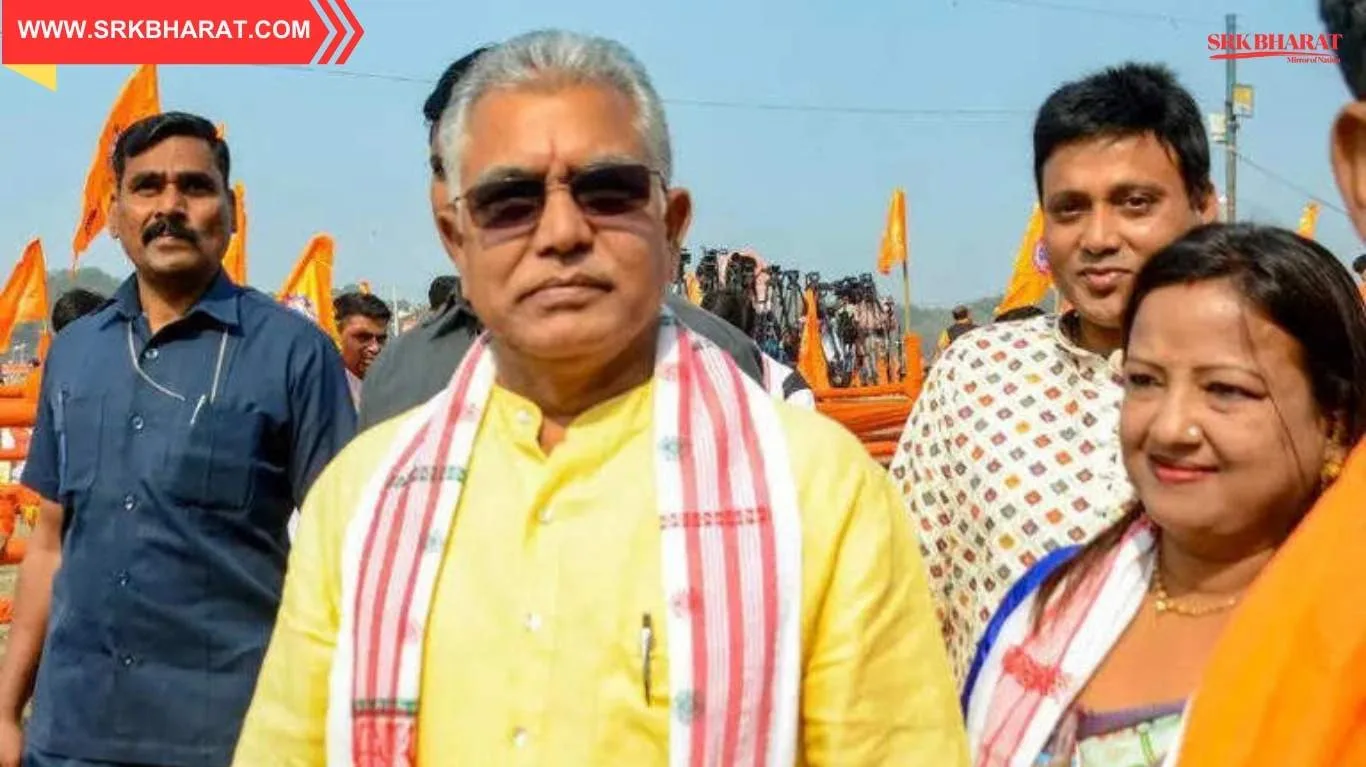
The political corridors of West Bengal have been abuzz after senior Bharatiya Janata Party (BJP) leader Dilip Ghosh, known for his candid and outspoken style, launched a scathing attack on some of his party colleagues. However, following the storm created by his remarks, Ghosh has chosen to remain silent, sparking speculation about internal dynamics within the BJP and the future course of his political journey.
Background of the Controversy
- Dilip Ghosh, former state president of BJP in West Bengal and currently a national vice-president, has often made headlines for his blunt statements.
- Recently, he criticized certain party colleagues, accusing them of failing to connect with grassroots workers and mishandling organizational responsibilities.
- His remarks were seen as a direct challenge to the leadership style of some senior figures within the state unit.
- After the backlash and intense media coverage, Ghosh has refrained from making further comments, leading to speculation about whether he was advised to maintain silence or chose restraint on his own.
Key Highlights of the Situation
| Indicator | Details |
|---|---|
| Leader Involved | Dilip Ghosh |
| Party | Bharatiya Janata Party (BJP) |
| Nature of Remarks | Critical of party colleagues |
| Current Stance | Silent after controversy |
| Broader Impact | Sparks debate on BJP’s internal dynamics in Bengal |
Implications of Dilip Ghosh’s Silence
| Factor | Positive Impact | Challenges | Long-Term Implication |
|---|---|---|---|
| Party Discipline | Maintains unity after controversy | Risk of unresolved tensions | Reinforces leadership control |
| Public Perception | Avoids further negative headlines | Seen as suppression of dissent | Shapes image of BJP in Bengal |
| Media Attention | Reduces immediate spotlight | Speculation continues | Keeps issue alive in public discourse |
| Grassroots Workers | May feel reassured by candidness | Confusion over silence | Influences morale and loyalty |
| Political Strategy | Allows time for reconciliation | Risk of factionalism | Determines BJP’s strength in Bengal |
Why This Story Matters
- Internal Dynamics: Highlights the challenges BJP faces in consolidating its leadership in Bengal.
- Public Image: Ghosh’s candid remarks resonate with grassroots workers but risk exposing internal rifts.
- Strategic Silence: His decision to remain quiet reflects the delicate balance between discipline and dissent.
- Electoral Impact: The controversy could influence BJP’s performance in upcoming elections.
- Media Narrative: The issue continues to dominate political discussions in West Bengal.
Dilip Ghosh’s Political Profile
| Attribute | Details |
|---|---|
| Position | National Vice-President, BJP |
| Former Role | State President, BJP West Bengal |
| Known For | Outspoken and candid remarks |
| Influence | Strong grassroots connect |
| Current Situation | Silent after slamming colleagues |
Ghosh’s political journey has been marked by his ability to mobilize grassroots workers and his reputation for speaking his mind, often creating ripples within the party.
Expert Opinions
- Political Analysts: Suggest Ghosh’s remarks reflect deeper dissatisfaction among grassroots workers.
- Party Insiders: Emphasize the importance of maintaining discipline and unity.
- Critics: Argue that silencing dissent may weaken the party’s democratic fabric.
- Supporters: Believe Ghosh’s candidness is necessary to highlight organizational shortcomings.
Challenges Ahead
- Managing Dissent: Balancing candid voices with party discipline.
- Electoral Strategy: Ensuring internal unity ahead of crucial elections.
- Public Perception: Addressing concerns about factionalism.
- Media Scrutiny: Handling narratives that highlight internal rifts.
- Grassroots Morale: Reassuring workers about leadership accountability.
Opportunities for BJP
- Reconciliation: Use the controversy to strengthen internal dialogue.
- Grassroots Engagement: Address concerns raised by Ghosh to improve organizational connect.
- Leadership Clarity: Reinforce roles and responsibilities within the party.
- Strategic Silence: Utilize Ghosh’s restraint to project unity.
- Electoral Preparation: Focus on consolidating support ahead of polls.
Broader Context of Bengal Politics
- West Bengal remains a challenging state for BJP, with strong competition from the ruling Trinamool Congress (TMC).
- Internal unity is crucial for BJP to expand its influence in the state.
- Leaders like Dilip Ghosh play a key role in mobilizing grassroots support.
- The controversy reflects the broader struggle of national parties to adapt to Bengal’s unique political culture.
Public Sentiment
- Grassroots workers expressed mixed reactions, with some supporting Ghosh’s candidness and others worried about internal divisions.
- Citizens debated whether his silence was voluntary or imposed by party leadership.
- Social media discussions highlighted the tension between discipline and dissent.
- Overall sentiment reflects curiosity and speculation about BJP’s internal dynamics.
Media Coverage
- News outlets widely reported Ghosh’s remarks and subsequent silence.
- Analysts debated the implications for BJP’s organizational strength in Bengal.
- Coverage emphasized the importance of grassroots connect in Bengal politics.
- The story continues to dominate discussions in political and civic circles.
Conclusion
The controversy surrounding Dilip Ghosh’s candid remarks against BJP colleagues and his subsequent silence underscores the complexities of party politics in West Bengal. While his outspoken style resonates with grassroots workers, the decision to remain quiet reflects the importance of maintaining discipline and unity. The incident highlights the delicate balance between dissent and cohesion, shaping the future of BJP’s strategy in Bengal.
Disclaimer
This article is intended for informational purposes only and does not constitute official endorsement or criticism. Political statements, party strategies, and public sentiments are subject to change based on evolving circumstances. Readers are encouraged to follow official updates for accurate information. The author and publisher are not responsible for any decisions made based on this article.