





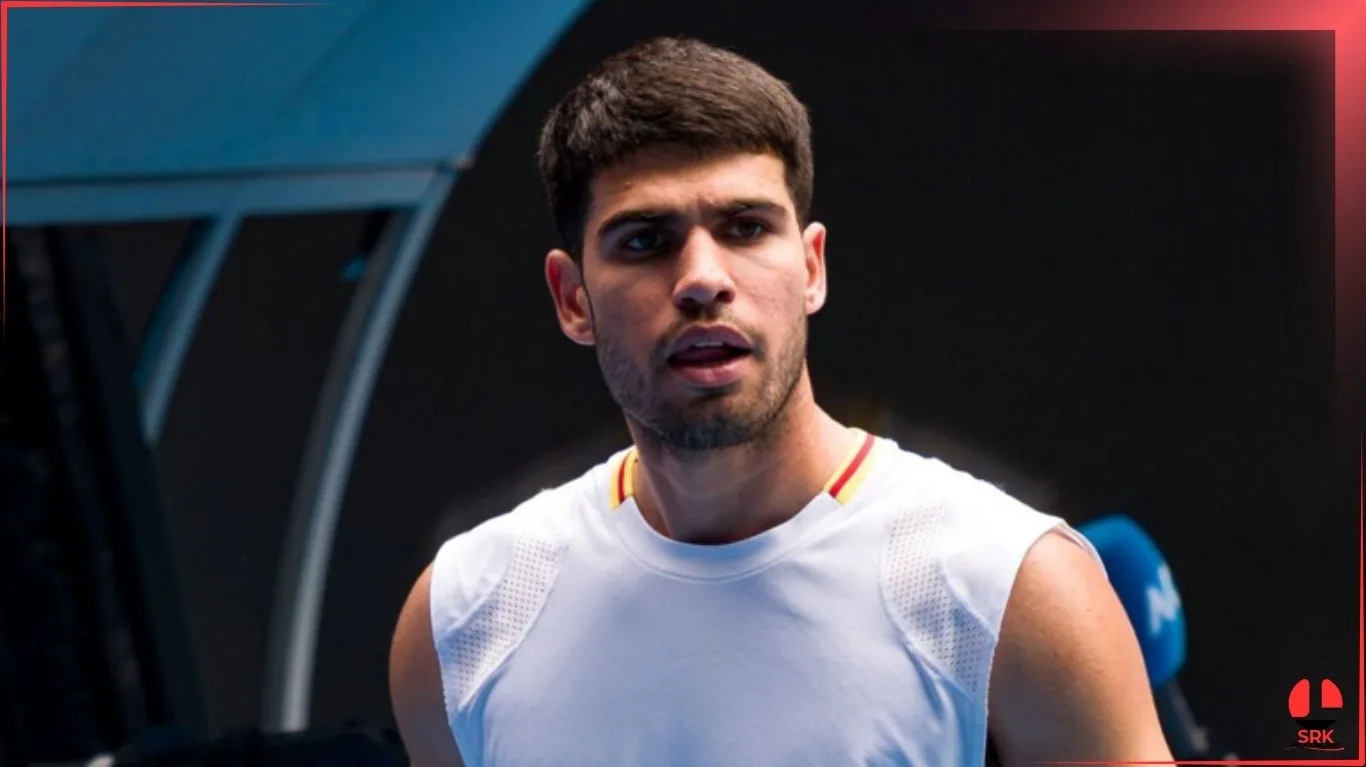
The Qatar Open in Doha witnessed high drama when Spanish tennis star Carlos Alcaraz clashed with the chair umpire over a time violation call. The fiery exchange quickly became the talking point of the tournament, drawing reactions from fans, analysts, and former players. Among those weighing in was former world No. 1 Kim Clijsters, who defended Alcaraz’s emotional response, arguing that his frustration was understandable given the circumstances.
Background of the Incident
Carlos Alcaraz, known for his aggressive playing style and passionate demeanor, was penalized for a time violation during a crucial moment of his match. The umpire’s decision triggered an immediate reaction from Alcaraz, who argued that the call was unfair and disrupted his rhythm. His animated protest included gestures and verbal exchanges, highlighting his dissatisfaction with the ruling.
Kim Clijsters’ Defense
Kim Clijsters, a respected voice in tennis, defended Alcaraz’s reaction. She emphasized that players often face immense pressure during matches and that emotional outbursts are part of the sport. According to Clijsters, Alcaraz’s response should be viewed in the context of competitive intensity rather than as disrespect toward officials.
Key Highlights
- Time Violation Call: Sparked heated argument between Alcaraz and the umpire.
- Player Reaction: Alcaraz expressed frustration, claiming the call was unjust.
- Clijsters’ View: Defended Alcaraz, citing competitive stress and fairness concerns.
- Public Debate: Fans and analysts divided over whether Alcaraz’s reaction was justified.
Comparative Analysis of Player Reactions to Umpire Decisions
| Player | Typical Reaction Style | Public Perception | Impact on Matches |
|---|---|---|---|
| Carlos Alcaraz | Passionate, vocal | Divided – admired by fans, criticized by purists | Can disrupt focus |
| Novak Djokovic | Assertive, confrontational | Seen as strong-willed | Often regains composure |
| Rafael Nadal | Calm, measured | Widely respected | Maintains rhythm |
| Serena Williams | Strong protests | Polarizing – admired for courage | Can shift momentum |
Analysis of Sentiment
| Sentiment Category | Impact on Alcaraz | Impact on Tennis Community | Impact on Tournament |
|---|---|---|---|
| Fan Support | High – many sympathize with his passion | Sparks debate on fairness | Increases media coverage |
| Media Coverage | Extensive – highlights controversy | Raises questions about umpiring standards | Boosts tournament visibility |
| Player Solidarity | Mixed – some defend, others criticize | Encourages discussion on rules | Adds intensity to competition |
| Official Response | Neutral – rules defended | Reinforces authority of umpires | Maintains regulatory framework |
Broader Implications
The incident underscores the ongoing tension between players and officials in professional tennis. While rules are designed to ensure fairness, their enforcement often sparks controversy. Alcaraz’s clash with the umpire highlights the need for clearer communication and consistency in applying regulations.
Challenges Ahead
- For Alcaraz: Managing emotions while maintaining focus during high-pressure matches.
- For Officials: Ensuring consistency in enforcing rules to avoid perceptions of bias.
- For Tennis Authorities: Balancing strict rule enforcement with player welfare.
Conclusion
Carlos Alcaraz’s heated exchange with the chair umpire in Doha has reignited debates about time violations and player conduct in tennis. With Kim Clijsters defending his reaction, the incident reflects the fine line between passion and discipline in professional sport. As Alcaraz continues his rise, his ability to channel emotions constructively will be crucial in shaping his legacy.
Disclaimer
This article is a journalistic analysis based on publicly available information and sports commentary. It does not endorse or oppose any player, official, or institution. Readers are encouraged to interpret the content as informative coverage and verify facts independently before forming opinions.