


In a development that could escalate geopolitical tensions across the Himalayas, top Indian security and diplomatic sources indicate that China may intensify efforts to prevent the next Dalai Lama from being identified or enthroned within Indian territory. The move is seen as part of Beijing’s long-standing policy to control Tibetan Buddhist affairs and undermine the Dharamshala-based Tibetan government-in-exile’s legitimacy.
Chinese strategy to assert reincarnation control
According to officials familiar with the matter, Chinese authorities have conveyed through informal diplomatic backchannels that any attempt by the current Dalai Lama or the Tibetan clergy to identify his reincarnation within India would be viewed as a violation of Chinese sovereignty over Tibet. This aligns with Beijing’s 2007 “Regulations on Religious Affairs”, under which reincarnations of Tibetan spiritual leaders must receive government approval.
One senior intelligence source stated:
“China’s priority is to ensure the next Dalai Lama is born within its jurisdiction in Tibet Autonomous Region. They believe reincarnation is a tool to cement political control over Tibetan Buddhists globally.”
Why reincarnation remains core to Tibet’s future
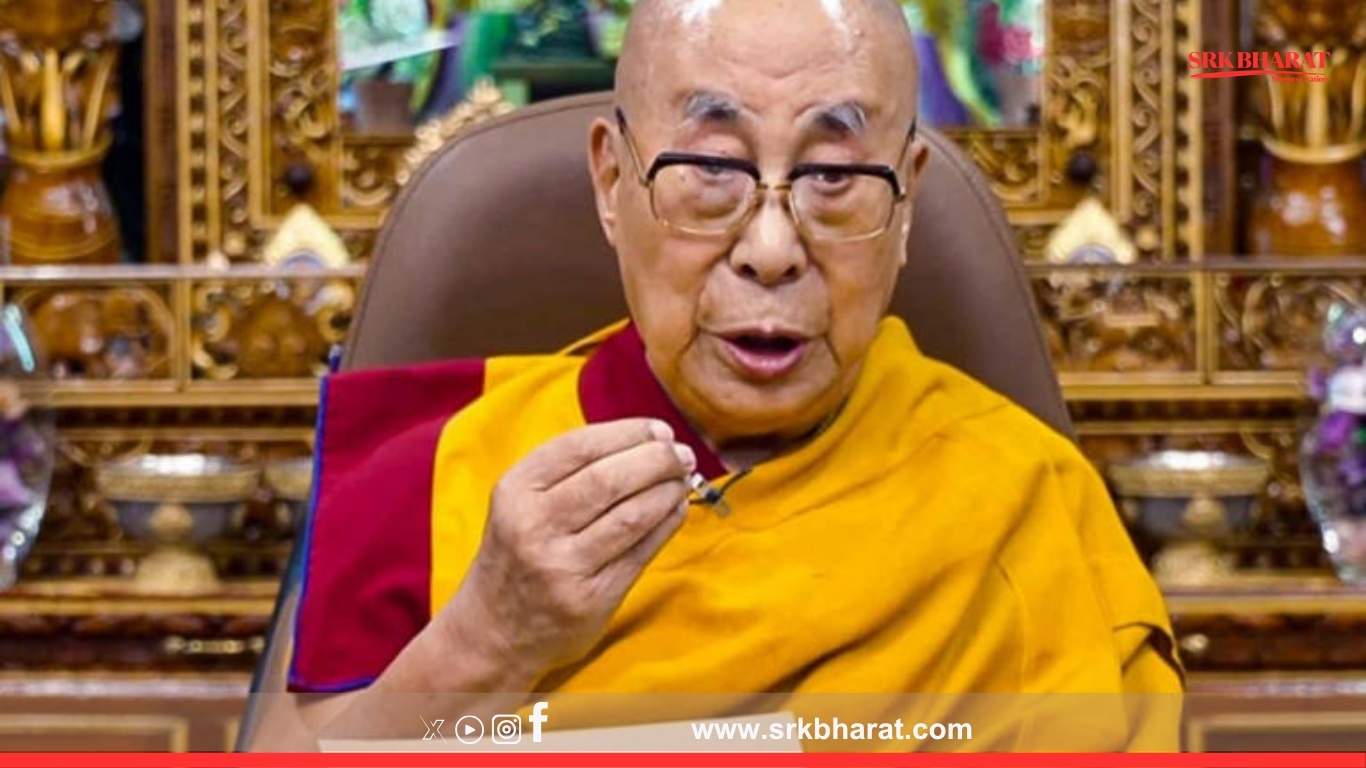
The current 14th Dalai Lama, Tenzin Gyatso, now 89, has hinted at multiple possibilities for his reincarnation:
- He may not reincarnate at all, ending the centuries-old lineage to prevent Chinese interference.
- He may reincarnate outside Tibet, including India or Nepal, to maintain the traditional spiritual process independent of CCP control.
- He may name his successor before death, though that goes against standard reincarnation traditions.
In recent public speeches, he has repeatedly stated:
“If two Dalai Lamas emerge, one from a free country and one from China, no one will respect the Chinese choice.”
India’s delicate diplomatic stance
Indian officials have so far refrained from formal comment, maintaining the position that the Dalai Lama’s reincarnation is purely a religious matter for the Tibetan community. However, security agencies are alert to potential Chinese coercive moves, including:
- Increased pressure on Nepal to block Tibetan refugee movements.
- Diplomatic protests against Indian support for the Tibetan clergy.
- Propaganda campaigns delegitimising any reincarnation announced from India.
- Intelligence operations to influence Tibetan monasteries within Indian territory.
Reactions from Tibetan leadership
The Central Tibetan Administration (CTA) in Dharamshala issued a guarded statement:
“The reincarnation of His Holiness is a matter for Tibetans and followers worldwide. Political interference cannot alter spiritual truth.”
Senior monks in prominent monasteries across Himachal Pradesh and Karnataka emphasised they would uphold the Dalai Lama’s instructions irrespective of Chinese claims, with one saying:
“Communist China has no place in our religious traditions. The next Dalai Lama will be recognised by the genuine Tibetan clergy.”
Geopolitical implications
| Stakeholder | Potential Impact |
|---|---|
| India | Possible escalation of diplomatic tensions if reincarnation occurs on Indian soil, but bolsters its soft power among global Tibetan Buddhist communities. |
| China | Would consider it a direct challenge to its sovereignty claim over Tibet, potentially leading to aggressive border posturing or economic retaliation. |
| Nepal | Increased pressure from Beijing to curb Tibetan refugee activities, risking domestic political frictions. |
| Tibetan diaspora | Likely to rally behind India’s moral position if reincarnation process is obstructed by China. |
Professor Brahma Chellaney, strategic affairs expert, noted:
“China’s insistence on controlling reincarnation is about legitimacy, not religion. If India supports a Dalai Lama reincarnated outside Chinese territory, it will be a powerful counter to Beijing’s narrative on Tibet.”
Historical background: Why China seeks to control Dalai Lama reincarnation
After annexing Tibet in 1950, China systematically sought to absorb Tibetan religious institutions into its governance. In 1995, it controversially detained the Panchen Lama recognised by the Dalai Lama, installing its own choice as the 11th Panchen Lama in 1996. The true Panchen Lama remains missing to date.
By controlling the Panchen Lama, who traditionally plays a key role in identifying the next Dalai Lama, China hopes to engineer a compliant spiritual leader aligned with CCP interests, thereby neutralising the Tibetan cause.
Recent developments raising concerns
- Increased Chinese military infrastructure build-up along the Arunachal-Tibet border, particularly near Tawang, the birthplace of the 6th Dalai Lama.
- Heightened Chinese religious affairs outreach to Tibetan monasteries within Tibet and Yunnan to prepare for the reincarnation process.
- New regulations on online religious content in China restricting independent teachings by Tibetan monks abroad.
- Sharp rise in PLA surveillance activities near Bhutanese and Nepalese borders, signalling broader Himalayan strategic assertiveness.
Global reactions and Tibetan diaspora concerns
International human rights groups have consistently called on Beijing to respect Tibetan religious freedom, while the US Congress passed the Tibetan Policy and Support Act, 2020, asserting that decisions regarding the Dalai Lama’s succession are solely for the Tibetan Buddhist community to make.
Lobsang Sangay, former Sikyong (President) of CTA, commented:
“If the next Dalai Lama is born in India, it will be a spiritual assertion against colonial occupation. China fears this as it undermines their narrative.”
India’s strategic options
Experts suggest India could:
- Continue its traditional policy of religious non-interference while providing security to Tibetan institutions.
- Strengthen intelligence coordination with Nepal and Bhutan to protect Tibetan clergy movements.
- Leverage global Buddhist solidarity platforms to counter Chinese influence operations.
- Maintain military preparedness along Tawang and Sikkim in anticipation of potential Chinese coercive actions.
Final thoughts
The question of where the next Dalai Lama will be born and identified is no mere religious affair; it carries profound strategic, cultural, and political consequences for the India-China-Tibet triangle. As the 14th Dalai Lama ages, the geopolitical theatre over his succession is set to intensify, potentially becoming the next flashpoint in an already tense Himalayan security landscape.
Disclaimer: This news article is for informational purposes only. It includes diplomatic insights, intelligence-based assessments, and public expert analyses. Final reincarnation decisions remain subject to religious processes within the Tibetan Buddhist community, with official positions pending formal announcements from concerned governments and institutions.