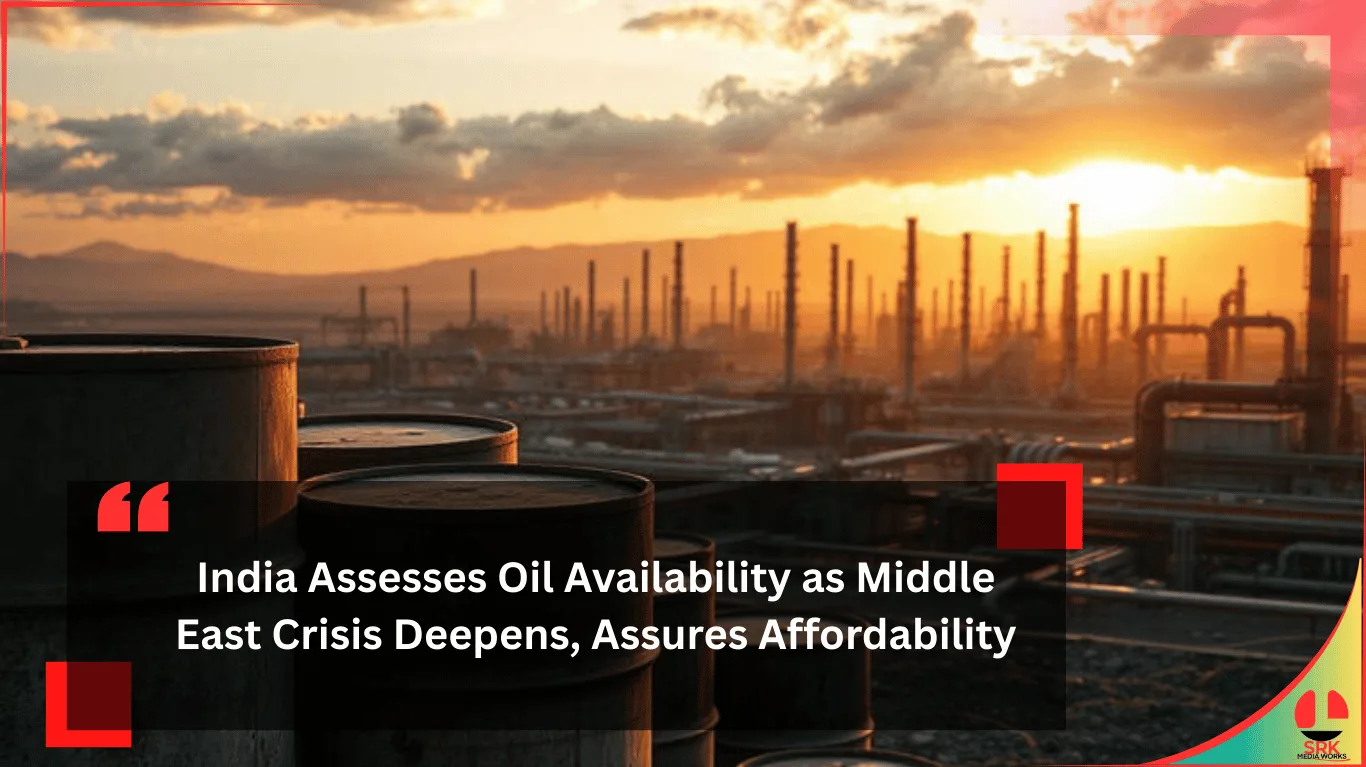




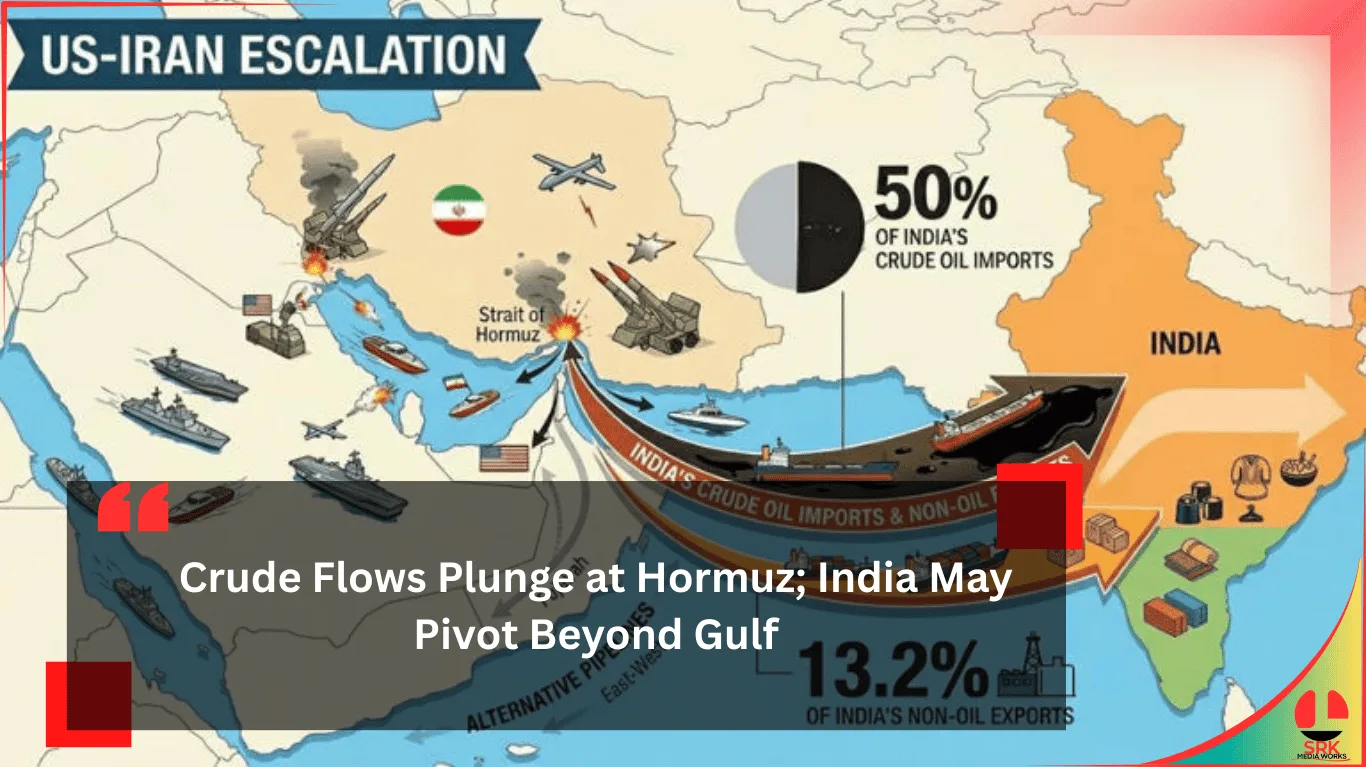
The global energy landscape has been jolted by a sharp decline in crude oil flows through the Strait of Hormuz, the world’s most critical oil transit chokepoint. For India, which imports a significant portion of its crude from Gulf nations, the disruption has triggered urgent reassessments of supply chains and long-term strategies. Officials have indicated that India may pivot beyond the Gulf to diversify its energy sources, ensuring both availability and affordability.
Why the Strait of Hormuz Matters
The Strait of Hormuz, located between Iran and Oman, is the narrow passage through which nearly 20% of the world’s oil supply flows daily. Any disruption here has immediate consequences for global energy markets.
Key Facts:
- Daily Transit: Around 18–20 million barrels of oil.
- Global Dependence: Major economies including India, China, Japan, and Europe rely heavily on Gulf oil.
- Strategic Vulnerability: Military tensions, blockades, or drone attacks can halt shipments.
India’s Response
India has moved quickly to assess the situation, with government officials assuring that measures are in place to maintain affordability for consumers. The Ministry of Petroleum and Natural Gas has emphasized:
- Monitoring Supply Chains: Continuous tracking of crude shipments.
- Strategic Reserves: India may tap into emergency petroleum reserves if needed.
- Diversification: Exploring imports from Africa, the US, and Latin America.
- Renewable Push: Accelerating investments in solar, wind, and green hydrogen.
Comparative Analysis of India’s Oil Import Strategy
| Source Region | Current Share | Potential Expansion | Strategic Benefit |
|---|---|---|---|
| Gulf Nations | ~60% | Limited due to crisis | Proximity, established contracts |
| Africa | ~15% | Expand imports | Diversification, competitive pricing |
| US & Americas | ~10% | Increase LNG & crude | Stable supply, advanced technology |
| Domestic Reserves | Limited | Emergency use only | Short-term relief |
| Renewables | Growing | Accelerated push | Long-term sustainability |
Pivot Analysis of Sentiment
| Sentiment Category | Impact on India | Impact on Global Market | Impact on Citizens |
|---|---|---|---|
| Investor Confidence | Strengthened – proactive measures reassure markets | Stabilizes oil futures | Encourages optimism |
| Public Perception | Positive – affordability assured | Neutral – global volatility persists | Relief from government assurances |
| Media Coverage | Extensive – highlights India’s pivot | Focus on Middle East crisis | Keeps energy debate alive |
| Diplomatic Relations | Enhanced – India engages new suppliers | Encourages cooperation | Builds trust in government action |
Challenges Ahead
- Global Volatility: Continued instability in the Middle East could disrupt supplies further.
- Price Fluctuations: Oil markets remain sensitive to geopolitical shocks.
- Logistical Risks: Shipping routes may face threats, impacting imports.
- Domestic Demand: Rising consumption adds pressure on supply chains.
Opportunities Emerging
- Diversification: Expanding imports from Africa, US, and Latin America.
- Renewable Energy: Crisis accelerates India’s push for solar, wind, and hydrogen.
- Strategic Partnerships: Strengthening ties with non-Gulf producers.
- Technological Innovation: Enhancing refining efficiency and distribution networks.
Broader Implications
India’s pivot beyond the Gulf reflects broader global realities:
- Energy Dependence: Nations remain vulnerable to chokepoint disruptions.
- Global Cooperation: Crisis highlights need for collective energy security strategies.
- Economic Balance: Oil prices directly impact inflation and growth worldwide.
- Sustainability: Push for renewable energy gains urgency amid recurring crises.
Conclusion
The plunge in crude flows at the Strait of Hormuz has underscored the fragility of global energy supply chains. For India, the crisis is both a challenge and an opportunity. By diversifying imports, strengthening strategic reserves, and accelerating renewable energy investments, India is positioning itself to weather volatility while ensuring affordability for its citizens. The pivot beyond the Gulf may well define India’s energy future in the coming decade.
Disclaimer
This article is a journalistic analysis based on publicly available information and global energy trends. It does not endorse or oppose any government, institution, or policy. Readers are encouraged to interpret the content as informative coverage and verify facts independently before forming opinions.