

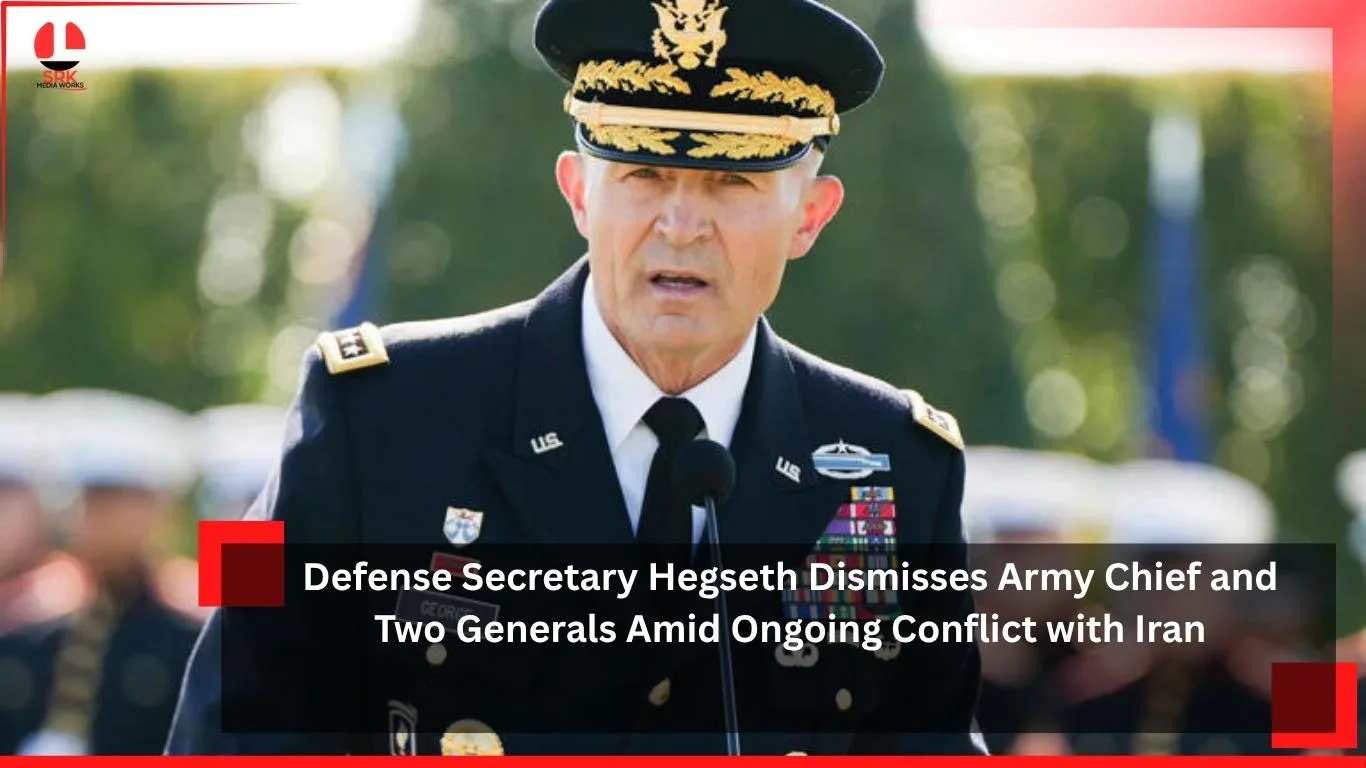
In a dramatic shake-up of military leadership, U.S. Defense Secretary Pete Hegseth has dismissed the Army Chief and two senior generals amid escalating tensions with Iran. This unprecedented move has sent shockwaves through Washington and the international community, raising questions about the stability of U.S. military command during a critical period of conflict. The decision underscores the seriousness of the ongoing confrontation with Iran and signals a recalibration of America’s military strategy.
Background of the Dismissal
The dismissal of top military officials during an active conflict is rare and highlights deep divisions within the defense establishment. Reports suggest disagreements over strategy, operational readiness, and the handling of escalating hostilities with Iran may have contributed to the decision. Defense Secretary Hegseth emphasized the need for “fresh leadership” to navigate the challenges posed by Iran’s aggressive posture in the region.
Key Details of the Shake-Up
- Army Chief Removed: The highest-ranking Army officer has been relieved of duty.
- Two Generals Dismissed: Senior generals overseeing critical operations were also removed.
- Reason Cited: Strategic misalignment and the need for new leadership amid conflict.
- Immediate Impact: Interim commanders have been appointed to ensure continuity of operations.
Implications for U.S. Military Strategy
The removal of senior leaders during wartime raises concerns about command stability. However, Hegseth has assured that the military remains fully capable of responding to threats. Analysts believe the move could pave the way for more aggressive tactics against Iran, while others warn it may create uncertainty within the ranks.
Comparative Analysis of Military Leadership Changes
| Year | Conflict Context | Leaders Dismissed | Reason Stated |
|---|---|---|---|
| 2007 | Iraq War | 1 General | Strategic disagreements |
| 2010 | Afghanistan War | 1 General | Public criticism of leadership |
| 2026 | Iran Conflict | Army Chief + 2 Generals | Strategic realignment |
This comparative view shows how leadership changes during conflicts often stem from disagreements over strategy.
Sector-Wise Impact of Leadership Shake-Up
| Sector | Impact Level | Key Issues |
|---|---|---|
| Military Operations | Very High | Command restructuring, morale concerns |
| Diplomacy | High | Signals instability to allies and adversaries |
| Domestic Politics | Medium | Debate over civilian control of military |
| Global Security | Very High | Heightened tensions with Iran |
| Defense Industry | Medium | Potential shifts in procurement priorities |
Analytical Pivot
| Year | Conflict | Leadership Stability | Military Effectiveness |
|---|---|---|---|
| 2024 | Middle East tensions | Stable | High |
| 2025 | Escalation with Iran | Moderate | Strong |
| 2026 | Active conflict with Iran | Disrupted | Uncertain |
This analysis highlights how leadership stability directly influences military effectiveness during conflicts.
International Reactions
- Iran: Officials in Tehran have described the dismissals as evidence of U.S. “internal chaos.”
- Allies: NATO partners expressed concern but reaffirmed support for U.S. military operations.
- Global Analysts: Commentators warn that leadership instability could embolden Iran and complicate diplomatic efforts.
Possible Scenarios
- Aggressive Strategy Shift: New leadership may adopt more assertive tactics against Iran.
- Internal Reorganization: The shake-up could lead to broader restructuring within the Army.
- Diplomatic Fallout: Allies may question U.S. reliability amid leadership instability.
Future Outlook
Experts predict that the coming weeks will be critical in determining the impact of the dismissals. If new leadership stabilizes operations, the U.S. could strengthen its position against Iran. However, prolonged uncertainty may weaken military effectiveness and complicate diplomatic negotiations.
Conclusion
Defense Secretary Hegseth’s dismissal of the Army Chief and two generals amid the ongoing conflict with Iran marks a turning point in U.S. military strategy. While the move reflects a desire for fresh leadership, it also raises concerns about stability during wartime. The global community will closely watch how the U.S. navigates this leadership transition and its implications for the conflict with Iran.
Disclaimer
This article is intended for informational purposes only. The content reflects current developments and analysis based on publicly available information. Readers should not interpret this as official policy guidance or military advice. While accuracy has been prioritized, future developments may alter the situation. Independent verification is recommended before drawing conclusions.