



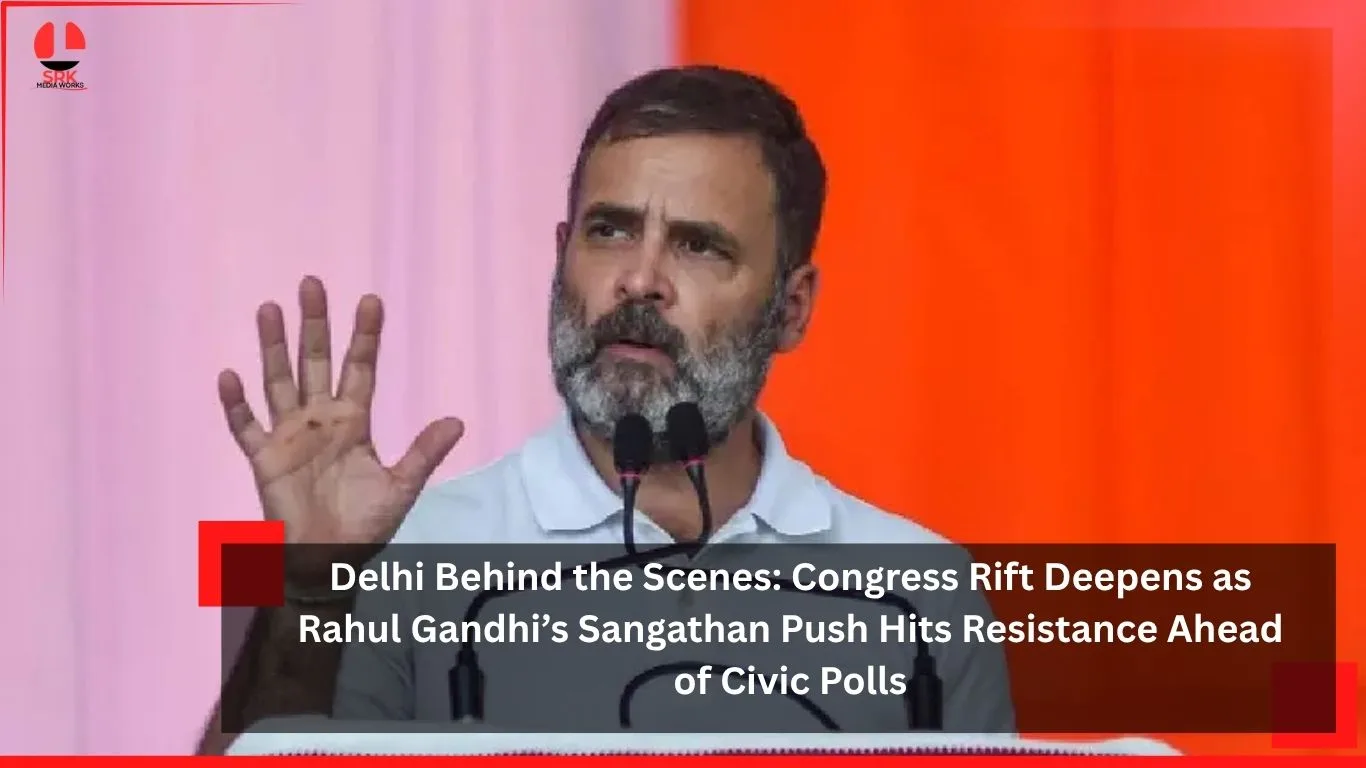
The Congress party in Delhi is witnessing a growing rift as Rahul Gandhi’s push for Sangathan—a renewed organizational drive—faces resistance from within. With civic polls approaching, the internal discord highlights the challenges of balancing reform, grassroots mobilization, and factional interests in India’s oldest political party.
Sangathan Push and Its Objectives
Rahul Gandhi’s Sangathan initiative is designed to strengthen the Congress organization at the grassroots level. The plan emphasizes:
- Reviving local committees.
- Empowering youth and women leaders.
- Streamlining communication between state and central leadership.
- Preparing for upcoming civic elections with a stronger cadre base.
However, the push has met resistance from senior leaders in Delhi who fear losing influence.
Internal Resistance
Several factions within the Delhi Congress are reportedly unhappy with the Sangathan reforms. Senior leaders argue that the restructuring sidelines traditional power centers. Younger leaders, aligned with Rahul Gandhi, support the changes, creating a generational divide.
The resistance is not only about organizational changes but also about candidate selection for civic polls. Established leaders want to retain control, while Rahul Gandhi’s camp insists on fresh faces.
Impact on Civic Poll Strategy
The civic polls in Delhi are crucial for Congress, which has struggled against the dominance of the BJP and AAP in recent years. A united front could help the party regain ground, but internal rifts threaten to weaken its campaign.
Comparative Analysis of Party Dynamics
| Aspect | Rahul Gandhi’s Sangathan Push | Senior Leaders’ Resistance | Impact on Congress |
|---|---|---|---|
| Candidate Selection | Fresh faces, youth, women | Established leaders, loyalists | Risk of split in ticket distribution |
| Organizational Structure | Decentralized, grassroots focus | Centralized, faction-driven | Possible weakening of unity |
| Campaign Strategy | Modern, digital outreach | Traditional, local networks | Lack of coordination |
| Public Perception | Reformist, progressive | Status quo, conservative | Confused messaging |
This analysis shows how the clash of strategies could affect Congress’s performance in civic polls.
Pivot Analysis: Delhi Congress Rift
| Dimension | Before Sangathan Push | After Sangathan Push | Implications |
|---|---|---|---|
| Unity | Moderate cohesion | Increasing factionalism | Risk of electoral setback |
| Youth Involvement | Limited | Expanded under reforms | Potential long-term gains |
| Senior Leadership Control | Strong | Challenged | Possible defections |
| Electoral Readiness | Weak | Strengthened but divided | Mixed outcomes |
The pivot analysis highlights how reforms, while necessary, have triggered internal turbulence.
Historical Context
Congress has faced similar rifts in the past. Organizational reforms often clash with entrenched interests. In Delhi, the party’s decline since the rise of AAP has made reforms urgent, but resistance from within has slowed progress.
Public Perception
For voters, internal rifts project weakness. While Sangathan reforms could energize the base, visible discord may undermine confidence. Civic polls often hinge on local issues, but party unity plays a critical role in mobilization.
Strategic Challenges Ahead
- Balancing Reform and Tradition: Rahul Gandhi must find a way to integrate senior leaders without diluting reforms.
- Candidate Consensus: A transparent process could reduce factional disputes.
- Messaging: Congress needs a unified narrative to counter BJP and AAP.
Possible Outcomes
- Successful Integration: Sangathan reforms strengthen the party, leading to improved performance in civic polls.
- Factional Split: Resistance undermines unity, resulting in poor electoral outcomes.
- Gradual Transition: Reforms take root slowly, with mixed results in the short term but potential long-term gains.
Conclusion
The deepening rift in Delhi Congress ahead of civic polls underscores the challenges of organizational reform in a party with entrenched factions. Rahul Gandhi’s Sangathan push aims to rejuvenate the party, but resistance from senior leaders threatens to derail momentum. The outcome of this struggle will not only shape Congress’s performance in civic polls but also determine its ability to reinvent itself for future battles.
Disclaimer: This article is based on political developments and analysis of party dynamics. It does not endorse any political party or leader. The content is intended for informational purposes only, highlighting organizational challenges and electoral implications. Readers should interpret the situation within the broader context of Indian politics.