



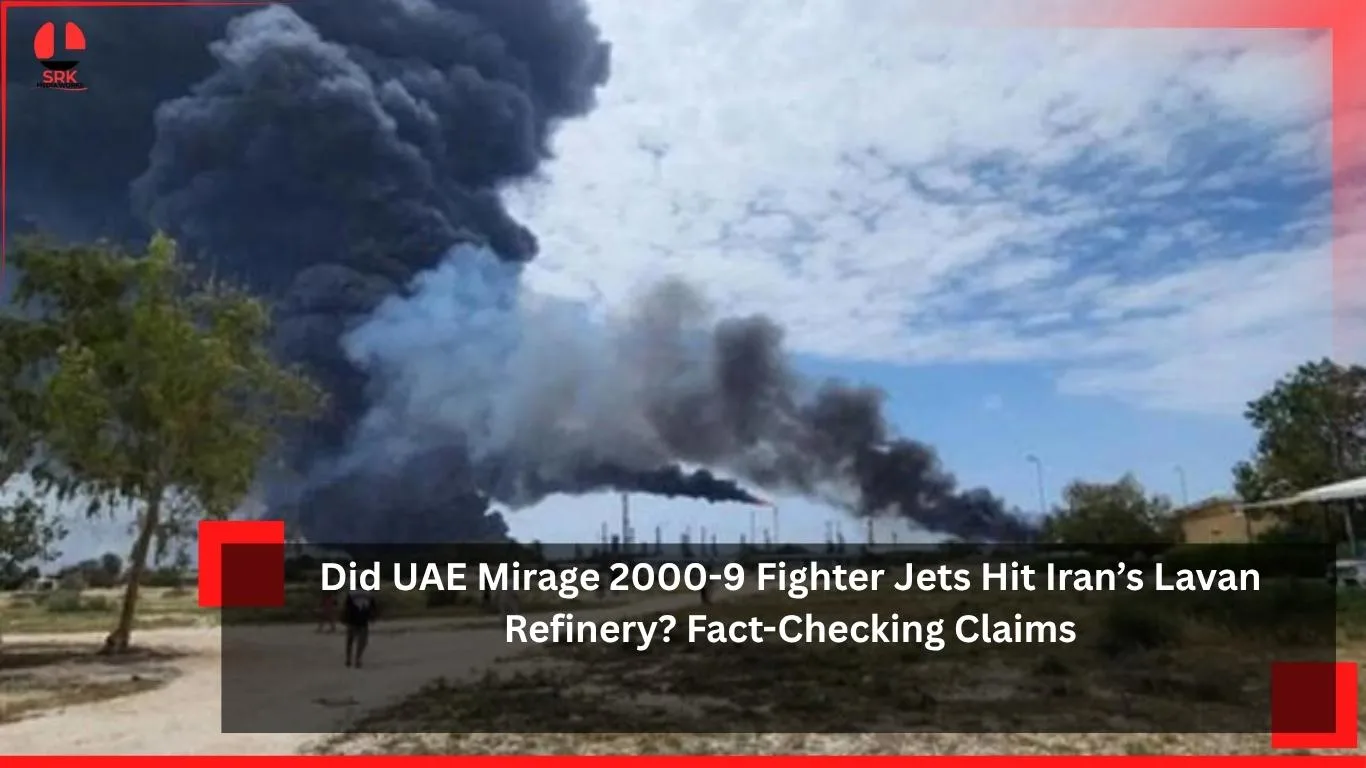
The recent reports claiming that UAE Mirage 2000-9 fighter jets struck Iran’s Lavan refinery have sparked intense debate across the Middle East and beyond. While Iran confirmed an “enemy attack” on the refinery, no casualties were reported. Speculation has pointed toward UAE involvement, but official confirmation remains absent, leaving the situation clouded by uncertainty and geopolitical tension.
The Alleged Strike
Iranian authorities reported explosions at the Lavan refinery, a key energy facility located on Lavan Island in the Persian Gulf. The refinery is strategically important due to its role in processing crude oil and supporting Iran’s export capacity.
- Timing of the Incident: The attack occurred shortly after Iran launched retaliatory strikes in the region.
- Nature of the Strike: Reports suggest precision-guided munitions were used, consistent with Mirage 2000-9 capabilities.
- Casualties: Iran confirmed no human casualties, though infrastructure damage was reported.
Mirage 2000-9 Capabilities
The Mirage 2000-9 is a French-built multirole fighter jet operated by the UAE Air Force.
| Feature | Specification | Strategic Use |
|---|---|---|
| Speed | Mach 2+ | Rapid strike capability |
| Weapons | Laser-guided bombs, missiles | Precision targeting |
| Range | 1,550 km | Regional operations |
| Avionics | Advanced radar systems | Enhanced strike accuracy |
These capabilities make the Mirage 2000-9 suitable for precision strikes against infrastructure targets like refineries.
Political Context
The alleged strike must be understood within the broader geopolitical framework:
- Iran’s Retaliatory Actions: Iran had recently launched attacks against regional adversaries, escalating tensions.
- UAE’s Position: The UAE has historically aligned with Western powers and regional coalitions against Iran’s influence.
- Global Reactions: International observers remain cautious, with no official confirmation of UAE involvement.
Economic Implications
The Lavan refinery plays a crucial role in Iran’s energy sector. Damage to the facility could have significant economic consequences.
| Sector | Impact of Alleged Strike | Global Effect |
|---|---|---|
| Oil Exports | Potential disruption | Fluctuation in oil prices |
| Domestic Supply | Reduced refinery output | Strain on local markets |
| Currency Value | Rial under pressure | Increased inflation risk |
Regional Security Dynamics
The alleged strike has heightened security concerns across the Middle East.
- Proxy Conflicts: Iran’s regional networks may retaliate against UAE interests.
- Alliance Shifts: Gulf states may reassess their security strategies.
- Energy Security: Global markets remain sensitive to disruptions in the Persian Gulf.
Fact-Checking the Claims
Despite widespread speculation, no official evidence has confirmed UAE involvement.
- Iran’s Statement: Iran acknowledged an “enemy attack” but did not name the UAE.
- UAE’s Silence: The UAE has not issued any statement confirming or denying involvement.
- Independent Verification: Satellite imagery and intelligence reports remain inconclusive.
Comparative Analysis
| Dimension | Iran’s Claim | UAE’s Position | Global View |
|---|---|---|---|
| Military | Enemy strike | No confirmation | Unverified |
| Political | Aggression | Silence | Caution |
| Economic | Refinery hit | No comment | Oil market concern |
| Social | Nationalist sentiment | Neutral stance | Humanitarian worries |
Conclusion
The claim that UAE Mirage 2000-9 fighter jets hit Iran’s Lavan refinery remains unverified. While the attack on the refinery is confirmed, attributing responsibility to the UAE is speculative at this stage. The incident underscores the fragile security environment in the Persian Gulf, where military actions, economic interests, and political rivalries intersect. Until official evidence emerges, the narrative remains contested, reflecting the complexity of Middle Eastern geopolitics.
Disclaimer
This article is based on available information and geopolitical analysis. It does not represent official government positions or verified intelligence. Readers are advised to treat the content as an overview of claims and counterclaims, and to consult multiple perspectives before drawing conclusions about sensitive international events.