

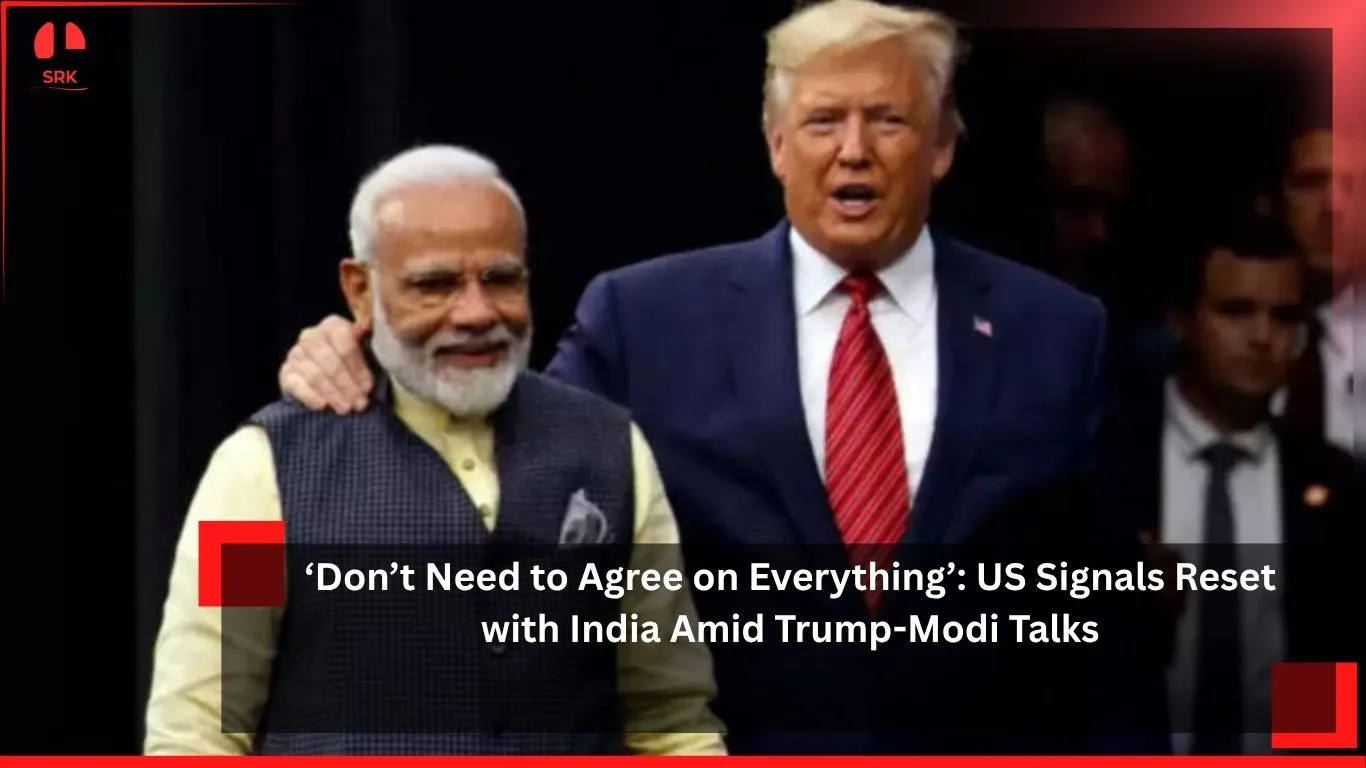
In a significant diplomatic development, the United States has signaled a reset in its relationship with India during recent talks between President Donald Trump and Prime Minister Narendra Modi. American officials emphasized that the two democracies “don’t need to agree on everything” to strengthen their partnership, highlighting a pragmatic approach to cooperation despite differences.
Context of the Reset
The Trump-Modi talks focused on a wide range of issues, including:
- West Asia tensions: Both leaders discussed the fallout of recent conflicts and their impact on global energy security.
- Trade relations: While disagreements remain over tariffs and market access, both sides expressed willingness to find common ground.
- Defense cooperation: The U.S. reiterated its commitment to expanding defense ties with India, particularly in technology sharing and joint exercises.
- Climate and energy: India pushed for recognition of its renewable energy initiatives, while the U.S. stressed energy independence.
Why the Reset Matters
- Strategic Partnership: India and the U.S. are key players in the Indo-Pacific, where China’s rise has reshaped security dynamics.
- Economic Ties: Bilateral trade continues to grow, despite disputes over tariffs and intellectual property.
- Global Diplomacy: Cooperation between the two democracies strengthens multilateral institutions and counters authoritarian influence.
- Symbolic Message: The phrase “don’t need to agree on everything” reflects maturity in the relationship, acknowledging differences while prioritizing shared goals.
Comparative Analysis of US-India Relations
| Issue | US Position | India’s Position | Current Status |
|---|---|---|---|
| Trade Tariffs | Reduce barriers | Protect domestic industries | Ongoing negotiations |
| Defense Cooperation | Expand technology sharing | Strengthen indigenous defense | Growing collaboration |
| Climate Policy | Energy independence | Renewable energy expansion | Partial alignment |
| West Asia Conflict | Military presence | Diplomatic caution | Divergent approaches |
This table highlights the areas of divergence and convergence, showing how both nations balance differences with cooperation.
Pivot in Diplomatic Strategy
The reset signals a pivot in U.S. diplomatic strategy:
- From Confrontation to Pragmatism: Acknowledging differences rather than forcing alignment.
- From Transactional to Strategic: Moving beyond short-term deals to long-term partnership.
- From Isolation to Engagement: Reaffirming commitment to allies in Asia.
Sentiment Analysis
| Group | Sentiment Toward Reset | Likely Response |
|---|---|---|
| US Officials | Positive, pragmatic | Push for deeper ties |
| Indian Government | Cautiously optimistic | Seek balanced cooperation |
| Business Leaders | Encouraged | Advocate for trade reforms |
| Global Observers | Watchful | Assess impact on China relations |
Broader Implications
- Regional Security: Stronger US-India ties could reshape Indo-Pacific alliances.
- Economic Growth: Trade reforms may unlock new opportunities for businesses.
- Climate Cooperation: Joint initiatives could accelerate renewable energy adoption.
- Global Balance: The reset strengthens democratic cooperation against authoritarian powers.
Conclusion
The Trump-Modi talks mark a turning point in US-India relations. By emphasizing that “don’t need to agree on everything,” both nations acknowledge their differences while reaffirming their commitment to partnership. This pragmatic reset could pave the way for deeper cooperation in defense, trade, and global diplomacy, ensuring that the relationship remains resilient in the face of challenges.
Disclaimer
This article is intended for informational purposes only and does not represent official government policy or diplomatic conclusions. The content is based on general observations of international relations and public statements. Readers should note that diplomatic negotiations are subject to change and interpretation.