





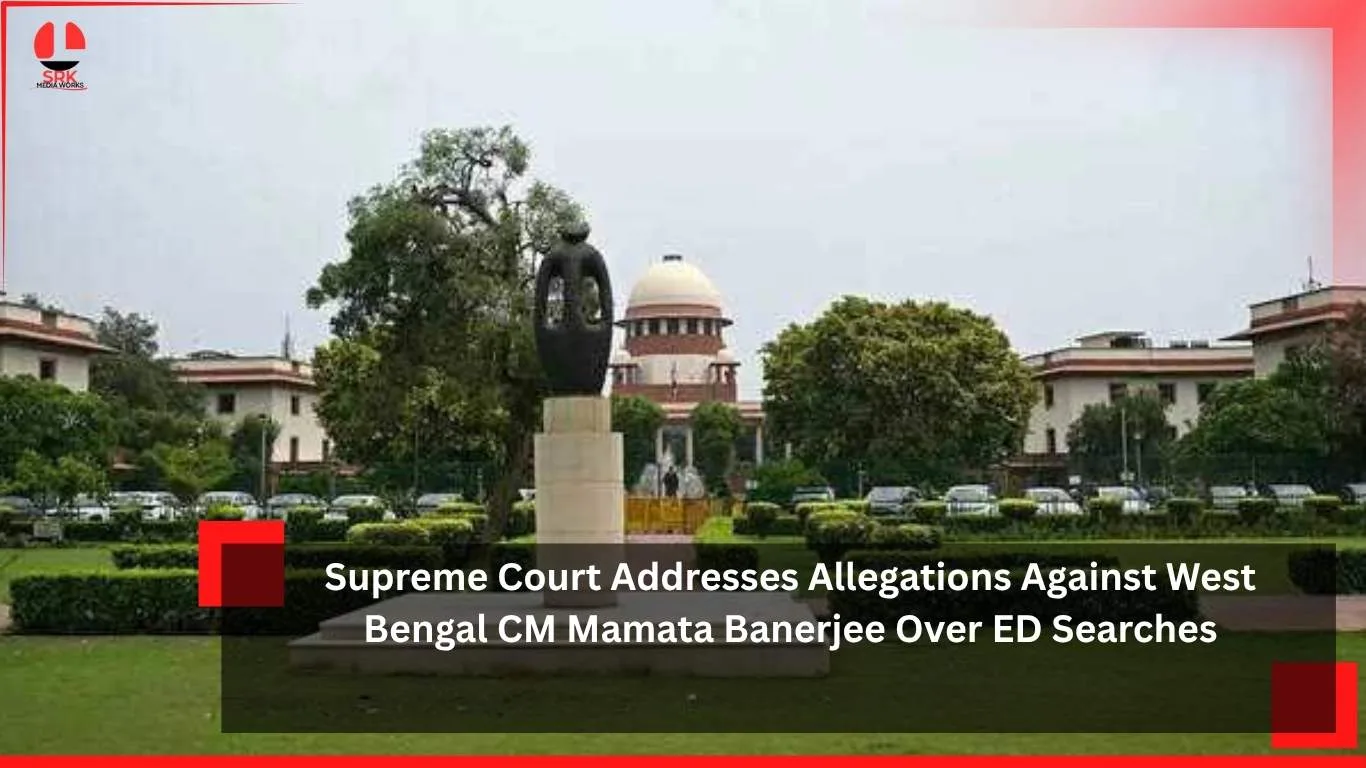
The political atmosphere in West Bengal has intensified as the Enforcement Directorate (ED) has summoned the Indian Political Action Committee (I-PAC) chief for questioning, while also signaling its intent to proceed against Chief Minister Mamata Banerjee in connection with alleged financial irregularities and political funding controversies. This move has sparked a storm in political circles, with opposition parties accusing the central government of using investigative agencies for political vendetta, while the ruling Trinamool Congress (TMC) insists it is being unfairly targeted.
Background of the ED Action
- I-PAC, founded by political strategist Prashant Kishor, has played a crucial role in shaping electoral campaigns across India, including in West Bengal.
- The ED’s summons to the I-PAC chief is linked to alleged irregularities in funding, contracts, and campaign expenditures.
- Sources suggest that the ED is keen to expand its probe to include Mamata Banerjee, citing possible links between political funding and governance decisions.
- The development comes ahead of crucial elections, raising questions about timing and intent.
Key Highlights
| Indicator | Details |
|---|---|
| Agency Involved | Enforcement Directorate (ED) |
| Individuals Targeted | I-PAC chief, Mamata Banerjee |
| Allegations | Financial irregularities, political funding controversies |
| Political Context | West Bengal governance and upcoming elections |
| Broader Impact | Sparks debate on use of investigative agencies |
ED’s Action vs Political Reactions
| Factor | ED’s Position | TMC’s Position | Opposition’s Position | Implication |
|---|---|---|---|---|
| Investigation | Financial irregularities | Political vendetta | Central govt misuse | Polarized narratives |
| Targeted Individuals | I-PAC chief, Mamata Banerjee | Unfair targeting | Political strategy | Heightened tensions |
| Timing | Linked to probe | Election-linked | Election-linked | Raises suspicion |
| Public Messaging | Legal process | Victimization | Accountability | Contrasting narratives |
| Broader Impact | Governance scrutiny | Rallying support | Political mileage | Intensifies debate |
Why This Story Matters
- Governance Scrutiny: Raises questions about transparency in political funding.
- Electoral Impact: Could influence voter sentiment ahead of elections.
- Political Strategy: Highlights the role of investigative agencies in shaping narratives.
- Public Confidence: Citizens are divided between viewing ED’s action as accountability or vendetta.
- National Debate: Reflects broader concerns about the independence of institutions.
ED’s Stand
- The ED maintains that its actions are based on evidence of financial irregularities.
- Officials argue that political funding must be transparent and accountable.
- The agency insists that its probe is independent of political considerations.
- Summoning the I-PAC chief is seen as part of a larger investigation into campaign financing.
TMC’s Response
- The Trinamool Congress has strongly condemned the ED’s actions, calling them politically motivated.
- Mamata Banerjee has accused the central government of attempting to destabilize her administration.
- TMC leaders argue that the probe is aimed at weakening their electoral prospects.
- The party has vowed to resist what it calls “political harassment.”
Opposition’s Position
- Opposition parties have seized the opportunity to criticize both TMC and the central government.
- Some argue that the probe exposes irregularities in TMC’s governance.
- Others claim that the central government is misusing agencies to target opponents.
- The opposition’s divided stance reflects the complexity of the issue.
Expert Opinions
- Political Analysts: Note that the timing of the ED’s action raises questions about intent.
- Economists: Highlight the importance of transparency in political funding.
- Legal Experts: Stress that due process must be followed to ensure credibility.
- Critics: Warn that politicization of agencies could erode public trust.
Challenges Ahead
- Legal Process: Ensuring investigations are fair and transparent.
- Public Perception: Managing voter sentiment amid allegations of vendetta.
- Political Stability: Preventing unrest in West Bengal.
- Institutional Credibility: Safeguarding the independence of investigative agencies.
- Electoral Impact: Balancing governance with campaign narratives.
Opportunities for Governance
- Transparency: Strengthen accountability in political funding.
- Legal Reform: Introduce clearer regulations on campaign financing.
- Public Confidence: Reassure citizens about institutional independence.
- Political Dialogue: Encourage debate on governance and accountability.
- Institutional Strengthening: Reinforce credibility of investigative agencies.
Broader Context of Indian Politics
- Investigative agencies have often been accused of being used for political purposes.
- The ED’s actions in West Bengal reflect broader national debates on accountability and vendetta.
- Political funding remains a contentious issue across parties.
- The controversy underscores the need for reforms in electoral financing.
Sectoral Breakdown of Impact
| Sector | Impact | Strategic Importance |
|---|---|---|
| Politics | Intensifies debate | Shapes electoral narratives |
| Governance | Scrutiny of funding | Ensures accountability |
| Law & Institutions | Questions of independence | Determines credibility |
| Public Sentiment | Divided opinions | Influences voter trust |
| Economy | Transparency in funding | Strengthens democratic processes |
Media Coverage
- Headlines focused on ED’s summons to I-PAC chief.
- Analysts debated whether Mamata Banerjee is being unfairly targeted.
- Coverage highlighted the role of investigative agencies in electoral politics.
- The story continues to dominate discussions in political and media circles.
Conclusion
The ED’s decision to quiz the I-PAC chief and its intent to proceed against Mamata Banerjee has added a new dimension to West Bengal’s political landscape. While the agency insists it is acting on evidence, TMC accuses the central government of vendetta. The controversy reflects broader national debates on transparency, accountability, and the independence of institutions. As elections approach, the outcome of this probe will shape not only West Bengal’s politics but also India’s democratic narrative.
Disclaimer
This article is intended for informational purposes only and does not constitute legal or political advice. Investigations, statements, and political strategies are subject to change based on evolving circumstances. Readers are encouraged to follow official updates for accurate information. The author and publisher are not responsible for any decisions made based on this article.
В последние годы онлайн развитие ребёнка становится всё более распространённым.
Подход с интерактивными программами позволяет получать знания из дома.
Хороший вариант для родителей, которые выбирают гибкое обучение для ребёнка.
Страница: https://golden-forum.com/memberlist.php?sk=l&sd=d&mode=searchuser&first_char=g