






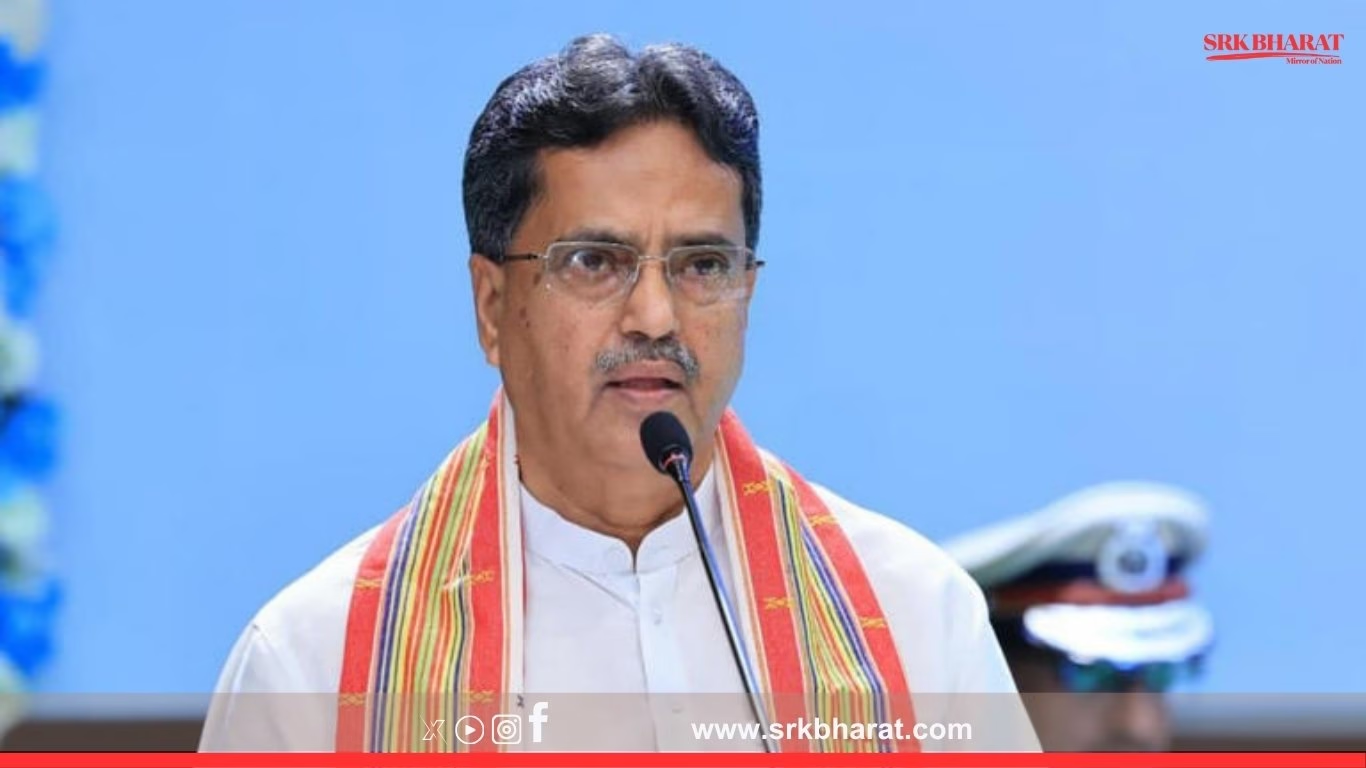
Tripura has taken a pioneering step in legal reform by hosting India’s first state-level exhibition on the newly enacted criminal laws—Bharatiya Nyaya Sanhita (BNS) 2023, Bharatiya Nagarik Suraksha Sanhita (BNSS) 2023, and Bharatiya Sakshya Adhiniyam (BSA) 2023. Chief Minister Dr. Manik Saha inaugurated the five-day exhibition at the Hapania Indoor Exhibition Hall in Agartala, calling it an “eye-opener” for citizens and stakeholders in the justice system.
The event, which began on September 10, 2025, aims to raise public awareness about the transformative changes introduced under Prime Minister Narendra Modi’s leadership. These laws, which came into effect on July 1, 2024, replace colonial-era legislations and are designed to enhance transparency, efficiency, and citizen-centric justice delivery.
Tripura Leads the Way in Legal Awareness
Tripura is the only state in India to organize such an exhibition, positioning itself at the forefront of legal reform and public education. CM Saha, who also serves as the state’s Home Minister, emphasized the importance of timely justice and the need to bridge gaps in the existing system.
“Tripura is in the front row in many sectors. Still, there are some gaps. This exhibition is an eye-opener. It’s not just about laws—it’s about empowering citizens with knowledge,” Saha said during his address.
He also shared insights from a recent meeting in Guwahati with Union Home Minister Amit Shah, where implementation strategies for the new laws were discussed. The exhibition, which runs until September 14, features interactive displays, legal workshops, and expert panels aimed at demystifying the new legal framework for the public.
Key Features of the New Criminal Laws
The three new legislations—BNS, BNSS, and BSA—are designed to modernize India’s criminal justice system. They incorporate provisions for digital evidence, prioritize cases involving women and children, and streamline investigation procedures.
| Law Name | Key Reform Highlights |
|---|---|
| Bharatiya Nyaya Sanhita (BNS) | Replaces IPC; introduces community service, expands definitions of offenses |
| Bharatiya Nagarik Suraksha Sanhita (BNSS) | Replaces CrPC; mandates time-bound investigations, digital FIRs |
| Bharatiya Sakshya Adhiniyam (BSA) | Replaces Evidence Act; allows audio/video statements, digital documentation |
One of the most notable changes is the provision allowing police to record statements at the residence of vulnerable individuals—including senior citizens, women, minors, and persons with disabilities—rather than requiring them to visit police stations.
CM Saha’s Vision for Justice Reform
Dr. Saha praised the citizen-friendly nature of the new laws and reiterated Tripura’s commitment to implementing them effectively. “Justice delayed is justice denied. These laws are designed to ensure that justice is not only delivered but delivered on time,” he said.
He highlighted that the reforms would improve conviction rates, reduce pendency, and restore public trust in the legal system. The Chief Minister also noted that the laws include provisions for third-gender individuals and mandate completion of investigations in cases involving women and children within two months.
| Reform Area | Impact on Justice Delivery |
|---|---|
| Time-bound Investigations | Faster resolution of cases, reduced backlog |
| Digital Evidence Inclusion | Enhanced accuracy and transparency in trials |
| Vulnerable Witness Protection | Improved accessibility and dignity for marginalized groups |
| Community Service Penalties | Alternative sentencing for minor offenses |
Public Engagement and Educational Impact
The exhibition has drawn large crowds, including students, legal professionals, law enforcement officers, and civil society members. Interactive kiosks, mock courtrooms, and multilingual brochures have made the complex legal content accessible to all.
Legal experts from across the country have participated in panel discussions, offering insights into how the new laws will reshape legal practice. Workshops on digital FIR filing, evidence handling, and victim rights have been particularly popular among attendees.
| Exhibition Feature | Purpose and Audience |
|---|---|
| Mock Courtroom | Demonstrates trial procedures under new laws |
| Legal Workshops | Educates police, lawyers, and students on implementation |
| Interactive Kiosks | Provides real-time legal information to citizens |
| Multilingual Brochures | Ensures inclusivity across linguistic groups |
National Significance and Future Outlook
Tripura’s initiative has garnered praise from legal scholars and policymakers nationwide. By taking the lead in public education on criminal law reforms, the state has set a precedent for others to follow.
Legal analysts believe that such exhibitions can play a crucial role in bridging the gap between legislation and implementation. They also help dispel myths and misinformation surrounding legal changes.
Dr. Saha expressed hope that other states would replicate Tripura’s model. “We are proud to be the first, but we hope we won’t be the last. Legal awareness is the foundation of a just society,” he said.
Conclusion
Tripura’s state-level exhibition on the new criminal laws is more than a ceremonial event—it is a bold step toward democratizing legal knowledge and strengthening justice delivery. Under the leadership of CM Manik Saha, the state has demonstrated that governance is not just about policy but about people.
As the exhibition continues to inform and inspire, it serves as a reminder that legal reform must be accompanied by public engagement. Tripura’s example shows that with vision and commitment, even the most complex reforms can be made accessible and impactful.
Disclaimer: This article is based on publicly available information and official statements. All legislative interpretations are subject to judicial review and government clarification. Readers are advised to consult legal professionals for specific advice.

I don’t think the title of your article matches the content lol. Just kidding, mainly because I had some doubts after reading the article.