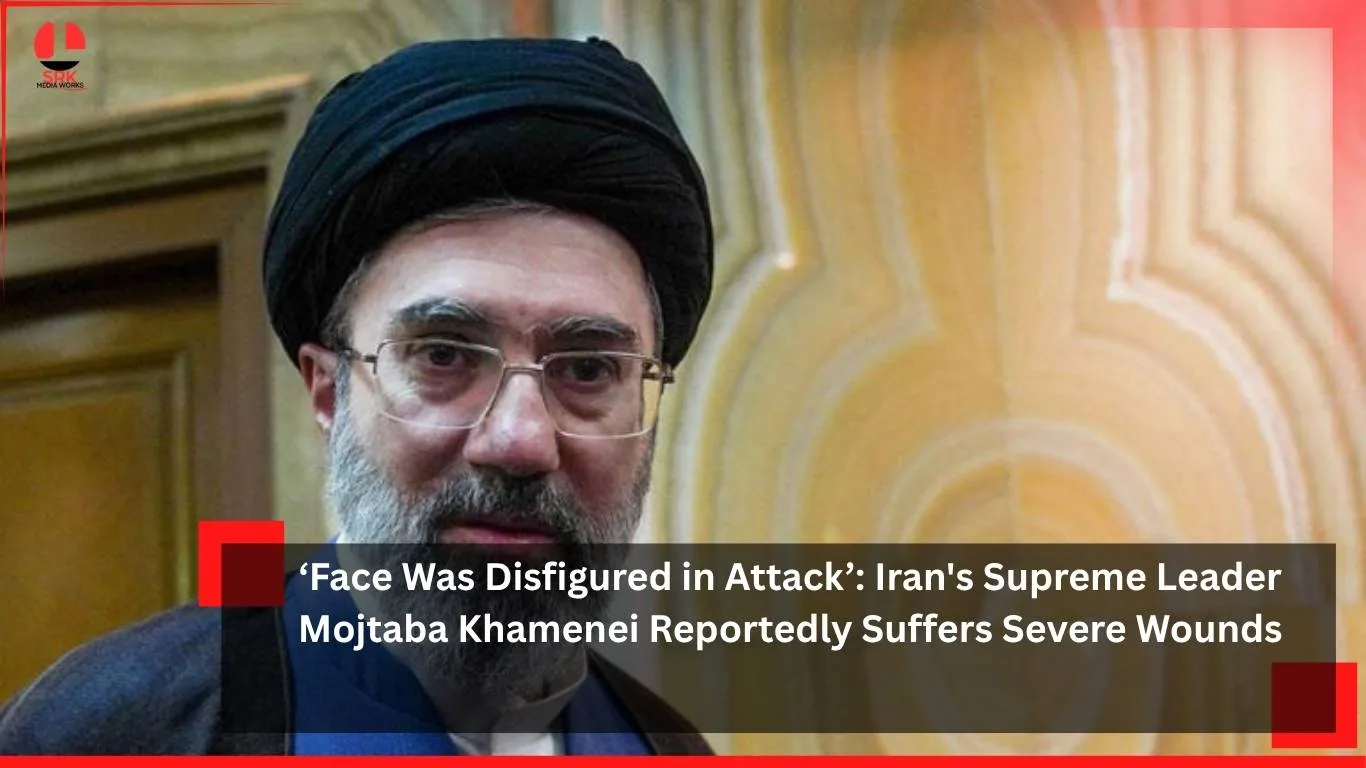
Reports emerging from Iran suggest that Mojtaba Khamenei, the Supreme Leader, has suffered severe and disfiguring wounds following a reported attack. The incident, which has drawn global attention, raises questions about Iran’s internal stability, succession politics, and the symbolism of leadership in a nation already facing geopolitical challenges.
The Reported Attack and Its Impact
According to accounts circulating in regional media, Mojtaba Khamenei’s face was disfigured during the attack, leaving him with visible wounds. While official confirmation remains limited, the news has sparked widespread speculation about both the nature of the attack and its implications for Iran’s political future.
The disfigurement of a leader carries symbolic weight in Iran, where physical presence and authority are deeply tied to perceptions of legitimacy. For a figure like Mojtaba Khamenei, who has long been seen as a potential successor to his father Ayatollah Ali Khamenei, such an incident could alter the dynamics of power.
Historical Context of Leadership Vulnerability
Iranian leaders have historically faced threats, both external and internal. From assassination attempts to political rivalries, the nation’s leadership has often been tested. The reported attack on Mojtaba Khamenei fits into this broader narrative of vulnerability, highlighting the risks faced by those at the pinnacle of power.
Symbolism of Disfigurement in Political Leadership
In many cultures, visible wounds or disfigurement can become symbols of resilience or weakness, depending on how they are framed. For Iran, the image of a wounded Supreme Leader could be interpreted in multiple ways:
- Resilience: A leader who survives an attack may be seen as strong and enduring.
- Weakness: Visible disfigurement may raise doubts about capability and authority.
- Martyrdom: In Iran’s political culture, suffering can be reframed as sacrifice for the nation.
International Reactions
Global observers are closely watching the situation. For the United States and other Western nations, the incident raises questions about Iran’s stability and the future of its leadership. Regional powers, meanwhile, are assessing how this might affect Iran’s role in Middle Eastern geopolitics.
Succession Politics
Mojtaba Khamenei has often been discussed as a possible successor to Ayatollah Ali Khamenei. His reported injuries could complicate succession plans, especially if they affect his ability to project authority. Iran’s political system, which blends religious authority with political power, places significant emphasis on the leader’s image and presence.
Comparative Leadership Analysis
| Leader | Incident | Impact on Authority | Public Perception |
|---|---|---|---|
| Mojtaba Khamenei | Reported disfiguring attack | Uncertain, may weaken succession prospects | Speculation and concern |
| Ayatollah Ali Khamenei | Survived assassination attempts | Strengthened authority | Seen as resilient |
| Global Leaders (e.g., Churchill, Roosevelt) | Physical challenges | Often reframed as resilience | Admired for endurance |
This comparison shows how physical vulnerability can either undermine or reinforce authority, depending on narrative framing.
Pivot Analysis: Political Stability After Leadership Injury
| Aspect | Before Attack | After Attack | Implications |
|---|---|---|---|
| Succession | Mojtaba seen as strong candidate | Injuries raise doubts | Possible shift in succession debates |
| Public Perception | Controlled image of authority | Disfigurement challenges image | May weaken legitimacy |
| International View | Stable leadership transition expected | Concerns about instability | Increased global scrutiny |
| Internal Politics | Consolidated power | Potential rivalries | Factional tensions may rise |
This pivot analysis highlights how the reported attack could reshape Iran’s political landscape.
Media Narratives
Iranian state media has remained cautious, while international outlets have amplified the story. The contrast in coverage reflects broader tensions between Iran’s desire to control narratives and global curiosity about its leadership.
Cultural Dimensions
In Iran, leadership is not only political but also spiritual. The Supreme Leader embodies religious authority, and physical disfigurement could challenge perceptions of divine favor or legitimacy. This cultural dimension adds complexity to the incident’s impact.
Potential Outcomes
Several scenarios could unfold:
- Rehabilitation and Resilience: Mojtaba Khamenei recovers and uses the incident to strengthen his image.
- Weakening of Succession Plans: His injuries reduce his viability as a successor.
- Rise of Rivals: Other figures within Iran’s political system gain prominence.
- Narrative of Sacrifice: The incident is reframed as evidence of his dedication to Iran.
Conclusion
The reported disfiguring attack on Mojtaba Khamenei is more than a personal tragedy—it is a political event with far-reaching implications. It raises questions about succession, legitimacy, and Iran’s future direction. Whether the incident strengthens or weakens his position will depend on how it is framed within Iran’s political and cultural narratives.
Disclaimer: This article is based on reports and analysis of political symbolism. It does not confirm the authenticity of the incident but explores its potential implications. The content is intended for informational purposes only, highlighting how leadership vulnerability can influence political dynamics. Readers should interpret the situation with caution, as official details remain limited.