


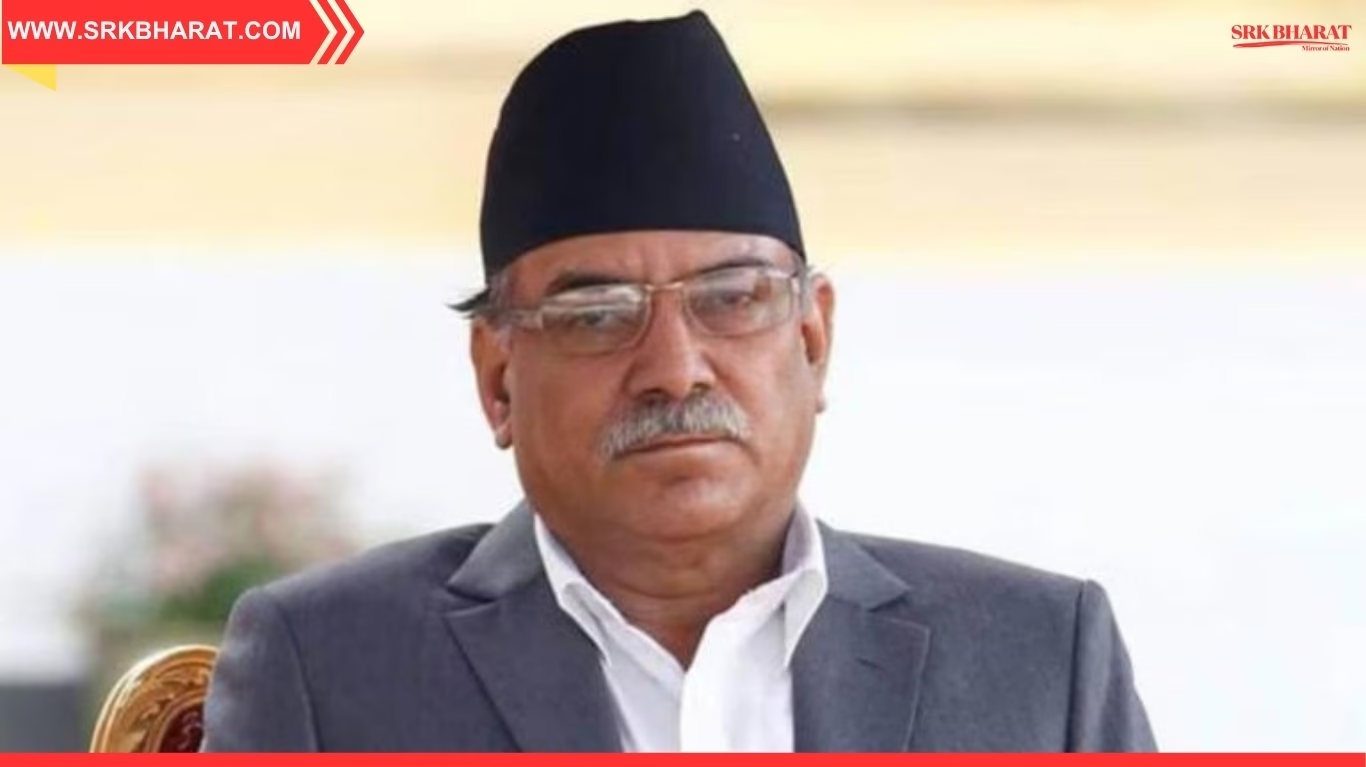
Former Nepal Prime Minister Pushpa Kamal Dahal ‘Prachanda’ has publicly questioned the Nepali Army’s inability to safeguard the government secretariat and other public properties during the recent wave of violent protests that rocked Kathmandu and other cities. Speaking to the media on October 10, 2025, Prachanda expressed gratitude for the Army’s protection of top political leaders but raised concerns over the breach of critical state infrastructure.
“If the Army could protect us, why couldn’t it protect the government secretariat and vital public institutions?” Prachanda asked, referring to the arson and vandalism that targeted the Parliament House and other administrative buildings during the unrest that followed K P Sharma Oli’s resignation.
🧠 Timeline of Nepal’s Political Crisis and Army Deployment
| Date | Event Description |
|---|---|
| Sep 8, 2025 | Anti-government protests erupt in Kathmandu |
| Sep 9, 2025 | Parliament House and secretariat attacked |
| Sep 10, 2025 | Army deployed across cities to restore order |
| Sep 30, 2025 | New Prime Minister sworn in |
| Oct 10, 2025 | Prachanda questions Army’s selective protection |
The protests, triggered by allegations of corruption and authoritarianism under Oli’s administration, escalated into violent clashes, prompting the Army to take control of security operations.
📊 Army’s Role During the Crisis
| Security Measure | Implementation Status |
|---|---|
| Protection of Political Leaders | Successfully executed |
| Crowd Control in Urban Areas | Partial success, delayed response |
| Safeguarding Government Buildings | Failed to prevent damage to secretariat |
| Restoration of Public Order | Achieved within 72 hours |
While the Army was praised for stabilizing the situation and facilitating a peaceful transition of power, its failure to protect key government assets has drawn criticism from political leaders and civil society.
🧾 Nepal Army’s Response to Prachanda’s Remarks
In a statement issued hours after Prachanda’s comments, the Nepali Army Headquarters said it was “objectively assessing the critical appraisal” and reaffirmed its commitment to national security. The Army cited “operational constraints and lack of prior intelligence” as reasons for the lapse.
| Army Statement Highlights | Summary |
|---|---|
| Acknowledgement of Criticism | “We respect democratic feedback.” |
| Justification for Lapses | “No prior intel on secretariat attack.” |
| Commitment to Reform | “Reviewing protocols for future readiness” |
The Army also emphasized that its primary mandate is national defense and that internal security is typically managed by the Nepal Police and Armed Police Force.
🗣️ Political Reactions and Public Sentiment
- CPN-UML Leaders: Accused Prachanda of politicizing a security lapse.
- Civil Society Groups: Called for an independent inquiry into the Army’s role.
- Public Sentiment: Mixed reactions, with many demanding accountability.
| Stakeholder | Reaction Summary |
|---|---|
| CPN-UML | “Prachanda is deflecting blame.” |
| Human Rights Watch Nepal | “Security forces must be held accountable.” |
| Kathmandu Residents | “We need better protection of institutions.” |
The incident has reignited debates on the civil-military balance and the need for clearer protocols during national emergencies.
🧭 What’s Next for Nepal’s Security Framework
- Parliamentary Inquiry: Likely to be initiated by opposition parties
- Security Reform Bill: Under discussion to redefine Army’s emergency role
- Public Hearings: Proposed by civil society to gather citizen feedback
- International Oversight: UNHRC may review Nepal’s crisis response mechanisms
The new government is expected to prioritize institutional resilience and security modernization in its first 100-day agenda.
Disclaimer
This news content is based on verified political statements, military briefings, and public records as of October 11, 2025. It is intended for editorial use and public awareness. The information does not constitute diplomatic advice, military analysis, or political endorsement and adheres to ethical journalism standards.