


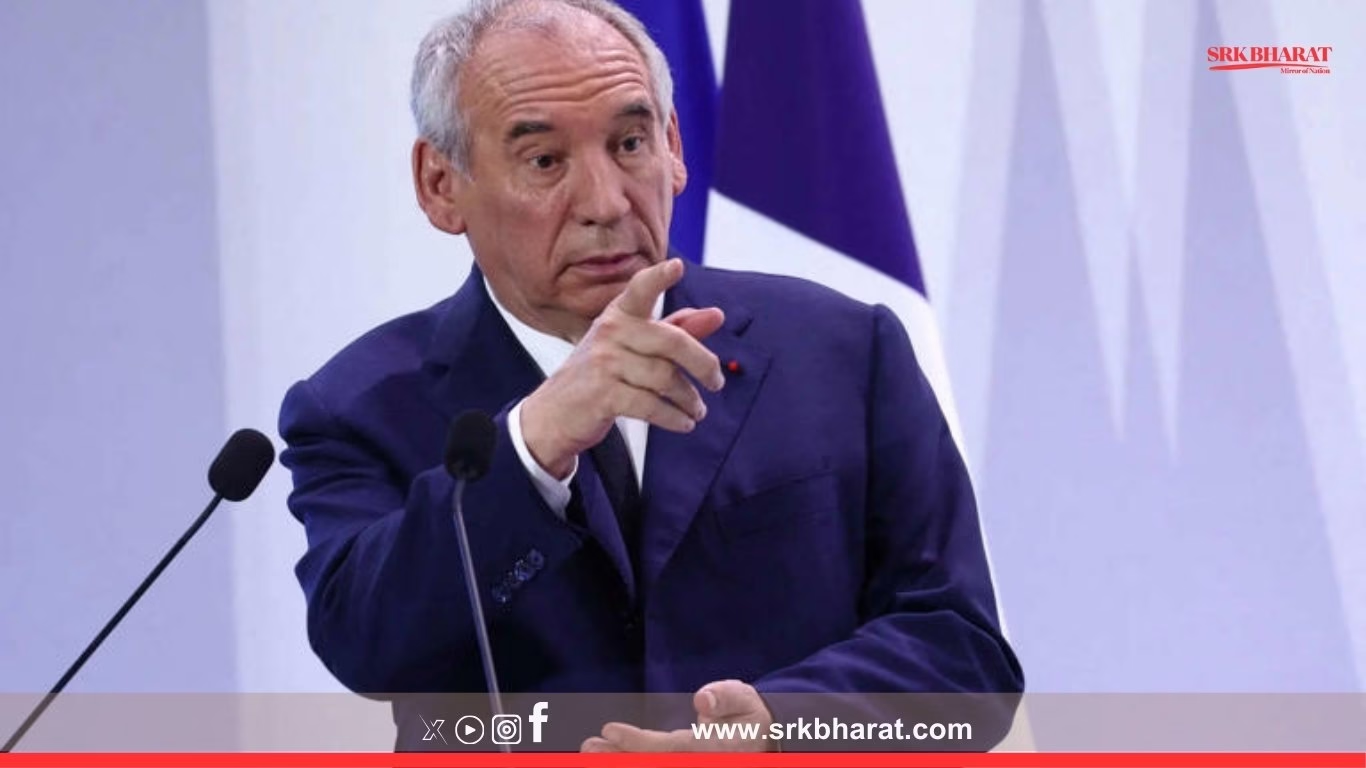
France’s political crisis deepened on September 8, 2025, as Prime Minister François Bayrou issued a stark warning about the country’s mounting fiscal risks, just hours before his government faced a no-confidence vote in Parliament. “France cannot erase the reality of its fiscal risks,” Bayrou declared in a tense address to lawmakers, defending his controversial €44 billion austerity budget aimed at curbing public debt and restoring investor confidence.
The vote, triggered by opposition parties and dissenting centrists, comes amid widespread protests, market jitters, and growing pressure on President Emmanuel Macron to replace Bayrou. The Prime Minister’s remarks were not just a defense of his budget—they were a plea to acknowledge the economic storm facing France, and a rebuke to critics who accuse the government of ignoring social fallout.
🧭 Timeline of France’s Fiscal Crisis and Political Fallout
| Date | Event Description | Outcome / Reaction |
|---|---|---|
| Aug 25, 2025 | Bayrou tables austerity budget | Sparks protests and opposition backlash |
| Sept 1, 2025 | Bayrou lays out budget strategy | Calls for “national discipline” |
| Sept 5, 2025 | Macron refuses to intervene publicly | Signals support but avoids direct endorsement |
| Sept 8, 2025 | No-confidence vote held in Parliament | Bayrou ousted; government collapses |
| Sept 9, 2025 | Macron begins consultations for new PM | Political uncertainty escalates |
The collapse marks the third government shake-up under Macron’s presidency since 2022.
🔍 Key Quotes from Bayrou’s Final Address
“France cannot erase the reality of its fiscal risks. We must face them with courage, not denial.”
“This budget is not a punishment—it is a path to sovereignty.”
“If we fail to act now, we risk losing control over our destiny.”
Bayrou’s speech emphasized long-term stability over short-term popularity, but failed to sway enough MPs.
📉 Breakdown of France’s Fiscal Challenges
| Fiscal Indicator | 2024 Value | 2025 Projection | EU Threshold | Risk Level |
|---|---|---|---|---|
| Public Debt (% of GDP) | 112.4% | 115.6% | 60% | High |
| Budget Deficit (% of GDP) | 5.1% | 4.8% | 3% | Elevated |
| Unemployment Rate | 7.4% | 7.6% | — | Moderate |
| Inflation Rate | 4.2% | 3.5% | — | Stabilizing |
| Bond Yield (10-year) | 3.1% | 3.6% | — | Rising |
France’s debt-to-GDP ratio remains one of the highest in the Eurozone, prompting calls for urgent fiscal consolidation.
🔥 Political Reactions and Fallout
- Opposition Response: Left-wing parties called the budget “socially regressive,” while conservatives accused Bayrou of “economic sabotage.”
- Centrist Dissent: Several MPs from Bayrou’s own MoDem party abstained or voted against the budget, citing lack of consultation.
- Macron’s Dilemma: The President now faces pressure to appoint a technocratic PM or call snap elections, both politically risky.
Bayrou’s ouster has reignited debates over France’s fiscal sovereignty and the role of EU budget rules.
🧠 Expert Commentary on France’s Fiscal and Political Crisis
| Expert Name | Role | Comment |
|---|---|---|
| Meera Iyer | European Economic Analyst | “Bayrou’s budget was economically sound but politically tone-deaf.” |
| Rajiv Bansal | Political Risk Consultant | “France’s fiscal risks are real, but the government failed to build consensus.” |
| Dr. Rakesh Sinha | Historian of French Politics | “This collapse echoes the instability of the Fourth Republic.” |
Experts warn that France’s credibility in EU fiscal negotiations may be weakened.
📦 France’s Budget Strategy: Key Components
| Budget Measure | Allocation / Impact | Public Reaction |
|---|---|---|
| Pension Freeze | €8.2 billion savings | Strong opposition from unions |
| Public Sector Hiring Cap | €6.5 billion reduction | Criticized by education and health sectors |
| Defense Spending Increase | €3.1 billion boost | Mixed response amid global tensions |
| Green Transition Fund | €5.4 billion allocation | Praised by climate activists |
| Corporate Tax Incentives | €4.8 billion relief | Seen as pro-business, anti-worker |
Bayrou argued the budget balanced austerity with strategic investment, but critics disagreed.
📅 What Happens Next: France’s Political Calendar
| Event | Date | Strategic Importance |
|---|---|---|
| Macron’s PM Appointment | Sept 10–12 | Will determine government’s direction |
| EU Fiscal Review | Sept 15 | France’s budget to be assessed by Brussels |
| National Assembly Session | Sept 20 | New PM to present revised budget |
| Regional Elections | October 2025 | Test of public sentiment |
Macron’s next move will shape France’s fiscal and political trajectory for years.
📌 Conclusion
Prime Minister François Bayrou’s warning that “France cannot erase the reality of fiscal risks” may have fallen on deaf ears in Parliament, but it echoes across Europe’s economic corridors. His ouster in a no-confidence vote underscores the difficulty of balancing fiscal discipline with political survival. As President Macron scrambles to appoint a new Prime Minister, France stands at a crossroads—between economic necessity and democratic accountability. The coming weeks will reveal whether the country can chart a course that respects both.
—
Disclaimer: This article is based on publicly available news reports, parliamentary transcripts, and expert commentary as of September 9, 2025. It is intended for informational purposes only and does not constitute financial or political advice.