

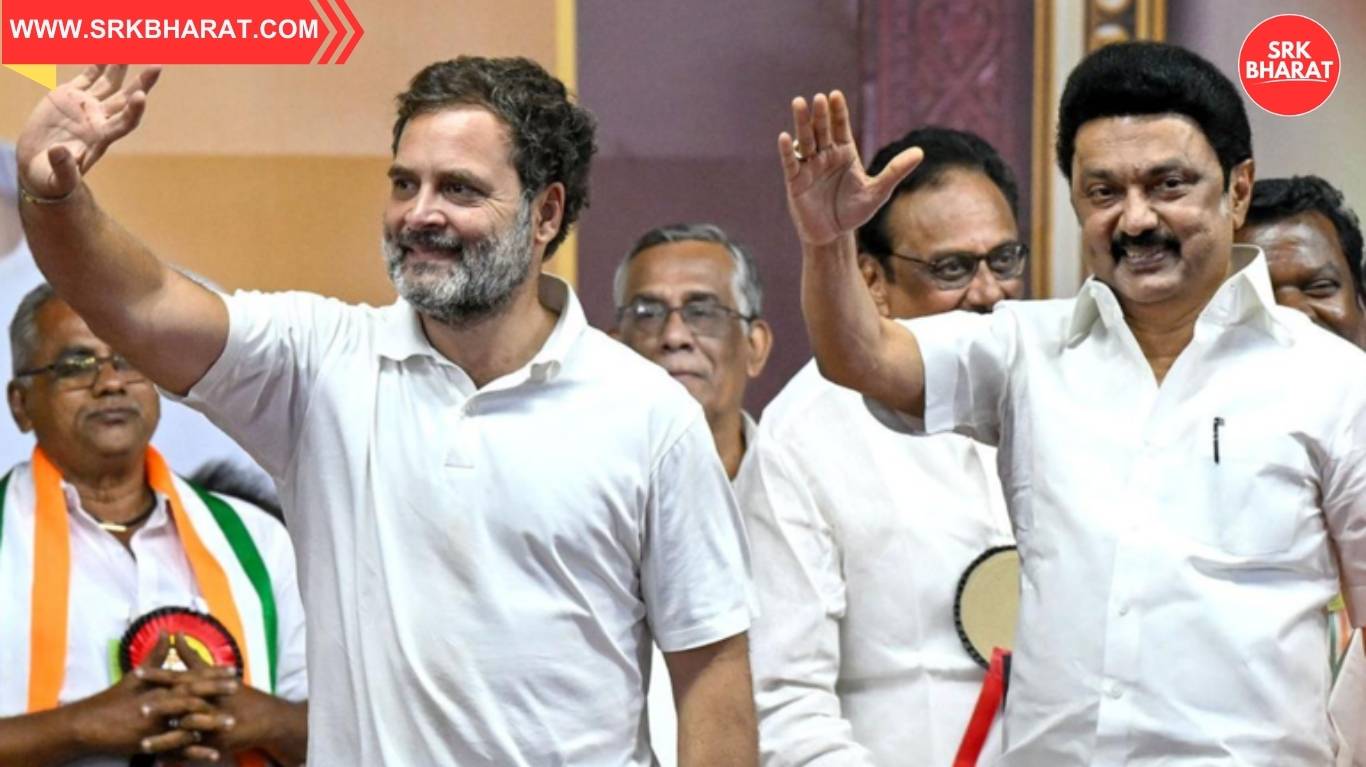
Tamil Nadu’s political landscape has been jolted by a fresh row between the Congress and the DMK, after Chief Minister M.K. Stalin termed the Congress’s demand for power-sharing in the state government a “conspiracy.” The remarks have triggered sharp reactions, with Congress leaders pushing back strongly, insisting that their demand is legitimate and rooted in coalition principles.
Background of the Row
- The DMK and Congress are long-time allies in Tamil Nadu, with the DMK leading the state government.
- Congress leaders recently raised the issue of power-sharing, seeking ministerial representation in the Tamil Nadu cabinet.
- Stalin dismissed the demand, calling it a “conspiracy” aimed at destabilizing the alliance.
- Congress leaders responded by asserting their right to representation, citing their role in strengthening the alliance during elections.
Congress’s Pushback
- Legitimacy of Demand: Congress leaders argue that coalition politics requires fair representation.
- Electoral Contribution: Congress claims its support was crucial in securing DMK’s victory.
- Alliance Principles: They emphasize that power-sharing is a standard practice in coalition governments.
- Public Messaging: Congress leaders have framed Stalin’s remarks as dismissive of democratic norms.
DMK’s Position
- Strong Majority: DMK believes its electoral mandate gives it full authority to govern.
- Stability Concerns: Stalin has suggested that power-sharing demands could destabilize governance.
- Narrative Control: By calling the demand a “conspiracy,” DMK aims to project strength and unity.
Comparative Analysis of Coalition Politics in India
| State/Region | Leading Party | Ally Party | Power-Sharing Status |
|---|---|---|---|
| Tamil Nadu | DMK | Congress | Disputed, no cabinet posts for Congress |
| Maharashtra | Shiv Sena | NCP, Congress | Shared ministerial positions |
| Bihar | JD(U) | RJD | Cabinet representation for allies |
| Karnataka | Congress | JD(S) | Shared governance in past alliances |
This table shows how coalition politics varies across states, with Tamil Nadu’s current dispute standing out as unusual compared to other alliances.
Implications of the Row
- Alliance Stability: The dispute could strain DMK-Congress ties ahead of future elections.
- Public Perception: Voters may view the row as a sign of disunity within the alliance.
- National Impact: Congress’s pushback could influence its broader strategy in coalition politics across India.
- Opposition Advantage: Rival parties may exploit the rift to weaken the DMK-Congress alliance.
Conclusion
The clash between the DMK and Congress over power-sharing in Tamil Nadu highlights the complexities of coalition politics. While Stalin has dismissed the demand as a “conspiracy,” Congress leaders insist on their rightful place in governance. The outcome of this dispute will shape not only Tamil Nadu’s political future but also the broader narrative of coalition politics in India.
Disclaimer
This article is based on publicly available information and journalistic analysis of the DMK-Congress row in Tamil Nadu. It is intended for informational purposes only and does not represent insider accounts or official party documents. Readers should view this as a balanced overview of the situation.