




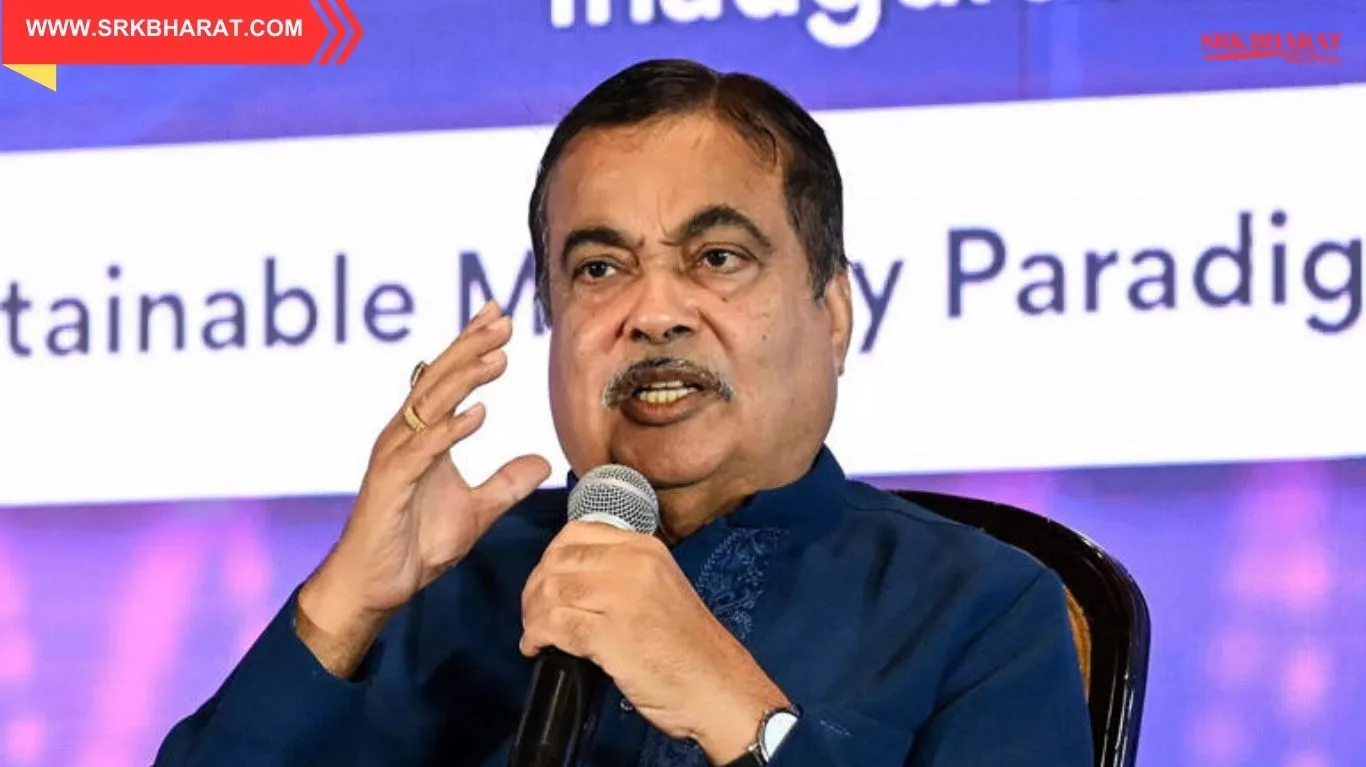
Union Minister for Road Transport and Highways Nitin Gadkari has emphasized the urgent need for India to reduce imports and aggressively push exports in order to achieve the ambitious target of becoming the world’s third-largest economy. His remarks highlight the government’s broader economic vision of self-reliance, industrial growth, and global competitiveness.
Background of Gadkari’s Statement
- India is currently the fifth-largest economy in the world, behind the US, China, Japan, and Germany.
- Gadkari underscored that cutting down on unnecessary imports and boosting exports across sectors such as manufacturing, agriculture, and technology is crucial for India’s economic leap.
- He pointed out that India’s trade deficit remains a challenge, with imports of items like electronics, crude oil, and luxury goods contributing significantly.
- The minister stressed that India must focus on value-added exports, innovation, and infrastructure development to achieve sustainable growth.
Key Highlights of Gadkari’s Call
| Indicator | Details |
|---|---|
| Current Rank | 5th-largest economy |
| Target Rank | 3rd-largest economy |
| Strategy | Reduce imports, boost exports |
| Focus Areas | Manufacturing, agriculture, technology, infrastructure |
| Broader Impact | Strengthens self-reliance, reduces trade deficit, enhances global competitiveness |
Import Cuts vs Export Push
| Factor | Import Cuts | Export Push | Long-Term Implication |
|---|---|---|---|
| Economic Impact | Reduces trade deficit | Increases foreign exchange reserves | Strengthens GDP growth |
| Industrial Growth | Encourages domestic production | Promotes global market presence | Enhances competitiveness |
| Employment | Creates local jobs | Expands opportunities in export industries | Boosts livelihoods |
| Innovation | Reduces dependency on foreign tech | Encourages R&D for global standards | Positions India as innovation hub |
| Global Standing | Shows resilience | Builds reputation as reliable exporter | Elevates India’s economic rank |
Why This Story Matters
- Economic Ambition: India’s goal of becoming the third-largest economy reflects its global aspirations.
- Policy Direction: Gadkari’s remarks align with the government’s “Make in India” and “Atmanirbhar Bharat” initiatives.
- Trade Balance: Reducing imports and boosting exports directly impacts India’s trade deficit.
- Global Competitiveness: Strengthening exports positions India as a major player in global supply chains.
- Future Outlook: Sets the stage for India’s economic roadmap over the next decade.
Import Cuts: The Strategy
- Gadkari emphasized reducing imports of items that can be produced domestically.
- Electronics, luxury goods, and certain agricultural products were highlighted as areas where India can achieve self-sufficiency.
- He called for stronger policies to encourage domestic manufacturing and reduce dependency on foreign suppliers.
- Import substitution is seen as a way to protect local industries and generate employment.
Export Push: The Opportunity
- India must focus on value-added exports rather than raw materials.
- Gadkari highlighted sectors like automobiles, textiles, pharmaceuticals, IT services, and renewable energy as key drivers.
- He stressed the importance of innovation, quality standards, and global branding to make Indian products competitive.
- Expanding into new markets in Africa, Latin America, and Southeast Asia was identified as a priority.
Expert Opinions
- Economists: Stress that balancing import cuts with export growth is essential for sustainable progress.
- Industry Leaders: Highlight the need for infrastructure and logistics improvements to support exports.
- Policy Analysts: Emphasize the importance of trade agreements and global partnerships.
- Entrepreneurs: Call for greater support for startups and SMEs to enter global markets.
Challenges Ahead
- Global Competition: Competing with established exporters like China and Germany.
- Infrastructure: Improving ports, logistics, and supply chains.
- Quality Standards: Meeting international benchmarks for products.
- Policy Implementation: Ensuring consistency in trade and industrial policies.
- Energy Dependency: Reducing reliance on imported crude oil.
Opportunities for India
- Manufacturing Growth: Strengthen domestic industries through Make in India.
- Agricultural Exports: Expand value-added food exports.
- Technology Leadership: Invest in AI, IT, and renewable energy exports.
- Global Partnerships: Forge trade agreements with emerging markets.
- Employment Generation: Create millions of jobs through industrial expansion.
Broader Context of India’s Economic Vision
- India’s ambition to become the third-largest economy aligns with its demographic advantage and growing middle class.
- Gadkari’s remarks reflect the government’s focus on infrastructure, industrial growth, and self-reliance.
- The strategy of import cuts and export push is consistent with global trends of economic nationalism and supply chain diversification.
- India’s success will depend on balancing domestic needs with global competitiveness.
Public Sentiment
- Citizens expressed optimism about India’s economic potential.
- Industry stakeholders welcomed the focus on exports but urged practical policy support.
- Critics cautioned against over-reliance on import substitution without innovation.
- Overall sentiment reflected cautious optimism and anticipation.
Media Coverage
- Headlines emphasized Gadkari’s call for import cuts and export push.
- Analysts debated the feasibility of India becoming the third-largest economy.
- Coverage highlighted the importance of infrastructure and innovation.
- The story continues to dominate discussions in economic and policy circles.
Conclusion
The call by Nitin Gadkari to cut imports and push exports underscores India’s ambitious roadmap to become the world’s third-largest economy. While challenges remain in infrastructure, global competition, and policy execution, the opportunities for manufacturing growth, technological leadership, and global partnerships are immense. Gadkari’s vision reflects India’s determination to strengthen self-reliance, reduce trade deficits, and elevate its global economic standing.
Disclaimer
This article is intended for informational purposes only and does not constitute financial or policy advice. Economic strategies, trade policies, and public sentiments are subject to change based on evolving circumstances. Readers are encouraged to follow official updates for accurate information. The author and publisher are not responsible for any decisions made based on this article.