





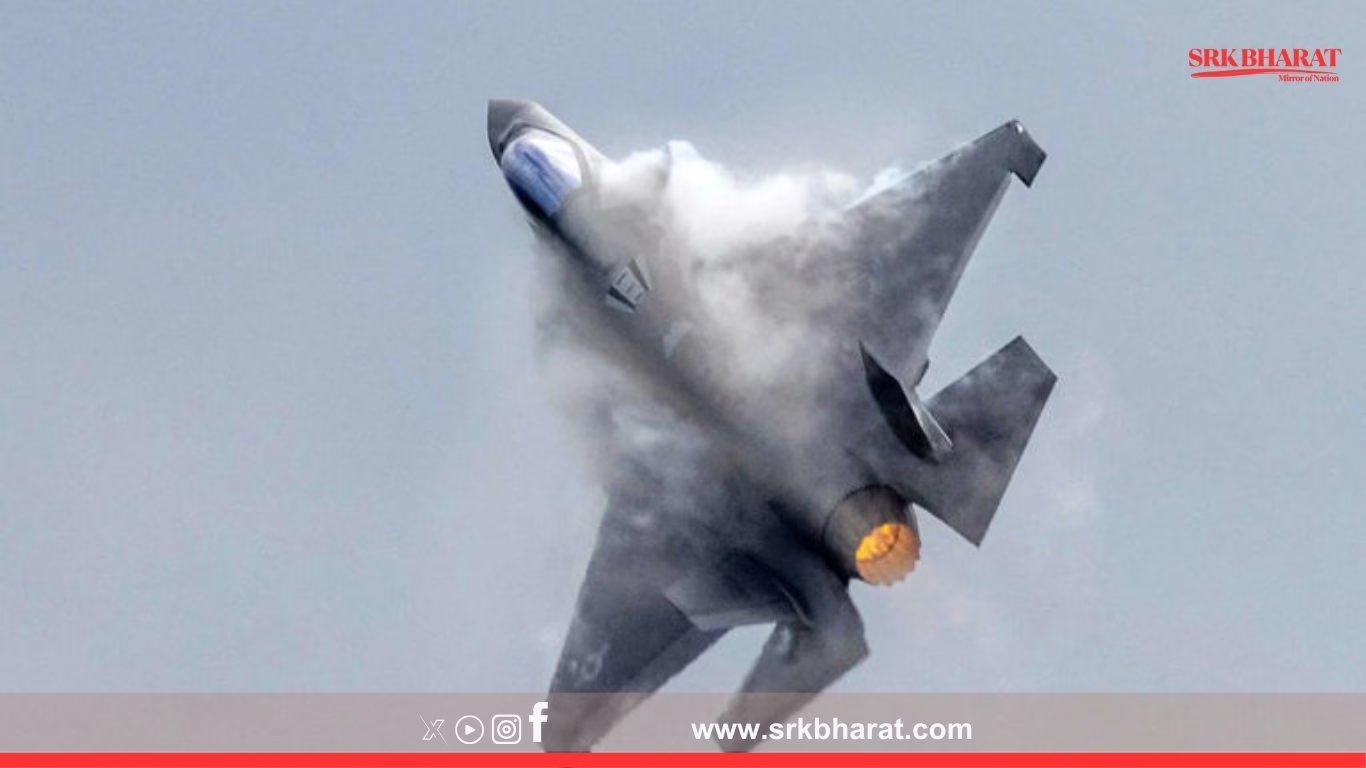
Germany’s defence ministry has confirmed it has no plans to purchase additional F-35 fighter jets beyond the 35 units already ordered, despite speculation that Berlin might expand its procurement to bolster NATO’s deterrence capabilities. The clarification came amid ongoing budget negotiations within Chancellor Olaf Scholz’s coalition and persistent debates on meeting NATO defence spending targets.
Background: Germany’s Existing F-35 Order
In 2022, Germany decided to buy 35 Lockheed Martin F-35A Lightning II jets as part of its €100 billion Zeitenwende military modernisation programme, launched after Russia’s invasion of Ukraine. The F-35s are intended to replace ageing Tornado aircraft and maintain Germany’s nuclear sharing responsibilities within NATO, allowing it to deploy US nuclear bombs stationed on German soil if required.
Why Is The Additional Purchase Speculation Arising Now?
Reports in sections of European defence media suggested Berlin was considering expanding its F-35 order due to:
- Heightened Threat Perceptions: Russia’s intensifying military posturing on NATO’s eastern flank.
- Pressure From NATO Allies: Especially the US, to strengthen air deterrence capabilities in Europe.
- Delays in Future European Fighter Programmes: The Future Combat Air System (FCAS), a joint French-German-Spanish project, faces repeated delays, pushing operational timelines into the late 2040s.
However, the German defence ministry has categorically denied any ongoing procurement process for additional F-35 units, stating that current acquisition plans align with budgetary ceilings and operational requirements.
Current German Combat Aircraft Fleet Modernisation Status
| Aircraft Type | Current Status | Replacement/Upgrade Plan |
|---|---|---|
| Tornado (85 units) | Operational since 1980s, nearing retirement | Being replaced by 35 F-35A units and 15 Eurofighter ECR variants |
| Eurofighter Typhoon (140+ units) | Operational; primary air superiority and multirole platform | Upgrades for AESA radar, electronic warfare, and new weapons integration ongoing |
| Future Combat Air System (FCAS) | In joint development phase with France and Spain | Expected entry into service post-2045 |
Why Is Germany Limiting Its F-35 Purchase?
- Budgetary Constraints: Defence spending is under scrutiny within the Scholz coalition, especially by fiscal conservatives aiming to reduce post-pandemic borrowing.
- Industrial Policy Priorities: Berlin is keen to prioritise European defence industrial base projects such as FCAS and the Eurodrone programme to maintain technological sovereignty.
- Nuclear Deterrence Sufficiency: Defence planners assess that 35 F-35s are adequate to fulfil nuclear sharing commitments under current NATO mission requirements.
NATO Context: How Does Germany Compare With Other F-35 Operators?
| NATO Country | F-35 Ordered Units | Operational Status |
|---|---|---|
| United States | 2,500+ | Multiple squadrons operational across USAF, Navy, Marines |
| United Kingdom | 74 | Squadrons operational on land and HMS Queen Elizabeth carrier |
| Italy | 90 | Operational with Air Force and Navy |
| Netherlands | 52 | Squadrons declared full operational capability |
| Germany | 35 | Delivery to begin in 2026, nuclear role certification by 2028 |
| Poland | 32 | First deliveries expected in 2026 |
| Denmark | 27 | First operational deployment in 2024 |
Implications for German Defence Strategy
The decision not to expand the F-35 order reflects Germany’s balanced procurement strategy focused on:
- Near-term nuclear deterrence assurance through the F-35 buy
- Long-term European strategic autonomy via FCAS development
- Continued Eurofighter upgrades to maintain air superiority in Central Europe
Challenges Facing German Defence Procurement
Germany’s defence procurement system remains under pressure due to:
- Delays in Budget Approvals: The Bundestag’s rigorous scrutiny processes have slowed disbursal from the €100 billion Zeitenwende fund.
- Industrial Bottlenecks: European defence manufacturers face skilled labour shortages and supply chain disruptions, delaying delivery timelines.
- Political Differences Within The Coalition: The Green Party emphasises arms control and restraint, while the Social Democrats and Free Democrats support stronger NATO contributions.
Industry Reaction to Non-Expansion of F-35 Orders
Lockheed Martin, the F-35 manufacturer, had earlier expressed optimism about expanding production lines to accommodate potential German order increases. Industry analysts note that:
- Europe remains a growth market for F-35 sales, with Finland, Switzerland, and Czechia joining the programme.
- Germany’s confirmation may shift Lockheed’s marketing focus to Eastern Europe and Asia-Pacific customers in the near term.
Future Outlook for German Air Power
With no additional F-35 units planned, Germany’s air power modernisation will depend on:
- Timely F-35 Deliveries: First aircraft expected to arrive by 2026 for pilot training, with operational capability by 2028.
- Eurofighter ECR Variant: Electronic Combat Role (ECR) upgrades for Eurofighter to replace Tornado ECR in SEAD missions.
- FCAS Programme Progress: Ensuring joint industrial commitments and political consensus for the sixth-generation fighter’s development.
European Strategic Autonomy vs Transatlantic Dependence
Germany’s decision reflects its dual strategic goal:
- Strengthening immediate NATO obligations through US-made platforms (F-35)
- Maintaining long-term European technological sovereignty through FCAS, despite political tensions with France over workshare distribution.
Defence experts argue that an excessive reliance on US platforms could undermine Europe’s quest for defence autonomy, while delays in European projects risk capability gaps as older fleets retire.
Conclusion
Germany’s announcement clarifies its air power modernisation trajectory amid tight budgets and complex coalition politics. While reaffirming commitment to NATO nuclear deterrence through its existing F-35 purchase, Berlin’s refusal to buy additional units highlights its strategic emphasis on European collaborative defence development and industrial autonomy. As defence spending debates continue, the challenge remains in aligning immediate operational needs with long-term technological independence to ensure credible deterrence and strategic resilience.
Disclaimer: This news article is based on official statements, publicly available procurement data, and defence analyst assessments. It does not reflect classified information or government-endorsed policy recommendations and is intended solely for informational and journalistic purposes.