





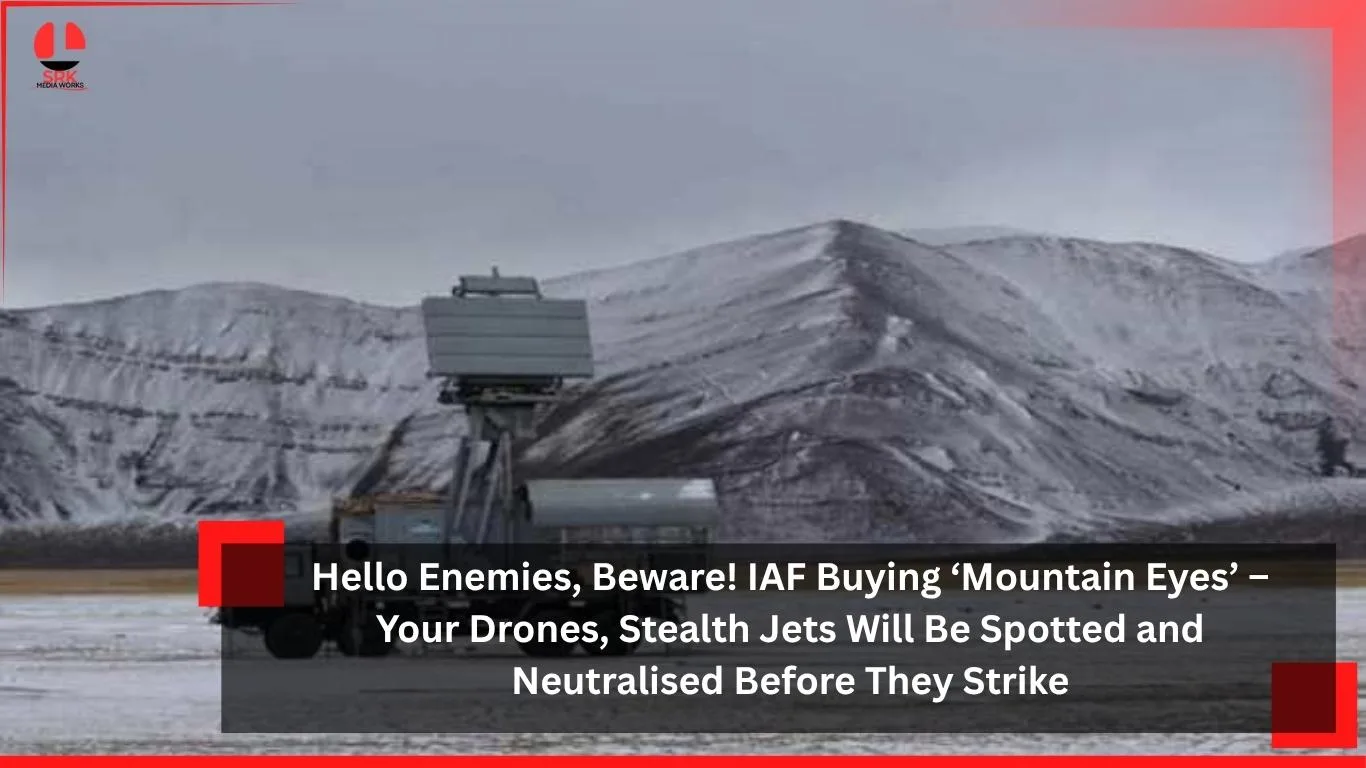
India’s defence preparedness is set to receive a massive boost with the Indian Air Force (IAF) moving ahead to acquire ‘Mountain Eyes’, a cutting-edge surveillance and detection system designed to spot and neutralise enemy drones, stealth aircraft, and other aerial threats well before they strike. This acquisition marks a significant leap in India’s air defence capabilities, especially in the backdrop of rising regional tensions and the increasing use of unmanned aerial vehicles (UAVs) in modern warfare.
What is ‘Mountain Eyes’?
‘Mountain Eyes’ is a next-generation airborne surveillance and detection system that integrates advanced radar, electro-optical sensors, and artificial intelligence-driven threat analysis.
- Detection Range: Capable of spotting stealth jets and drones at long distances, even in mountainous terrain.
- AI Integration: Uses machine learning algorithms to differentiate between civilian and military aerial objects.
- Neutralisation Capability: Can guide interceptor missiles and electronic warfare systems to disable threats.
- All-Weather Performance: Functions effectively in fog, rain, and high-altitude conditions.
Why the Acquisition Matters
India faces increasing challenges from adversaries deploying drones and stealth aircraft. The IAF’s move to acquire ‘Mountain Eyes’ is a proactive step to counter these threats.
- Drone Warfare: Pakistan and China have invested heavily in UAV technology.
- Stealth Aircraft: China’s J-20 stealth fighter poses a direct challenge.
- Border Security: Mountainous terrain along the Line of Actual Control (LAC) makes detection difficult.
- Strategic Deterrence: Enhances India’s ability to deter pre-emptive strikes.
Comparative Analysis: Global Surveillance Systems
| Country | System Name | Key Features | Deployment Status |
|---|---|---|---|
| India | Mountain Eyes | AI-driven detection, drone neutralisation | Acquisition phase |
| USA | AWACS (E-3 Sentry) | Long-range radar, global deployment | Operational |
| China | KJ-2000 | Airborne early warning, stealth detection | Operational |
| Russia | Beriev A-50 | Radar surveillance, electronic warfare | Operational |
India’s ‘Mountain Eyes’ positions the IAF alongside global powers in terms of advanced aerial surveillance capabilities.
Impact on Regional Security
- Enhanced Border Defence: Greater ability to monitor aerial activity along the LAC and LoC.
- Counter to Drone Threats: Neutralises UAVs used for surveillance and attacks.
- Strategic Advantage: Strengthens India’s deterrence posture against adversaries.
- Boost to Defence Industry: Opens opportunities for indigenous defence manufacturing partnerships.
Challenges Ahead
While ‘Mountain Eyes’ promises significant advantages, challenges remain:
- Integration: Ensuring seamless integration with existing IAF systems.
- Cost: High acquisition and maintenance costs.
- Training: Preparing personnel to operate advanced AI-driven systems.
- Countermeasures: Adversaries may develop new stealth technologies to evade detection.
Conclusion
The Indian Air Force’s acquisition of ‘Mountain Eyes’ is a bold step toward securing India’s skies against modern aerial threats. By combining advanced detection technology with AI-driven analysis, the system ensures that enemy drones and stealth jets will be spotted and neutralised before they can strike. This move not only strengthens India’s defence preparedness but also sends a clear message to adversaries: India is ready, vigilant, and technologically equipped to safeguard its sovereignty.
Disclaimer
This article is based on publicly available defence reports, military analysis, and expert commentary. It is intended for informational purposes only and does not constitute official defence policy, financial advice, or professional guidance. Readers should verify details independently and follow official defence sources for updates.