

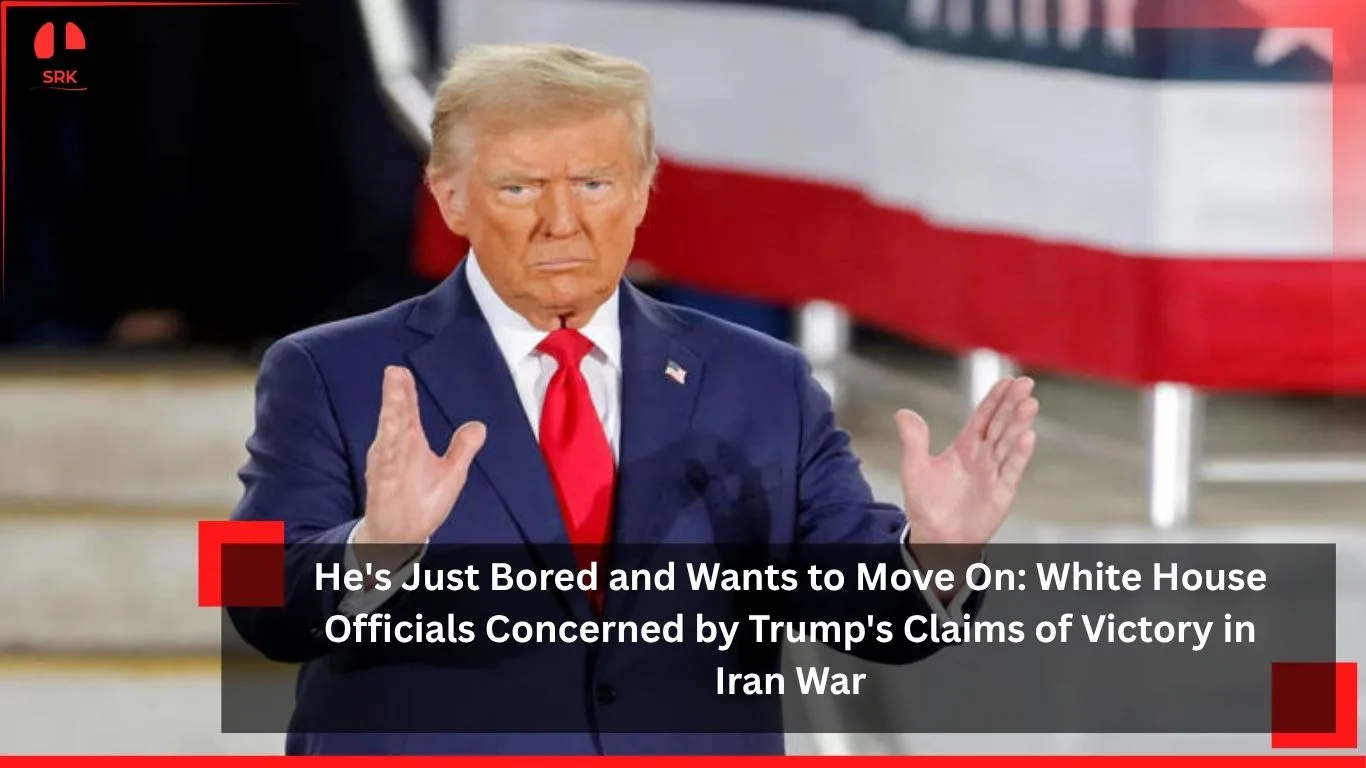
One month into the ongoing conflict with Iran, President Donald Trump has declared victory, a statement that has left White House officials deeply concerned. According to insiders, Trump’s insistence on portraying the war as a success is less about military achievements and more about his desire to move on from a draining confrontation. This claim of victory, despite the absence of a clear resolution, has sparked debates about strategy, credibility, and the future of U.S. foreign policy in the Middle East.
Trump’s Declaration of Victory
President Trump’s remarks about winning the war against Iran have raised eyebrows among military and diplomatic officials. While the administration initially pursued a hardline approach, the prolonged conflict has strained resources, disrupted global energy markets, and heightened tensions with Israel and Gulf allies. Officials suggest that Trump’s declaration is an attempt to shift focus away from the war and toward domestic priorities.
Key Points:
- Trump insists the U.S. has achieved its objectives.
- White House officials fear premature claims undermine credibility.
- Military leaders caution that Iran’s insurgent tactics remain a serious threat.
White House Concerns
Officials within the administration are reportedly worried that Trump’s statements could backfire. Declaring victory without a clear exit strategy risks emboldening Iran, confusing allies, and weakening U.S. leverage in diplomatic negotiations.
| Concern | Explanation |
|---|---|
| Credibility | Premature claims may erode trust among allies. |
| Military | Iran’s insurgent tactics continue to pose risks. |
| Diplomacy | Allies may question U.S. commitment. |
| Domestic Politics | Public skepticism over war outcomes could grow. |
Pivot Analysis: Stakeholder Narratives
| Stakeholder | Narrative | Implication |
|---|---|---|
| Trump | Claims victory, wants to move on | Political messaging, not military reality |
| White House Officials | Concern over credibility | Push for cautious approach |
| Iran | Resistance through insurgent tactics | Prolonged conflict likely |
| Israel | Security concerns | Continued strikes on Iranian assets |
| Global Markets | Energy disruption fears | Oil price volatility |
Iran’s Insurgent Tactics
Iran has adopted insurgent-style strategies, including drone strikes, cyber operations, and proxy militia attacks. These tactics are designed to exhaust U.S. and Israeli forces, disrupt energy supplies, and maintain leverage in negotiations. Despite Trump’s claims of victory, Iran’s ability to sustain asymmetric warfare suggests the conflict is far from over.
Impact on Global Energy Markets
The war has already disrupted oil shipments through the Strait of Hormuz, driving up prices and fueling inflation worldwide. Trump’s declaration of victory does little to address the ongoing energy crisis.
| Scenario | Oil Price Impact | Global Response |
|---|---|---|
| Limited disruption | Moderate increase | Strategic reserves tapped |
| Sustained insurgency | Sharp spike | Push for renewable adoption |
| Prolonged conflict | Severe disruption | Risk of global recession |
Domestic Political Implications
Trump’s insistence on portraying the war as a victory may be aimed at domestic audiences. By claiming success, he seeks to reassure voters and shift focus to economic and political issues at home. However, officials worry that public skepticism could grow if the conflict drags on and energy prices continue to rise.
Historical Parallels
Trump’s declaration echoes past instances where leaders prematurely claimed victory in conflicts, only to face prolonged struggles later. The Vietnam War and Iraq War serve as reminders of the dangers of underestimating insurgent tactics and overestimating short-term gains.
Conclusion
President Trump’s claim of victory in the Iran war reflects his desire to move on from a draining conflict, but White House officials remain concerned about the risks of premature declarations. With Iran continuing to employ insurgent tactics and global energy markets destabilized, the war is far from resolved. The tension between political messaging and military reality underscores the challenges of navigating modern conflicts in an interconnected world.
Disclaimer
This article is intended for informational and analytical purposes only. It does not represent the official stance of any government, institution, or individual mentioned. The content is based on geopolitical analysis, historical parallels, and public reports. Readers are encouraged to explore multiple perspectives for a comprehensive understanding of the issue.