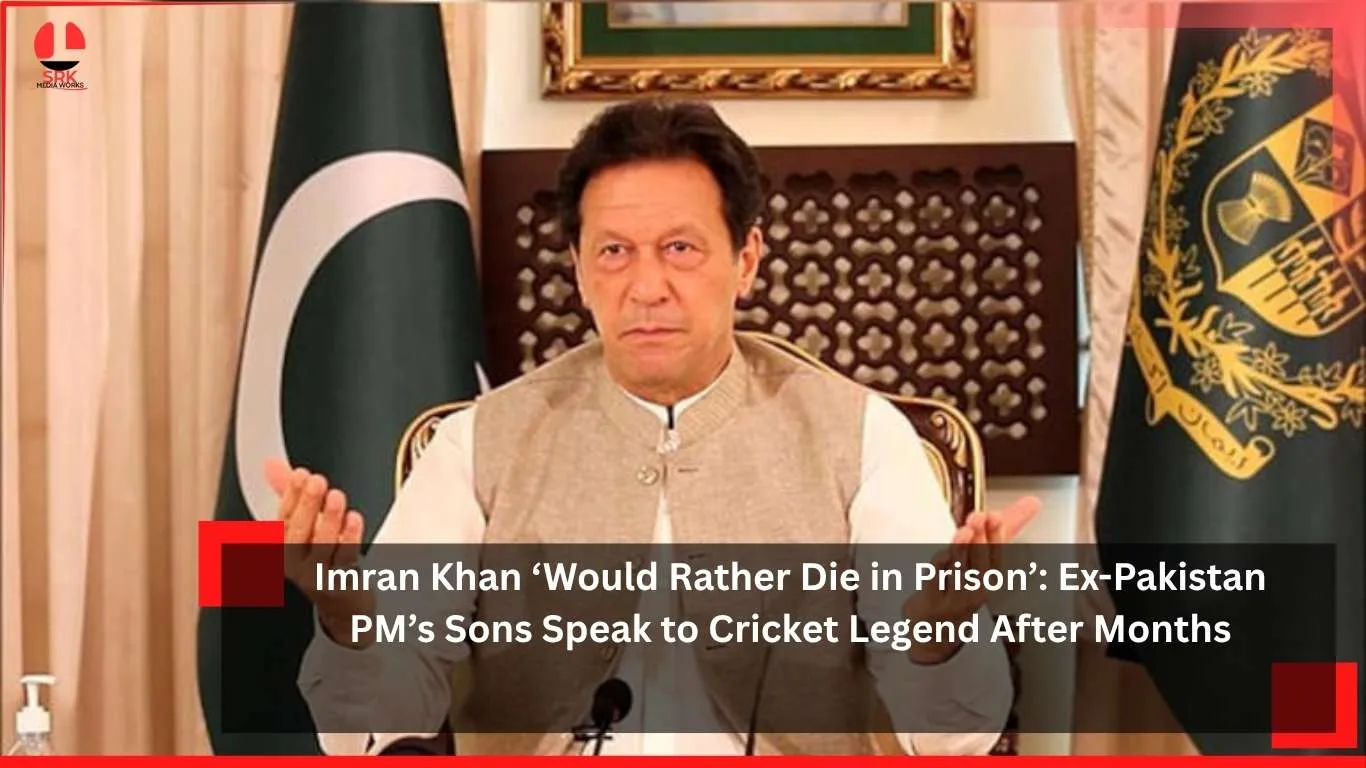
In a deeply emotional development, former Pakistan Prime Minister Imran Khan’s sons have spoken to their father for the first time in months, amid his ongoing incarceration. Khan reportedly told them that he “would rather die in prison” than compromise on his principles or accept deals that undermine his political struggle. This revelation has reignited debates about Pakistan’s political future, the resilience of Khan’s movement, and the personal toll of his imprisonment.
Context of the Conversation
Imran Khan, once celebrated globally as a cricket legend and later as Pakistan’s Prime Minister, has faced a turbulent political journey since his ouster. His imprisonment has been marked by allegations of corruption, political vendettas, and clashes with the country’s military establishment. For months, Khan’s sons—living abroad—had been unable to speak directly with him. Their recent conversation sheds light on Khan’s state of mind and his unwavering commitment to his cause.
Khan’s Defiant Message
During the conversation, Khan reportedly told his sons:
- He would not accept any compromise that undermines his political struggle.
- His imprisonment is a sacrifice for Pakistan’s democratic future.
- He remains committed to resisting pressure from powerful institutions.
- He views his struggle as part of a larger battle for justice and sovereignty.
This defiance underscores Khan’s determination to remain a central figure in Pakistan’s political narrative, even from behind bars.
Comparative Analysis of Political Leaders in Prison
| Leader | Country | Reason for Imprisonment | Outcome |
|---|---|---|---|
| Nelson Mandela | South Africa | Anti-apartheid activism | Became President |
| Aung San Suu Kyi | Myanmar | Pro-democracy activism | Global icon, later sidelined |
| Lula da Silva | Brazil | Corruption charges | Returned as President |
| Imran Khan | Pakistan | Corruption/political vendetta | Ongoing struggle |
This comparison highlights how imprisonment often strengthens the symbolic power of leaders, turning them into icons of resistance.
Pivot in Pakistan’s Political Landscape
Khan’s statement that he “would rather die in prison” represents a pivot in Pakistan’s political discourse. It signals that:
- He is unwilling to negotiate with the establishment.
- His supporters may rally further around his defiance.
- The opposition and ruling coalition face renewed pressure.
- Pakistan’s political crisis is far from resolution.
Sentiment Among Stakeholders
| Group | Sentiment Toward Khan | Likely Response |
|---|---|---|
| PTI Supporters | Loyal, inspired | Intensify protests |
| Military Establishment | Hostile, cautious | Maintain pressure |
| Opposition Parties | Divided | Exploit situation |
| International Observers | Concerned | Call for stability |
Broader Implications
- Domestic Politics: Khan’s defiance could prolong instability, with protests and political clashes intensifying.
- Judicial System: His imprisonment raises questions about judicial independence.
- International Perception: Pakistan’s global image suffers as democratic concerns grow.
- Generational Impact: Khan’s sons speaking out may symbolize continuity of his legacy.
Lessons from Khan’s Journey
- Charisma Matters: Khan’s cricket fame continues to bolster his political appeal.
- Defiance Inspires: His refusal to compromise resonates with supporters.
- Global Parallels: Leaders imprisoned for political reasons often emerge stronger.
- Uncertainty Persists: Pakistan’s political trajectory remains unpredictable.
Conclusion
Imran Khan’s declaration that he “would rather die in prison” than compromise highlights the depth of his conviction and the intensity of Pakistan’s political crisis. His sons’ conversation with him after months of silence adds a personal dimension to the struggle, reminding the world that behind the headlines lies a family enduring immense emotional strain. As Pakistan grapples with instability, Khan’s defiance ensures that his presence will continue to shape the nation’s political future.
Disclaimer
This article is intended for informational purposes only and does not represent official government policy or judicial conclusions. The content is based on general observations of political developments and public statements. Readers should note that claims made by political figures are subject to interpretation and verification.