


India and Russia have set an ambitious goal to boost bilateral trade to $100 billion by 2030, signaling a deepening economic partnership amid growing friction with the United States. The announcement came during Indian External Affairs Minister S. Jaishankar’s visit to Moscow, where he co-chaired the 26th round of the India-Russia Inter-Governmental Commission for Trade, Economic, Scientific, Technological and Cultural Cooperation (IRIGC-TEC).
The move reflects a strategic recalibration by both nations as they seek to reduce dependence on Western markets and navigate a shifting global order. With the US imposing punitive tariffs and criticizing India’s energy ties with Russia, New Delhi and Moscow are accelerating efforts to remove trade bottlenecks, finalize a free trade agreement (FTA) with the Eurasian Economic Union (EAEU), and expand cooperation across sectors including energy, defense, agriculture, and technology.
🧭 Strategic Goals and Trade Expansion Blueprint
India and Russia aim to increase annual trade by nearly 50% over the next five years, up from the current $65 billion. The roadmap includes tariff reductions, smoother payment mechanisms, and enhanced business-to-business engagement.
| Strategic Objective | Implementation Plan |
|---|---|
| $100 Billion Trade Target by 2030 | Expand bilateral trade volume across sectors |
| India-EAEU Free Trade Agreement | Terms of reference finalized during Moscow visit |
| Payment Mechanism Reform | Promote rupee-ruble transactions |
| Business Engagement | Regular forums and trade expos |
| Energy and Defense Cooperation | Long-term contracts and joint ventures |
Jaishankar emphasized that dependable and steady partners are essential in today’s volatile geopolitical climate, adding that India and Russia must “remove trade barriers and reduce non-tariff obstacles” to meet their shared goals.
📉 US-India Trade Tensions: A Catalyst for Realignment
India’s pivot toward Russia comes as its trade relationship with the US faces mounting pressure. President Donald Trump has imposed a 25% tariff on Indian goods and threatened to double it to 50% by August 27, a move that could severely impact India’s $85 billion annual exports to the US.
| Issue | Impact on India-US Trade |
|---|---|
| Tariff Hike (25% to 50%) | Makes Indian exports uncompetitive |
| Russian Oil Purchases | Criticized by US as aiding Putin’s war effort |
| Energy Diplomacy | India defends right to buy from cheapest source |
| Strategic Autonomy | India asserts non-aligned foreign policy |
India has defended its decision to buy discounted Russian oil, citing domestic inflation control and energy security. The US, however, views the trade as undermining sanctions against Moscow.
🧠 India-Russia Trade Composition and Growth Sectors
The bilateral trade basket is dominated by energy, defense, fertilizers, pharmaceuticals, and machinery. India imports crude oil, coal, and defense equipment from Russia, while exporting pharmaceuticals, tea, coffee, and engineering goods.
| Sector | Current Trade Volume | Growth Potential by 2030 |
|---|---|---|
| Energy (Oil & Gas) | $35 billion | $50 billion |
| Defense Equipment | $12 billion | $15 billion |
| Fertilizers | $6 billion | $10 billion |
| Pharmaceuticals | $4 billion | $8 billion |
| Agriculture & Food | $3 billion | $7 billion |
| Technology & IT | $2 billion | $5 billion |
India is also exploring joint manufacturing of defense platforms and nuclear energy cooperation, including new reactor projects and fuel supply agreements.
🔍 Diplomatic Signals and High-Level Engagement
Jaishankar’s Moscow visit is part of a broader diplomatic effort to strengthen ties with BRICS nations amid Western pressure. Prime Minister Narendra Modi is expected to host Russian President Vladimir Putin later this year, following their meeting at the 22nd Annual Summit in July 2024.
| Diplomatic Milestone | Outcome |
|---|---|
| Modi-Putin Summit (2024) | $100 billion trade target set |
| Jaishankar-Moscow Visit (2025) | FTA terms finalized, payment reforms |
| Putin’s Upcoming India Visit | Expected to sign energy and defense deals |
India has also requested expedited discharge of Indian nationals recruited into the Russian military, with four casualties reported this year. Russia has agreed to work through diplomatic channels to resolve the issue.
🧠 Global Reactions and Strategic Implications
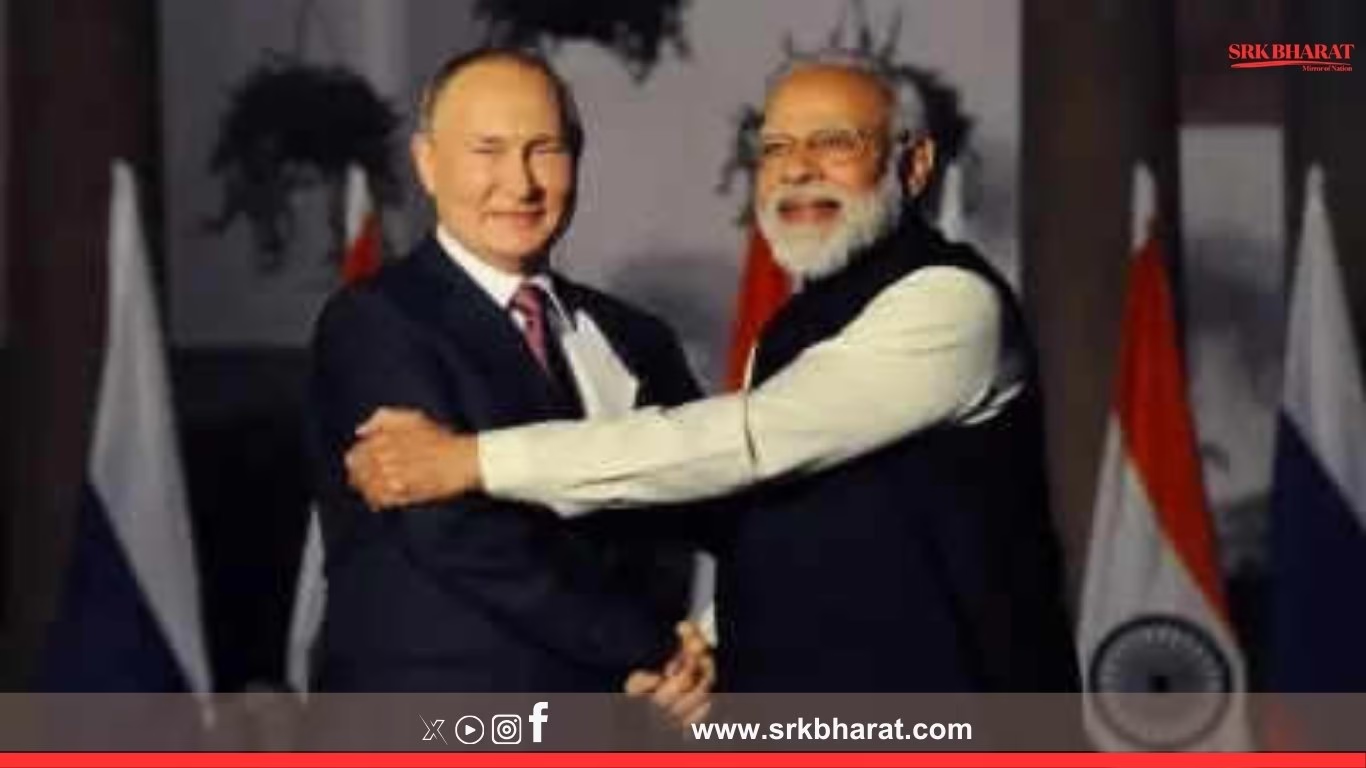
India’s growing closeness with Russia has drawn criticism from Washington and Kyiv. Ukrainian President Volodymyr Zelenskyy called Modi’s warm embrace of Putin a “devastating loss” to the peace process, while the US State Department expressed “concerns” over India’s continued engagement with Moscow.
| Country/Entity | Reaction Summary |
|---|---|
| United States | Concern over Russian oil and defense ties |
| Ukraine | Criticized Modi-Putin meeting |
| China | Welcomes India’s regional engagement |
| BRICS Nations | Support India-Russia trade expansion |
India has maintained that its foreign policy is guided by strategic autonomy and national interest, not alignment with any bloc.
📊 India-Russia Trade Timeline and Projections
| Year | Bilateral Trade Volume | Key Milestone |
|---|---|---|
| 2020 | $9.3 billion | Pre-pandemic baseline |
| 2022 | $35 billion | Surge in Russian oil imports |
| 2024 | $65 billion | Modi-Putin summit sets $100B target |
| 2025 | $70 billion (est.) | Jaishankar visit finalizes FTA terms |
| 2030 | $100 billion (goal) | Full implementation of trade roadmap |
The use of national currencies, especially rupee-ruble transactions, is expected to bypass Western sanctions and reduce dependence on the dollar.
📌 Conclusion
India and Russia’s push to elevate bilateral trade to $100 billion by 2030 marks a strategic pivot in global economic alignments. As US-India ties fray under tariff threats and geopolitical pressure, New Delhi is doubling down on dependable partnerships that offer energy security, defense cooperation, and diplomatic flexibility.
With the India-EAEU FTA on the horizon and high-level visits planned, the India-Russia trade corridor is poised to become a cornerstone of South-South cooperation. For India, the message is clear: strategic autonomy and diversified diplomacy are the keys to navigating an increasingly polarized world.
—
Disclaimer: This article is based on publicly available diplomatic and economic reports as of August 21, 2025. It is intended for informational purposes only and does not constitute investment or foreign policy advice.