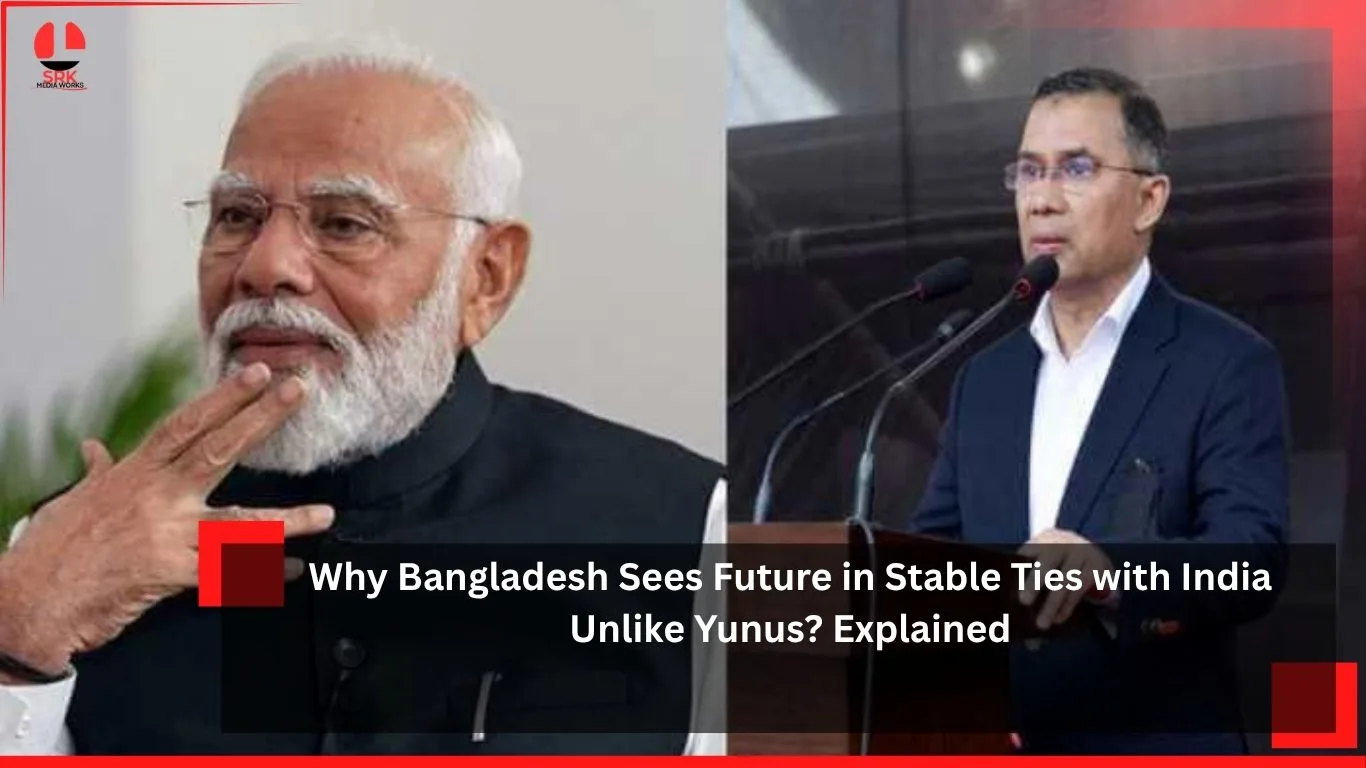


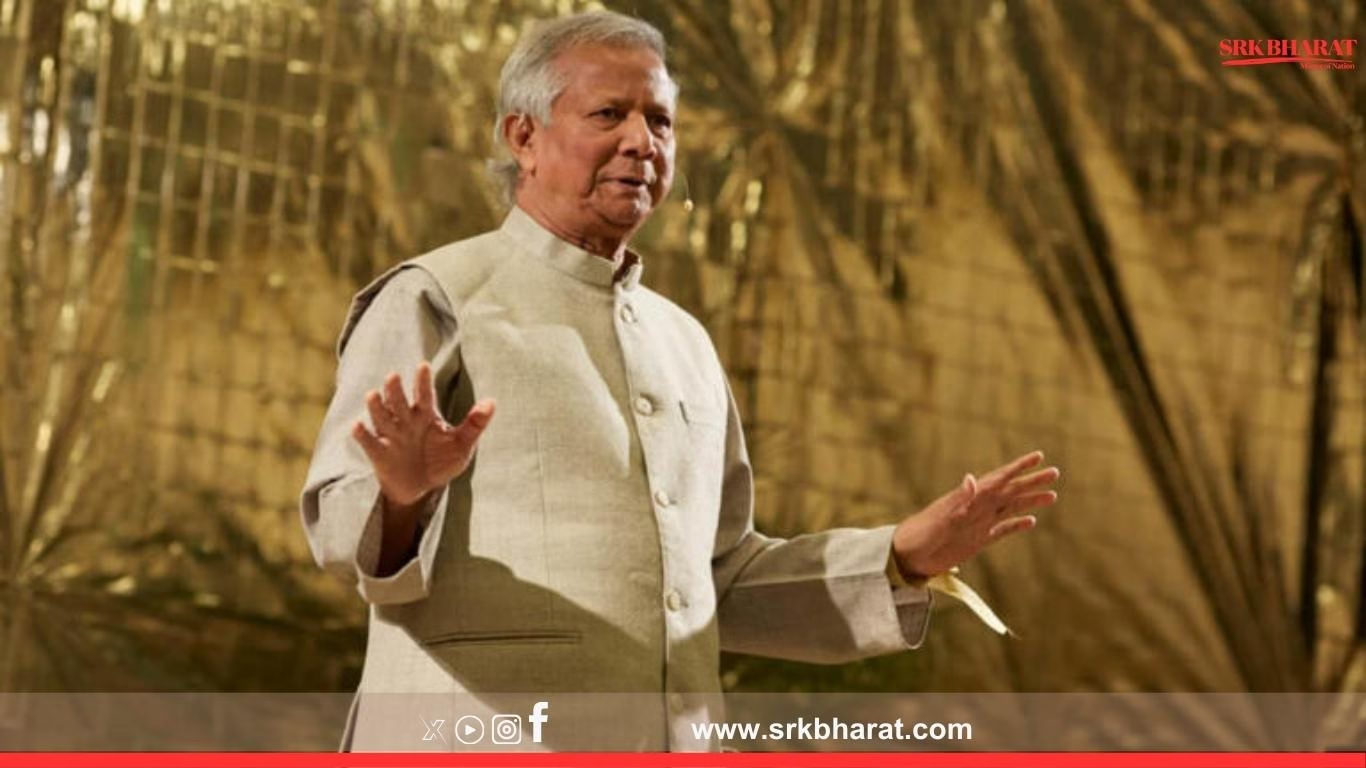
India-Bangladesh relations have entered a phase of visible strain following remarks by Bangladesh’s interim leader Muhammad Yunus, who blamed New Delhi’s decision to host former Prime Minister Sheikh Hasina for escalating tensions between the two neighbours. Speaking on the sidelines of the 80th United Nations General Assembly in New York, Yunus said India’s disapproval of the student-led protests that ousted Hasina in 2024 and its continued support for her have created “serious diplomatic discomfort.”
“Sheikh Hasina created all these problems and killed young people. India didn’t like what the students did, and now they are hosting her. That has created a lot of tension between India and Bangladesh,” Yunus said during a conversation hosted by Asia Society and Asia Society Policy Institute.
Hasina fled to India on August 5, 2024, after mass student protests toppled her 15-year rule. The protests, which began as a movement against alleged corruption and authoritarianism, quickly gained momentum across university campuses and urban centres. Following her departure, an interim administration led by Nobel laureate Muhammad Yunus was installed, promising fresh elections in 2026.
India-Bangladesh Diplomatic Timeline – Key Events Since Hasina’s Ouster
| Date | Event Description | Impact on Bilateral Relations |
|---|---|---|
| Aug 5, 2024 | Sheikh Hasina flees to India after student uprising | India grants refuge, sparking debate |
| Sep 2024 | Interim government formed under Muhammad Yunus | India maintains cautious engagement |
| Apr 2025 | PM Modi meets Yunus at BIMSTEC Summit in Bangkok | Reaffirms support for democratic Bangladesh |
| Sep 2025 | Yunus criticizes India’s role at UNGA | Diplomatic tensions surface publicly |
Yunus also dismissed reports labeling the protests as an “Islamic movement,” calling such narratives “fake news” and “propaganda.” “They say I am a Taliban too. These are lies. The students were fighting for democracy, not extremism,” he said.
India has so far maintained a measured stance. Prime Minister Narendra Modi met Yunus in April 2025 during the BIMSTEC Summit in Bangkok, reiterating India’s support for a “democratic, stable, peaceful, progressive and inclusive Bangladesh.” Modi also expressed concern over the safety of religious minorities in Bangladesh, urging thorough investigations into attacks on Hindus and other communities.
India’s Position on Bangladesh – Recent Statements and Engagements
| Indian Leader | Occasion / Platform | Key Message Delivered |
|---|---|---|
| PM Narendra Modi | BIMSTEC Summit, Apr 2025 | Support for inclusive democracy in Bangladesh |
| MEA Spokesperson | Weekly Briefing, Sep 2025 | No comment on Hasina’s asylum status |
| Indian Envoy to Dhaka | Private meeting with Yunus | Emphasis on regional stability and cooperation |
The interim government in Dhaka has formally requested India to extradite Hasina, accusing her of “crimes against humanity” during the crackdown on student protesters. India has not responded publicly to the request, and Hasina’s legal status remains unclear.
Yunus also took aim at India’s role in the stagnation of the South Asian Association for Regional Cooperation (SAARC), suggesting that political differences have hindered regional integration. “SAARC was born in Bangladesh. It’s a family of close members. We want to revive it, but politics of one country has stopped it,” he said.
SAARC Revival Push – Bangladesh’s Proposal vs India’s Concerns
| Issue Raised by Bangladesh | India’s Position / Response | Status of Resolution |
|---|---|---|
| Reactivation of SAARC | India cites Pakistan’s obstruction | No formal progress since 2014 |
| Youth Exchange Programs | India supports bilateral initiatives | Regional framework pending |
| Economic Integration | India prefers BIMSTEC over SAARC | Shift in strategic focus |
Political analysts believe the current strain is temporary but significant. “India and Bangladesh have shared deep ties, but the Hasina asylum issue has introduced a layer of mistrust. It’s a test of diplomatic maturity,” said Dr. Ranjan Bhattacharya, a South Asia expert at JNU.
Social media reactions have been polarized, with hashtags like #IndiaBangladeshTensions, #HasinaRefuge, and #YunusUNGA trending across platforms. While some users support India’s humanitarian gesture, others question the long-term implications for regional diplomacy.
Public Sentiment – Social Media Reaction to Yunus’ Statement
| Platform | Engagement Level | Sentiment (%) | Top Hashtags |
|---|---|---|---|
| Twitter/X | 2.1M mentions | 68% mixed | #IndiaBangladeshTensions #HasinaRefuge |
| 1.8M interactions | 72% critical | #YunusUNGA #SouthAsiaDiplomacy | |
| 1.6M views | 75% emotional | #RefugePolitics #BangladeshProtests | |
| YouTube | 1.4M views | 78% analytical | #IndiaBangladeshRelations #SAARCRevival |
Yunus has pledged to hold free and fair elections in 2026 and restore democratic institutions. India, while maintaining diplomatic engagement, is expected to tread cautiously, balancing its strategic interests with regional sensitivities.
As South Asia navigates a complex geopolitical landscape, the India-Bangladesh relationship will depend on how both nations manage the fallout of Hasina’s refuge and the broader implications of political transition in Dhaka.
Disclaimer: This article is based on publicly available diplomatic statements, verified news reports, and official engagements. It does not constitute foreign policy advice or political endorsement. All quotes are attributed to public figures and institutions as per coverage. The content is intended for editorial and informational purposes only.