





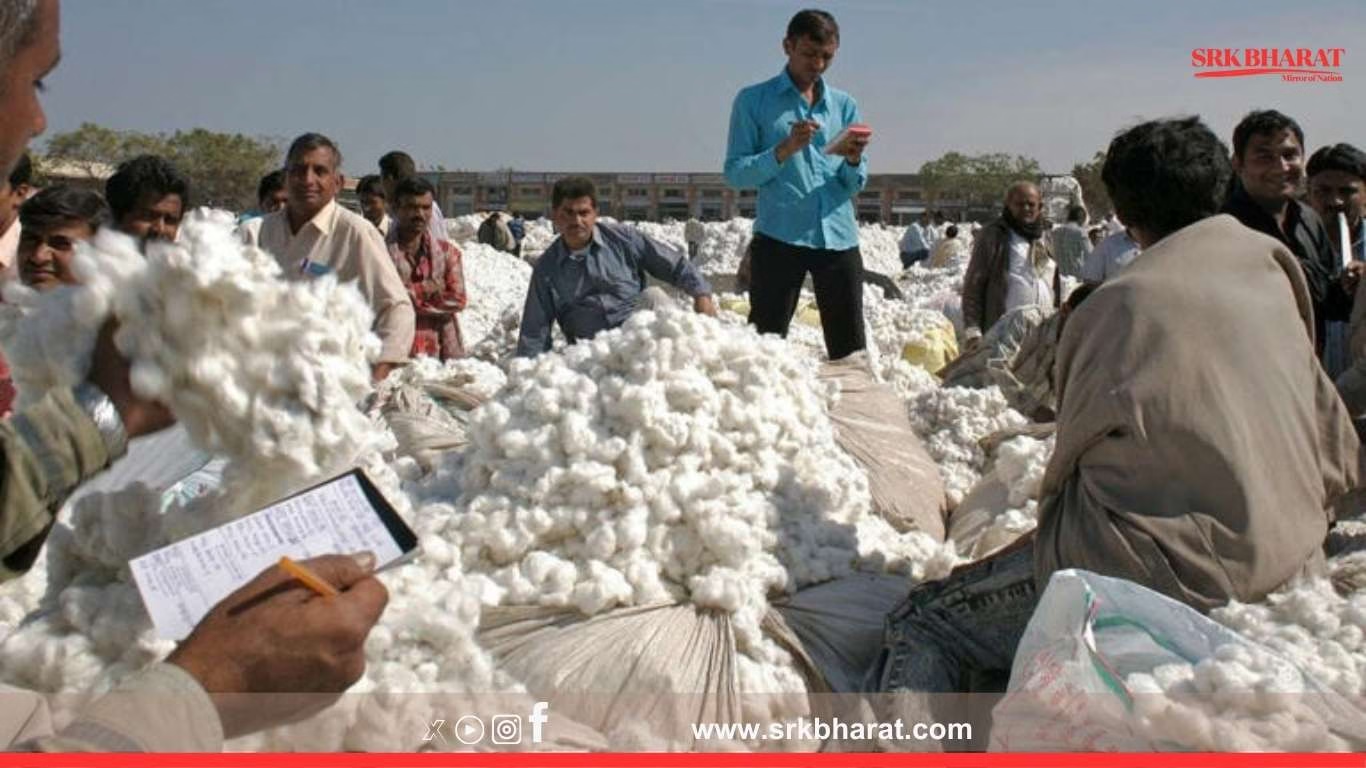
In a move aimed at supporting the domestic textile and apparel industry, the Government of India has extended the exemption on cotton import duty until December 2025, just a day after the United States imposed a 50% tariff on Indian cotton exports. The decision reflects New Delhi’s effort to balance domestic industry needs with global trade challenges, particularly as Indian cotton exporters grapple with shrinking access to the lucrative US market.
This extension is expected to ease raw material costs for India’s textile value chain, which employs millions of people and contributes significantly to the country’s exports. However, experts warn that the simultaneous imposition of tariffs by the US could lead to loss of export competitiveness, particularly in sectors like yarn, fabric, and apparel.
Why Cotton Import Duty Exemption Matters
India, while being one of the world’s largest producers of cotton, often struggles with supply fluctuations and price volatility. Climate change, erratic rainfall, and pest attacks have affected cotton yields in recent years. At the same time, rising global demand has pushed domestic cotton prices to record highs, hurting manufacturers.
By extending the exemption on import duties, the government aims to:
- Stabilize raw cotton supply for domestic textile mills.
- Reduce production costs for yarn and fabric manufacturers.
- Support export-oriented garment manufacturers competing globally.
- Prevent inflationary pressures on cotton-based consumer goods.
The exemption will allow mills to source cotton at competitive global prices, ensuring uninterrupted production cycles.
US Tariff Shock: A Double Blow for Indian Exporters
The US decision to impose a 50% tariff on Indian cotton exports comes as a major setback, considering the American market is a top destination for Indian textiles and apparel.
Industry bodies have expressed concern that these tariffs could:
- Reduce India’s competitiveness against rivals like Vietnam, Bangladesh, and China, which enjoy lower or preferential duties.
- Lead to cancellation of export orders from US-based buyers.
- Create surplus cotton stock domestically, putting downward pressure on farmers’ earnings.
- Shift global sourcing preferences towards alternative suppliers.
Comparative Snapshot: India’s Cotton Trade
| Indicator | Before Duty Exemption | After Duty Exemption | Impact of US Tariff |
|---|---|---|---|
| Import Cost of Cotton | Higher (due to 11% duty) | Lower (duty-free until Dec) | No impact |
| Domestic Mills’ Raw Material Availability | Limited | Improved | Neutral |
| Cotton Exports to US | Competitive | Same | Declines due to 50% tariff |
| Textile Exports Overall | Stable | Potential boost | Risk of slowdown |
Textile Industry Reactions
The textile sector, one of India’s largest employment generators after agriculture, has welcomed the import duty exemption but remains anxious about the US tariffs.
- Textile Exporters: Applauded the government’s swift move, noting that cheaper cotton imports will help maintain production cycles.
- MSMEs in Garment Sector: Warned that despite lower input costs, US tariffs will directly affect order flows.
- Farmers’ Concerns: Farmer groups have urged the government to safeguard domestic cotton growers, fearing cheap imports may depress local prices.
Long-Term Impact on Trade Balance
While duty-free imports may support domestic manufacturing in the short term, over-reliance on foreign cotton could strain the trade balance if not paired with higher-value textile exports.
Projected Outlook for India’s Cotton & Textile Trade
| Year | Cotton Import Value (USD Billion) | Textile Export Value (USD Billion) | Net Balance |
|---|---|---|---|
| 2023 | 2.1 | 40 | +37.9 |
| 2024 | 3.0 | 42 | +39 |
| 2025 (projected) | 3.5–4.0 | 45–46 | +41 to +42 |
The extension of duty exemption till December is expected to push imports higher, but if global demand weakens due to US tariffs, India may face challenges in maintaining a strong export balance.
Farmers vs Manufacturers: The Policy Dilemma
The government is now facing a delicate balancing act between protecting cotton farmers and ensuring competitiveness of the textile sector.
- Farmers want minimum support price (MSP) protection to offset risks of falling prices due to duty-free imports.
- Manufacturers insist that without cheap cotton, India cannot compete with global rivals.
This tug-of-war highlights the complexity of trade policy when global supply chains and domestic livelihoods intersect.
Global Trade Angle
The US tariffs are not just an economic issue but also reflect broader geopolitical tensions. Trade experts believe Washington’s decision is partly aimed at protecting its domestic cotton growers and reducing dependency on Asian suppliers.
At the same time, countries like Turkey, Egypt, and Brazil could benefit by filling the gap left by India in the American market.
Possible Government Measures Ahead
To mitigate risks, the Indian government is reportedly considering additional steps such as:
- Incentivizing value-added textile exports to diversify away from raw cotton.
- Exploring new trade partnerships with EU, Africa, and Middle East markets.
- Extending credit support schemes for MSME exporters.
- Reviewing export duty rebates to soften the blow of US tariffs.
If implemented, these measures could cushion India’s cotton sector from external shocks.
Conclusion
The extension of cotton import duty exemption till December signals India’s commitment to shielding its textile industry from global price volatility. However, the timing—just after the US imposed steep tariffs on Indian cotton—highlights the vulnerabilities of export-dependent sectors in an unpredictable global trade environment.
While manufacturers may benefit from cheaper raw material imports, farmers face the risk of suppressed domestic prices. On the other side, exporters must navigate a tougher US market where 50% tariffs could erode India’s competitive edge.
The coming months will test whether India can leverage duty-free cotton imports to sustain its textile production while also lobbying for fairer trade terms with global partners.
Disclaimer: This article is intended for informational purposes only, based on trade announcements and industry trends. It should not be considered financial, investment, or trade policy advice.



1xbet yeni giri? adresi 1xbet yeni giri? adresi .
клиника наркологии https://www.narkologicheskaya-klinika-23.ru .
1xbet com giri? 1xbet com giri? .
гидроизоляция подвала цена за м2 гидроизоляция подвала цена за м2 .
торкретирование стен торкретирование стен .
1xbet g?ncel 1xbet g?ncel .
наркологическая клиника анонимно http://www.narkologicheskaya-klinika-23.ru/ .
гидроизоляция подвалов цена gidroizolyaciya-podvala-cena.ru .
торкрет бетон цена торкрет бетон цена .
рулонные шторы виды механизмов http://www.avtomaticheskie-rulonnye-shtory1.ru .
1xbet yeni giri? adresi 1xbet yeni giri? adresi .
1xbet spor bahislerinin adresi http://1xbet-giris-2.com/ .
1xbet tr 1xbet tr .
1xbet com giri? http://1xbet-giris-8.com .
1xbet guncel http://www.1xbet-giris-2.com .
xbet xbet .
1xbet giri? adresi http://1xbet-giris-2.com/ .
рольшторы на окна купить в москве http://rulonnye-shtory-s-elektroprivodom7.ru .
bahis sitesi 1xbet bahis sitesi 1xbet .
продвинуть сайт в москве http://www.optimizaciya-i-seo-prodvizhenie-sajtov-moskva-1.ru .
маркетинговый блог https://www.statyi-o-marketinge7.ru .
контекстная реклама статьи контекстная реклама статьи .
продвижение в google optimizaciya-i-seo-prodvizhenie-sajtov-moskva-1.ru .
компании занимающиеся продвижением сайтов компании занимающиеся продвижением сайтов .
как продвигать сайт статьи https://statyi-o-marketinge6.ru/ .
продвижение сайта франция http://www.optimizaciya-i-seo-prodvizhenie-sajtov-moskva.ru/ .
согласование перепланировки нежилых помещений согласование перепланировки нежилых помещений .
icebet giri? icebet giri? .
valor games casino valor games casino .
surewin casino wallet http://www.surewin-online.com/ .
valor de fichas de casino por color http://www.valorslots.com/ .
1xbet giri? linki http://www.1xbet-7.com .
beep beep casino bonus http://www.beepbeepcasino-online.com .
valor bet casino app download https://valorslots.com .
1x giri? http://www.1xbet-7.com .
heaps of wins no deposit bonus codes heaps of wins no deposit bonus codes .
goliath casino login goliath-casino.com .
icebet33 icebet33 .
кухни на заказ в санкт-петербурге kuhni-spb-10.ru .
курсы seo курсы seo .
продвижение обучение kursy-seo-12.ru .
бюро переводов в москве teletype.in/@alexd78/iF-xjHhC3iA .
it переводчик услуги telegra.ph/Oshibka-lokalizacii-pochemu-vash-IT-produkt-ne-ponimayut-za-granicej-11-09 .
Топ-5 бюро переводов в москве teletype.in/@alexd78/iF-xjHhC3iA .
plane game money https://aviator-game-predict.com .
электрокарнизы для штор купить https://elektrokarniz2.ru/ .
прокарниз elektrokarniz1.ru .
гардина с электроприводом https://elektrokarniz-dlya-shtor11.ru/ .
автоматические жалюзи автоматические жалюзи .
умный дом шторы умный дом шторы .
мелбет http://www.v-bux.ru .
купить курсовую работу kupit-kursovuyu-1.ru .
написать курсовую работу на заказ в москве http://www.kupit-kursovuyu-6.ru/ .
заказать практическую работу недорого цены http://www.kupit-kursovuyu-7.ru/ .
купить курсовую москва купить курсовую москва .
aviator x http://www.aviator-game-winner.com/ .
flight game money aviator-game-deposit.com .
battery aviator game apk battery aviator game apk .
plane wali game https://aviator-game-deposit.com/ .
сайты по ремонту квартир в москве rejting-kompanij-po-remontu-kvartir-moskvy.com .
рольшторы на окна купить в москве http://www.avtomaticheskie-rulonnye-shtory11.ru .
ремонт квартир под ключ в москве отзывы http://rejting-kompanij-po-remontu-kvartir-moskvy.com/ .
рулонные шторы с электроприводом на окна http://www.avtomaticheskie-rulonnye-shtory11.ru .
рулонные шторы на электроприводе рулонные шторы на электроприводе .
metatrader 5 https://metatrader-5-downloads.com/ .
mt5 mac http://metatrader-5-downloads.com/ .
forex metatrader 5 http://www.metatrader-5-mac.com .
рулонные шторы виды механизмов https://avtomaticheskie-rulonnye-shtory11.ru .
mt5 mt5 .
электрические рулонные шторы купить москва avtomaticheskie-rulonnye-shtory11.ru .
meta trader 5 download http://www.metatrader-5-mac.com/ .
рулонные шторы с автоматическим управлением http://avtomaticheskie-rulonnye-shtory11.ru/ .
download mt5 for mac http://www.metatrader-5-mac.com/ .
курсовая работа недорого курсовая работа недорого .
сайт для заказа курсовых работ https://www.kupit-kursovuyu-8.ru .
написание курсовых работ на заказ цена http://www.kupit-kursovuyu-8.ru .
помощь курсовые http://www.kupit-kursovuyu-9.ru .
оценка ущерба от залива квартиры оценка ущерба от залива квартиры .
купить филлеры москва купить филлеры москва .
электрокарниз москва http://prokarniz36.ru/ .
оценка мебели после залива оценка мебели после залива .
электрокранизы prokarniz36.ru .
вызвать эксперта после залива вызвать эксперта после залива .
карниз для штор электрический http://elektrokarniz2.ru .
1 win букмекерская контора http://1win12043.ru
гардина с электроприводом https://provorota.su/ .
карниз для штор с электроприводом https://www.elektrokarniz2.ru .
электрокарнизы в москве электрокарнизы в москве .
карниз электроприводом штор купить https://elektrokarniz98.ru/ .
рулонные жалюзи купить в москве рулонные жалюзи купить в москве .
для рулонных штор rulonnye-shtory-s-elektroprivodom499.ru .
жалюзи на пульте жалюзи на пульте .
ролевые шторы ролевые шторы .
пластиковые окна рулонные шторы с электроприводом http://www.rulonnye-shtory-s-elektroprivodom499.ru .
кожаные жалюзи с электроприводом prokarniz23.ru .
рольшторы заказать rulonnye-shtory-s-elektroprivodom499.ru .
рулонные шторы с электроприводом на пластиковые окна https://www.rulonnye-shtory-s-elektroprivodom.ru .
бамбуковые электрожалюзи prokarniz23.ru .
отделка подвала http://www.gidroizolyacziya-podvala-iznutri-czena.ru .
гидроизоляция подвала цена [url=www.gidroizolyacziya-czena1.ru]гидроизоляция подвала цена[/url] .
сырость в подвале [url=https://gidroizolyacziya-podvala-iznutri-czena.ru/]https://gidroizolyacziya-podvala-iznutri-czena.ru/[/url] .
гидроизоляция цена работы за м2 [url=https://gidroizolyacziya-czena1.ru/]gidroizolyacziya-czena1.ru[/url] .
гидроизоляция подвала изнутри цена [url=https://www.gidroizolyacziya-podvala-iznutri-czena.ru]гидроизоляция подвала изнутри цена[/url] .
усиление проема [url=http://usilenie-proemov2.ru/]усиление проема[/url] .
помощь курсовые [url=http://kupit-kursovuyu-21.ru/]http://kupit-kursovuyu-21.ru/[/url] .
стоимость написания курсовой работы на заказ [url=www.kupit-kursovuyu-22.ru/]www.kupit-kursovuyu-22.ru/[/url] .
пин ап как вывести деньги https://pinup5010.ru
pin up yutuq olish yo‘li pin up yutuq olish yo‘li
pin up yuklash ios https://www.pinup5012.ru
пин ап промокод в приложении http://pinup5011.ru
пин ап как играть в авиатор http://pinup5013.ru/
пин ап бонус по промокоду pinup5014.ru
скачать лаки джет на андроид http://1win5522.ru
1win aviator demo uz 1win aviator demo uz
пин ап приложение не работает https://www.pinup5015.ru
1вин промокод на бонус 1win5512.ru
1win foydalanuvchi fikrlari 1win foydalanuvchi fikrlari
мелбет первая лига таблица мелбет первая лига таблица
1вин пополнение через карту https://1win5514.ru/
1 win официальный сайт скачать http://www.1win12045.ru
мелбет кж https://melbet5006.ru/
mostbet oficial http://www.mostbet2029.help
mostbet.com казино скачать https://mostbet2031.help/
бк теннесси скачать на андроид mostbet2030.help
mostbet bet [url=http://mostbet2032.help/]http://mostbet2032.help/[/url]
теннис букмекерская скачать теннис букмекерская скачать
que significa 1win que significa 1win
1win casino http://1win3001.mobi
1вин рулетка https://MAQOLALAR.UZ/
1win balansni ko‘rish http://www.SPORT-PROGRAMMING.UZ
1вин официальный сайт 1вин официальный сайт
1win kg http://1win12047.ru/
1win casino uganda https://1win5741.help/
1win casino https://1win5740.help
1win casino oyunları https://1win5761.help/
1win aviator qeydiyyat 1win aviator qeydiyyat
моней икс бонусы t.me/moneyx_tg .