



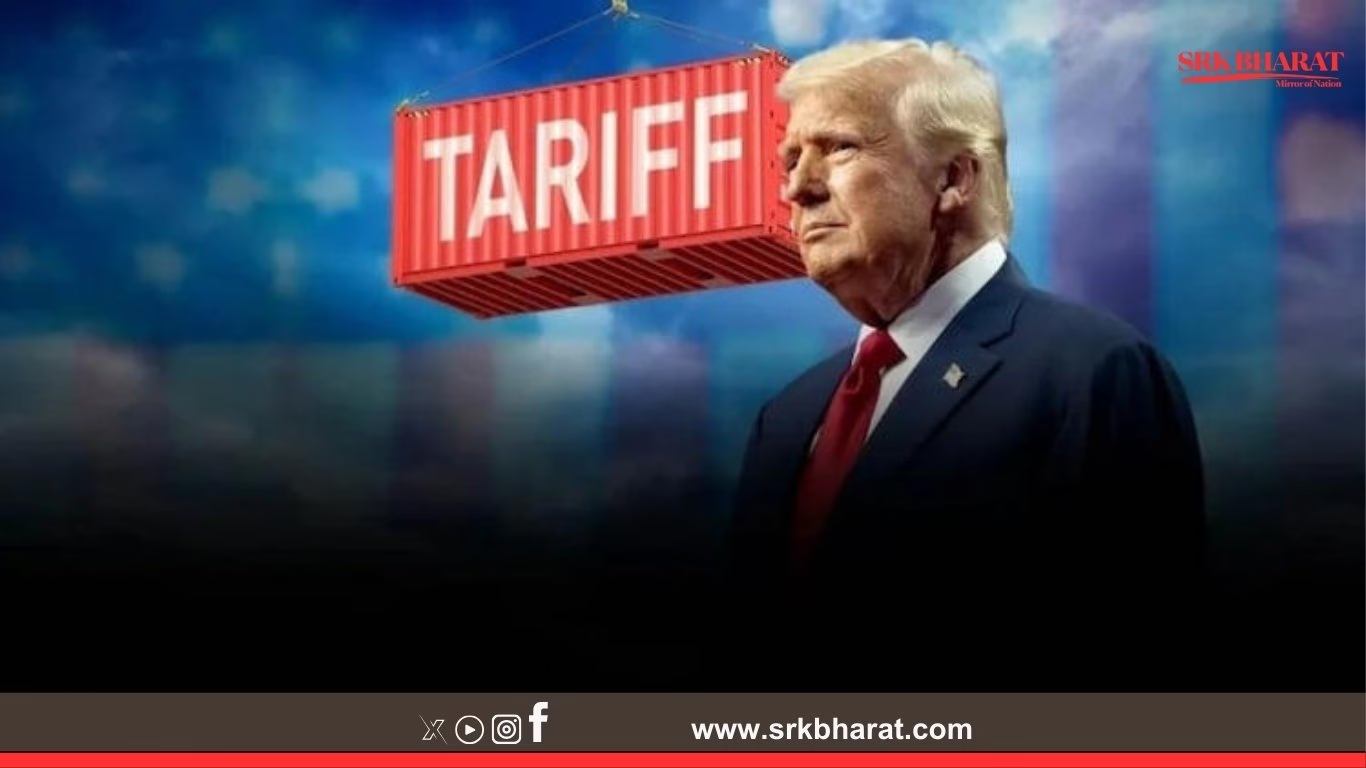
India and the United States are reportedly on the verge of finalising an interim trade agreement that could see tariffs on select Indian exports to the US slashed to below 20%, a significant step towards reviving stalled bilateral trade talks. According to senior officials familiar with the discussions, both nations are working towards a framework that could be announced later this year to provide immediate relief to exporters while broader negotiations on a full-fledged free trade agreement continue.
Background Of The Interim Trade Deal Proposal
Trade negotiations between India and the US have been underway for several years, with talks for a mini-deal first floated during the Donald Trump administration. The recent push stems from:
- India’s exclusion from the US Generalized System of Preferences (GSP) in 2019, which imposed higher duties on several Indian products.
- Rising bilateral trade deficits, with India aiming to maintain export competitiveness in textiles, leather goods, and engineering items.
- Geopolitical realignments, as both countries deepen strategic partnerships in defence and technology to counter China’s economic clout.
Key Features Expected In The Interim Agreement
| Focus Area | Possible Concessions & Provisions |
|---|---|
| Tariff Reduction | Duties on Indian textile and leather exports may be cut below 20%, reviving pre-GSP competitiveness. |
| Market Access | US firms may gain greater access to India’s agricultural and dairy sectors, albeit with quotas to protect domestic producers. |
| Digital Trade & Data | Interim provisions may lay groundwork for broader e-commerce and cross-border data flow negotiations. |
| Medical Devices | Possible removal or easing of price caps on select US medical devices in India to address longstanding trade irritants. |
Why The Deal Matters For India
1. Boost To Exporters
High US tariffs have hampered India’s competitiveness against Bangladesh, Vietnam, and Mexico in textiles and leather products. Sub-20% tariffs can:
- Reduce landed costs for Indian goods in US markets.
- Rebuild order volumes for MSME-dominated sectors like garments and footwear.
- Generate employment growth across key manufacturing clusters in Tamil Nadu, Karnataka, Uttar Pradesh, and West Bengal.
2. Geopolitical Signalling
The interim deal reinforces India’s growing strategic importance to the US, especially as both nations strengthen defence, semiconductor, and critical mineral supply chain partnerships.
3. Precursor To A Comprehensive Free Trade Agreement
Officials indicate that an interim agreement would:
- Build confidence on both sides.
- Resolve long-pending tariff and non-tariff barriers.
- Lay a smoother path for eventual full-scale FTA negotiations, covering services, intellectual property, digital trade, and investment protection.
Industry Reactions
Federation Of Indian Export Organisations (FIEO)
“Reducing tariffs on textiles, leather, and engineering goods is vital for MSME exporters to regain market share in the US. This interim deal will provide a critical demand boost.”
Textile Exporters
Exporters in Tiruppur and Surat welcomed reports of the tariff reduction:
- “Orders have been shifting to Bangladesh and Vietnam due to tariff differentials. A sub-20% US duty will partially restore Indian competitiveness,” said a leading knitwear exporter.
Agricultural Lobby Concerns
Farmers’ associations expressed cautious optimism but emphasised:
- No compromise on domestic dairy and poultry sectors, which remain politically sensitive with livelihood implications for millions.
Potential Challenges Ahead
| Issue | Impact On Negotiations |
|---|---|
| US Demands On Agriculture | Greater market access for American dairy and poultry could face resistance from Indian farmer groups and cooperatives. |
| Medical Device Pricing | US push to remove price caps on stents and implants may affect India’s affordable healthcare policies. |
| Digital Trade Rules | Disagreements over cross-border data flows and localisation mandates could delay broader trade pact components. |
Geopolitical Context
The US has been recalibrating trade partnerships to diversify supply chains away from China. India remains a key alternative manufacturing hub under its “China Plus One” strategy. The interim deal complements other strategic agreements in:
- Defence procurement under the iCET framework.
- Semiconductor collaboration, including Micron’s investment in Gujarat.
- Critical mineral supply chains, with recent pacts on lithium and rare earth exploration.
Impact On Bilateral Trade Numbers
| Year | US-India Bilateral Trade Value (USD Billion) | Key Export Sectors |
|---|---|---|
| 2021-22 | 119.5 | Gems & jewellery, textiles, pharma, engineering goods |
| 2022-23 | 128.5 | Same sectors with surge in engineering and electronics |
| 2023-24 (Projected) | ~135 | Growth dependent on tariff concessions and global demand recovery |
US Perspective On The Deal
For the Biden administration, the interim deal:
- Demonstrates responsiveness to Indo-Pacific allies.
- Helps address domestic industry lobbies seeking Indian market access in agriculture and medical devices.
- Supports broader US strategy to align trade with strategic security partnerships.
The Road Ahead
Trade ministry officials suggest:
- Draft text exchanges are in final stages, with legal and political vetting to follow.
- Official announcements are likely post high-level visits or summits scheduled later this year.
Expert View
Trade Policy Analyst
“An interim agreement is pragmatic. It delivers quick wins for both countries, sets a positive tone for larger FTA negotiations, and signals deeper bilateral commitment amid China-US tensions.”
Geopolitical Expert
“India’s diplomacy is balancing trade concessions with strategic gains, ensuring that no deal undermines domestic economic or political interests.”
Conclusion
The reported move towards a sub-20% tariff on key Indian exports to the US under an interim trade agreement marks a significant milestone in bilateral economic relations. It blends economic, strategic, and geopolitical objectives to create a win-win framework for both countries while ensuring India’s global trade competitiveness remains robust in a rapidly shifting world order.
Disclaimer: This news content is based on ongoing trade negotiations, expert analyses, and industry feedback. It is intended for general informational purposes only and does not constitute trade, business, or investment advice. Readers are advised to refer to official government releases and trade ministry notifications for finalised agreement details and sector-specific guidelines.