




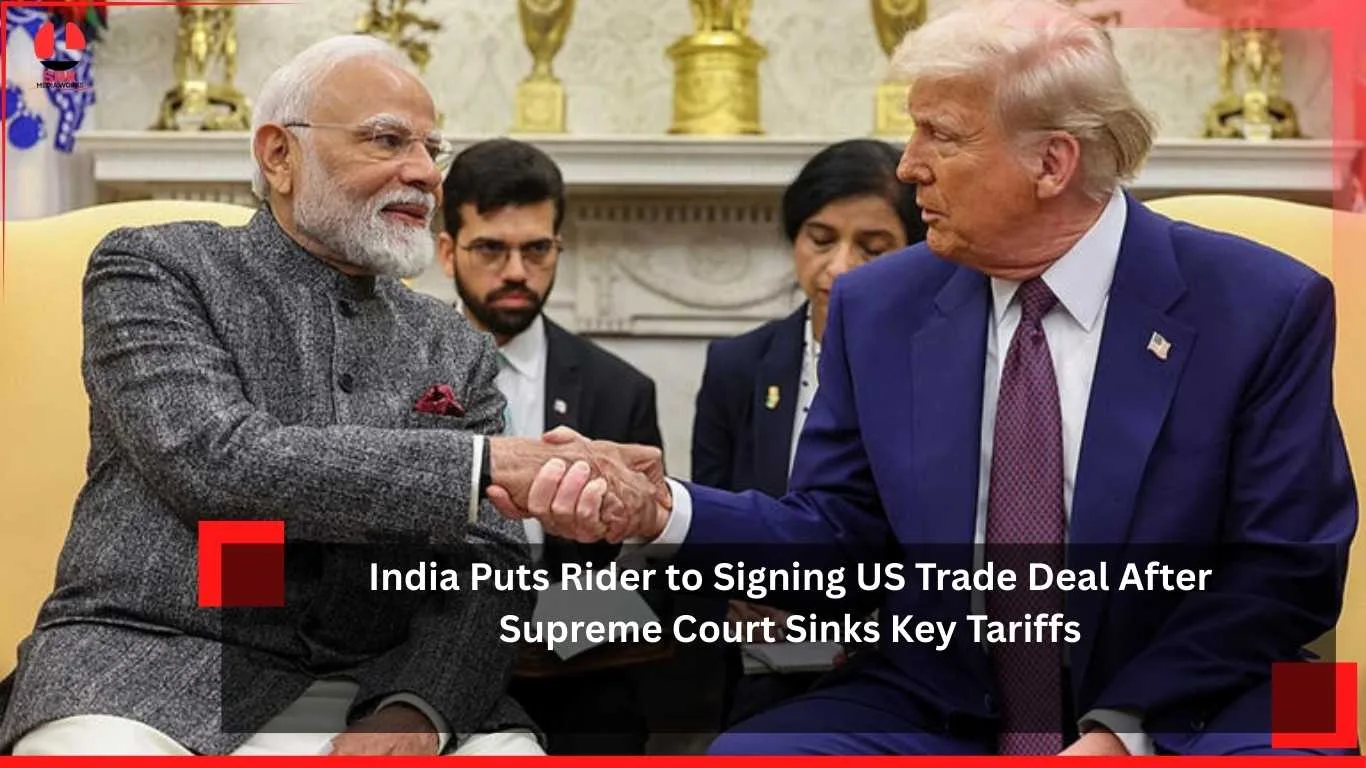
India has introduced new conditions before finalizing a trade deal with the United States, following a landmark Supreme Court ruling that struck down key tariffs. This development has reshaped the trajectory of bilateral trade negotiations, highlighting India’s cautious approach to balancing domestic economic interests with international commitments.
Background of the Supreme Court Ruling
The Supreme Court of India recently invalidated certain tariffs that had been imposed on imported goods, ruling them unconstitutional. These tariffs were considered crucial for protecting domestic industries, particularly in sectors such as agriculture, steel, and manufacturing.
The ruling has created a new legal and economic environment, forcing the government to reassess its trade strategies. With the US pushing for greater market access, India’s decision to add riders to the trade deal reflects its intent to safeguard national interests while complying with judicial directives.
India’s New Conditions
India’s riders to the trade deal reportedly include:
- Safeguards for Domestic Industries: Ensuring that tariff reductions do not harm local producers.
- Gradual Implementation: Phased reduction of tariffs rather than immediate elimination.
- Reciprocity Clause: Demanding equal concessions from the US in sectors like IT services and pharmaceuticals.
- Dispute Resolution Mechanism: Establishing a fair system to address disagreements under the deal.
Strategic Implications
For India
- Protects vulnerable sectors from sudden exposure to global competition.
- Reinforces sovereignty in trade policymaking.
- Enhances bargaining power in negotiations with Washington.
For the United States
- May delay the signing of the trade deal.
- Requires recalibration of expectations regarding market access.
- Could lead to pressure from US industries seeking immediate benefits.
Comparative Analysis of Trade Positions
| Dimension | India’s Position | US Position | Impact |
|---|---|---|---|
| Tariffs | Phased reduction | Immediate removal | Negotiation deadlock |
| Market Access | Conditional openness | Full access demanded | Tensions in talks |
| Services | Push for IT & pharma concessions | Focus on goods exports | Balanced reciprocity |
| Legal Framework | Compliance with Supreme Court ruling | Flexibility in trade law | Complex legal negotiations |
Pivot Analysis of Global Impact
| Factor | Positive for India | Positive for US | Neutral/Global Impact |
|---|---|---|---|
| Domestic Industry | Protection from sudden shocks | Access to Indian market | Stability in global supply chains |
| Diplomatic Relations | Enhanced bargaining power | Opportunity for deeper ties | Strengthened bilateral dialogue |
| Economic Growth | Balanced trade benefits | Expanded exports | Boost to global trade flows |
| Legal Compliance | Upholds constitutional law | Adjusts to Indian framework | Sets precedent for trade law |
Historical Context
India-US trade relations have often been marked by disputes over tariffs, subsidies, and market access. From agricultural exports to technology services, both nations have sought to maximize benefits while minimizing vulnerabilities. The Supreme Court’s ruling adds a new dimension, compelling India to negotiate within a stricter legal framework.
Possible Scenarios
- Delayed Deal: Negotiations may extend as both sides adjust to India’s new riders.
- Modified Agreement: A compromise could lead to a phased, balanced deal.
- Stalemate: Failure to reconcile differences may stall the trade pact indefinitely.
- Global Ripple Effect: Other nations may adopt similar legal safeguards in trade negotiations.
Public and Industry Reactions
- Indian Businesses: Welcomed the riders, seeing them as protection against unfair competition.
- US Corporations: Expressed frustration over delays, urging Washington to push harder.
- Economists: Viewed the move as pragmatic, balancing legal obligations with economic strategy.
- Civil Society: Called for transparency in negotiations to ensure public interest is safeguarded.
Conclusion
India’s decision to put riders on the US trade deal after the Supreme Court struck down key tariffs reflects a careful balancing act between domestic priorities and international commitments. While the move may delay the finalization of the agreement, it underscores India’s determination to protect its industries and uphold constitutional law. The outcome of these negotiations will shape the future of India-US economic relations and set a precedent for global trade diplomacy.
Disclaimer
This article is based on political statements, judicial rulings, and speculative analysis regarding India’s trade negotiations with the United States. The details of the trade deal remain unverified until officially signed, and interpretations are subject to change as new information emerges. The content is intended for informational and analytical purposes only.