

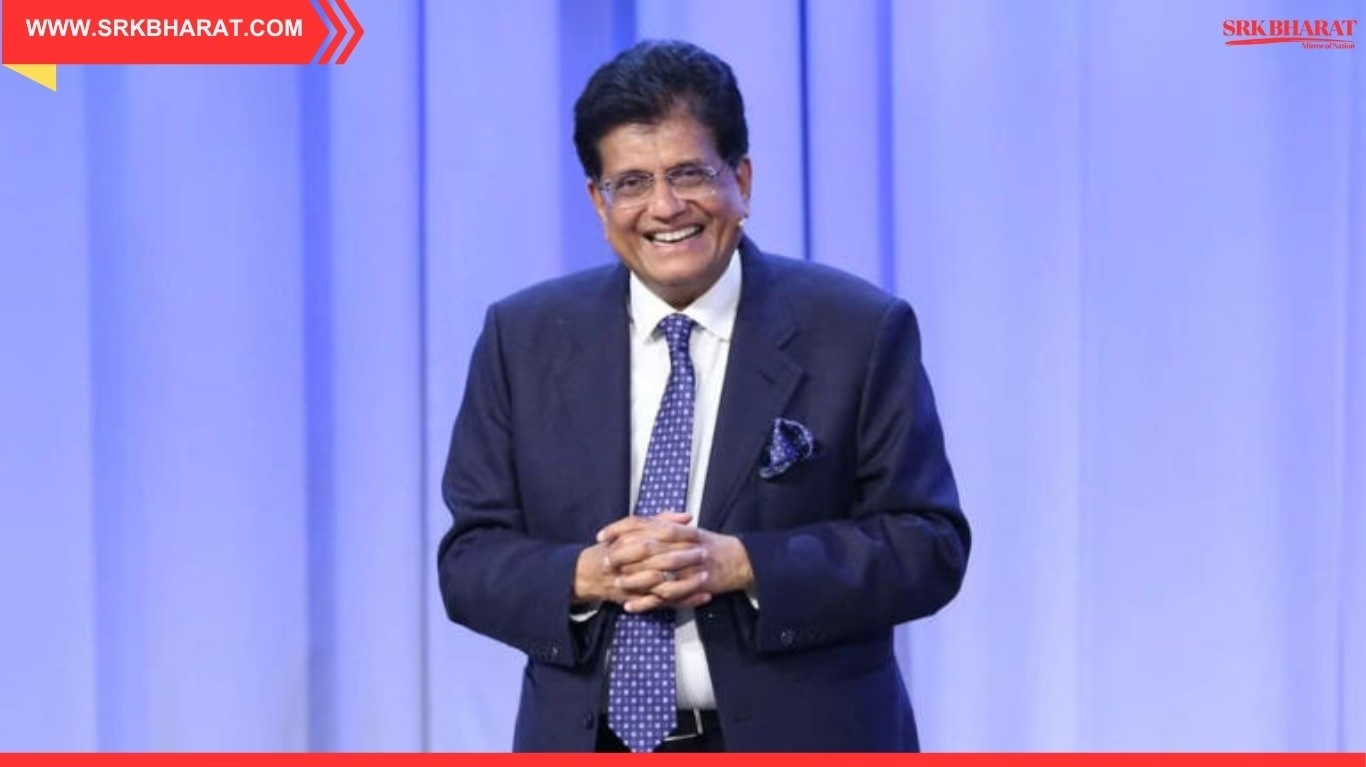
Union Commerce and Industry Minister Piyush Goyal has declared a strategic shift in India’s trade negotiations, asserting that the country is no longer desperate to clinch Free Trade Agreements (FTAs) or economic partnerships. Speaking at the 105th Annual General Meeting of ASSOCHAM in New Delhi on October 17, 2025, Goyal emphasized that “the days of negotiating from a position of weakness are gone.” India now engages with global partners from a position of strength, backed by robust economic fundamentals, rising exports, and a confident domestic industry.
Goyal’s remarks come amid ongoing negotiations with the European Union, Gulf Cooperation Council, and UK, and after the successful implementation of the India-EFTA Trade and Economic Partnership Agreement (TEPA). He clarified that India is prioritizing mutually beneficial, balanced trade deals that safeguard domestic interests, promote job creation, and enhance global competitiveness.
🧠 Key Highlights from Piyush Goyal’s Trade Strategy Statement
| Element | Details |
|---|---|
| Speaker | Piyush Goyal, Union Commerce and Industry Minister |
| Event | ASSOCHAM Annual General Meeting |
| Date | October 17, 2025 |
| Core Message | India negotiates trade deals from strength, not desperation |
| Recent FTA Success | India-EFTA TEPA |
| Ongoing Negotiations | EU, GCC, UK |
Goyal noted that India’s exports have crossed $770 billion in FY25, and the country is now a preferred partner for advanced economies.
📊 Timeline of India’s Trade Policy Evolution
| Year | Milestone Description |
|---|---|
| 2020 | India exits RCEP citing imbalance |
| 2022 | India signs FTAs with UAE and Australia |
| 2023 | TEPA with EFTA finalized |
| 2024 | India initiates talks with EU and UK |
| October 2025 | Goyal asserts new trade posture at ASSOCHAM |
India’s trade strategy now includes sectoral safeguards, digital trade provisions, and rules of origin enforcement.
🗣️ Reactions from Industry, Diplomats, and Trade Experts
- ASSOCHAM President: “India’s assertiveness is a sign of economic maturity.”
- EU Trade Envoy: “We welcome India’s clarity and strategic alignment.”
- Exporters’ Associations: “Balanced FTAs will help MSMEs and manufacturing.”
| Stakeholder Group | Reaction Summary |
|---|---|
| Domestic Industry | Supporting cautious and calibrated approach |
| Global Partners | Respecting India’s assertive negotiation style |
| Trade Analysts | Tracking impact on tariff and non-tariff barriers |
| Media | Highlighting shift from reactive to proactive diplomacy |
Goyal also stressed that India will not compromise on data sovereignty, labor standards, or environmental commitments in trade talks.
🧾 India’s Trade Strategy – Old vs New Approach
| Parameter | Earlier Approach | Current Strategy |
|---|---|---|
| Negotiation Posture | Reactive, urgency-driven | Strategic, strength-based |
| Partner Selection | Broad, including competitors | Selective, complementary economies |
| Domestic Safeguards | Limited | Strong sectoral protections |
| MSME Inclusion | Minimal | Central to FTA design |
| Trade Objectives | Market access | Balanced growth, job creation |
| Deal Timelines | Fast-tracked | Quality over speed |
India’s trade policy now aligns with its Make in India, Digital India, and Atmanirbhar Bharat goals.
🧭 What to Watch in India’s Trade Diplomacy
- EU FTA Progress: Key chapters on digital trade and services under discussion
- UK Trade Talks: Focus on financial services and mobility
- GCC Engagement: Energy, infrastructure, and food security on agenda
- Domestic Impact: New FTAs to benefit textiles, electronics, and pharma sectors
Goyal concluded, “India is no longer a passive participant. We are shaping global trade, not chasing it.”
Disclaimer
This news content is based on verified government statements, trade briefings, and media reports as of October 18, 2025. It is intended for editorial use and public awareness. The information does not constitute trade advice, policy endorsement, or economic forecasting and adheres to ethical journalism standards.