






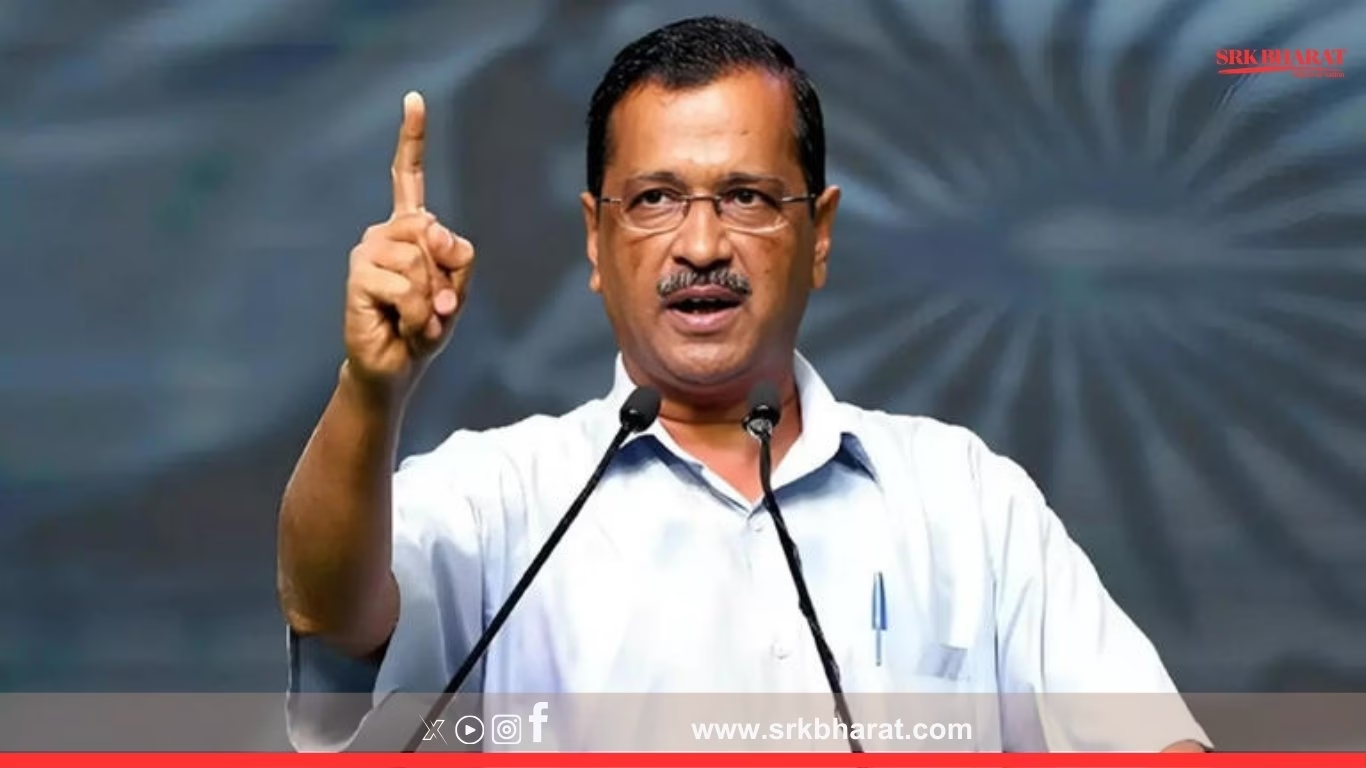
In a bold statement amid escalating trade tensions between India and the United States, Delhi Chief Minister Arvind Kejriwal has called for India to retaliate against former President Donald Trump’s 50% tariffs by imposing a 100% tariff on American goods. Kejriwal’s comments come at a time when Indian policymakers and industry leaders are grappling with the impact of these tariffs on exports, the domestic economy, and diplomatic relations.
Arvind Kejriwal’s Statement
Addressing a press conference, Kejriwal remarked:
“India should not remain silent when American policies harm our economy. If Trump can impose 50% tariffs on our exports, India must respond decisively with a 100% tariff on U.S. products.”
He further emphasized that the move would signal India’s commitment to protecting domestic industries, MSMEs, and farmers, who are disproportionately affected by U.S. trade restrictions.
Context of U.S. 50% Tariffs
The U.S., under Donald Trump’s administration, recently imposed a 50% tariff on several Indian goods, including steel, textiles, and select agricultural products. Key implications include:
| Category | Impact on Indian Exports | Affected States |
|---|---|---|
| Steel & Aluminum | Reduced demand, lower shipments | Maharashtra, Gujarat |
| Cotton & Textiles | Export volumes down, inventory pile-up | Tamil Nadu, Gujarat |
| Agricultural Products | Price volatility, reduced competitiveness | Punjab, Haryana |
The tariffs, according to Indian trade bodies, threaten $6–7 billion worth of exports annually, affecting both large-scale manufacturers and small enterprises.
Industry Reaction
Several industry leaders have weighed in on the Trump tariffs:
- Federation of Indian Export Organizations (FIEO): Urges the government to engage in negotiations to avoid long-term damage.
- Confederation of Indian Industry (CII): Suggests exploring retaliatory tariffs on U.S. goods selectively to protect critical sectors.
- MSMEs: Express concerns over rising costs and lost international market share.
Kejriwal’s proposal aligns with the more aggressive segment of industry sentiment, advocating strong retaliation rather than diplomacy alone.
Economic Implications of Retaliatory Tariffs
A 100% tariff on U.S. imports could have significant economic consequences:
| Potential Outcome | Positive Impact | Negative Impact |
|---|---|---|
| Protect Domestic Industries | Encourages local production, reduces import dependence | May increase domestic prices for imported goods |
| Trade Leverage | Signals India’s seriousness in negotiations | Risk of U.S. retaliatory measures on Indian exports |
| Political Messaging | Demonstrates assertive leadership | Could strain India-U.S. bilateral relations |
Experts caution that while retaliatory tariffs send a strong message, careful calibration is essential to avoid collateral damage to Indian consumers and global supply chains.
Political Dimensions
Kejriwal’s call for a 100% tariff has sparked discussion across political parties:
- BJP: Calls for measured response; emphasizes dialogue with the U.S. administration.
- Congress: Supports strong action to safeguard farmers and exporters.
- Regional Leaders: Mixed reactions; some echo Kejriwal’s hardline stance, others advocate for sector-specific interventions.
The proposal has reignited debates on India’s trade policy autonomy versus maintaining global trade relations.
Export Sectors at Risk
Certain sectors face heightened vulnerability:
- Textiles & Apparel: India’s top export sector to the U.S., especially cotton products.
- Steel & Aluminium: Major contributors to industrial output and employment.
- Pharmaceuticals & Chemicals: Emerging concern due to U.S. market sensitivity.
| Sector | U.S. Export Value (Approx.) | Jobs Dependent |
|---|---|---|
| Textiles & Apparel | $5 billion | 2.5 million |
| Steel & Aluminium | $3 billion | 1.2 million |
| Agricultural Products | $1.5 billion | 0.8 million |
Implementing retaliatory tariffs could mitigate losses for these sectors, but must balance domestic pricing pressures.
Global Trade Perspective
Trade experts note that retaliatory tariffs are a common tool in international trade disputes:
- China-U.S. Trade War (2018–2020): Both countries imposed high tariffs, affecting global supply chains and commodity prices.
- EU-U.S. Disputes: Steel and agricultural tariffs were used to push for policy concessions.
- India’s Position: Historically, India has used targeted tariffs and WTO channels rather than blanket 100% tariffs.
Kejriwal’s proposal deviates from past strategies by advocating a direct and extreme response, which could reshape India-U.S. trade dynamics.
Possible Challenges
While the idea of a 100% tariff has political appeal, challenges include:
- Consumer Prices: Imported electronics, machinery, and luxury goods could see sharp price increases.
- U.S. Retaliation: Risk of escalation affecting IT services, pharmaceuticals, and other Indian exports.
- Supply Chain Disruption: Industries dependent on American inputs could face production bottlenecks.
Trade analysts suggest sector-specific tariffs may be more effective than blanket measures.
Steps India Can Take
In addition to Kejriwal’s proposed action, other measures include:
- Negotiation via WTO channels to challenge U.S. tariffs.
- Diversifying export markets to reduce dependency on the U.S.
- Strengthening domestic manufacturing to offset import reliance.
- Providing subsidies or incentives for affected MSMEs and farmers.
Expert Opinions
- Trade Economist: “While a 100% tariff is extreme, signaling strength can sometimes accelerate negotiations. But India must prepare for retaliatory actions.”
- Industry Analyst: “Targeted tariffs on high-impact sectors may provide leverage without jeopardizing consumers or global supply chains.”
- Political Commentator: “Kejriwal’s proposal is as much about domestic messaging as it is about actual trade policy. It resonates with nationalist economic sentiment.”
Conclusion
Arvind Kejriwal’s call for India to hit back at U.S. tariffs with a 100% tariff underscores the growing frustration over trade imbalances and protectionist measures by foreign powers. While the proposal is bold and politically resonant, its implementation would require careful planning, sectoral targeting, and diplomatic finesse to avoid unintended consequences.
India’s policymakers face the challenge of balancing assertive trade measures with global economic realities, protecting domestic industries, and maintaining crucial bilateral relations with the United States. The coming weeks will reveal whether such hardline proposals translate into actionable policy or remain part of the political discourse.
Disclaimer: This article is for informational purposes only. It does not constitute financial, trade, or political advice. Readers should consult authorized sources and experts for decisions related to trade policy and tariffs.


по согласованию [url=http://www.soglasovanie-pereplanirovki-kvartiry3.ru]http://www.soglasovanie-pereplanirovki-kvartiry3.ru[/url] .