

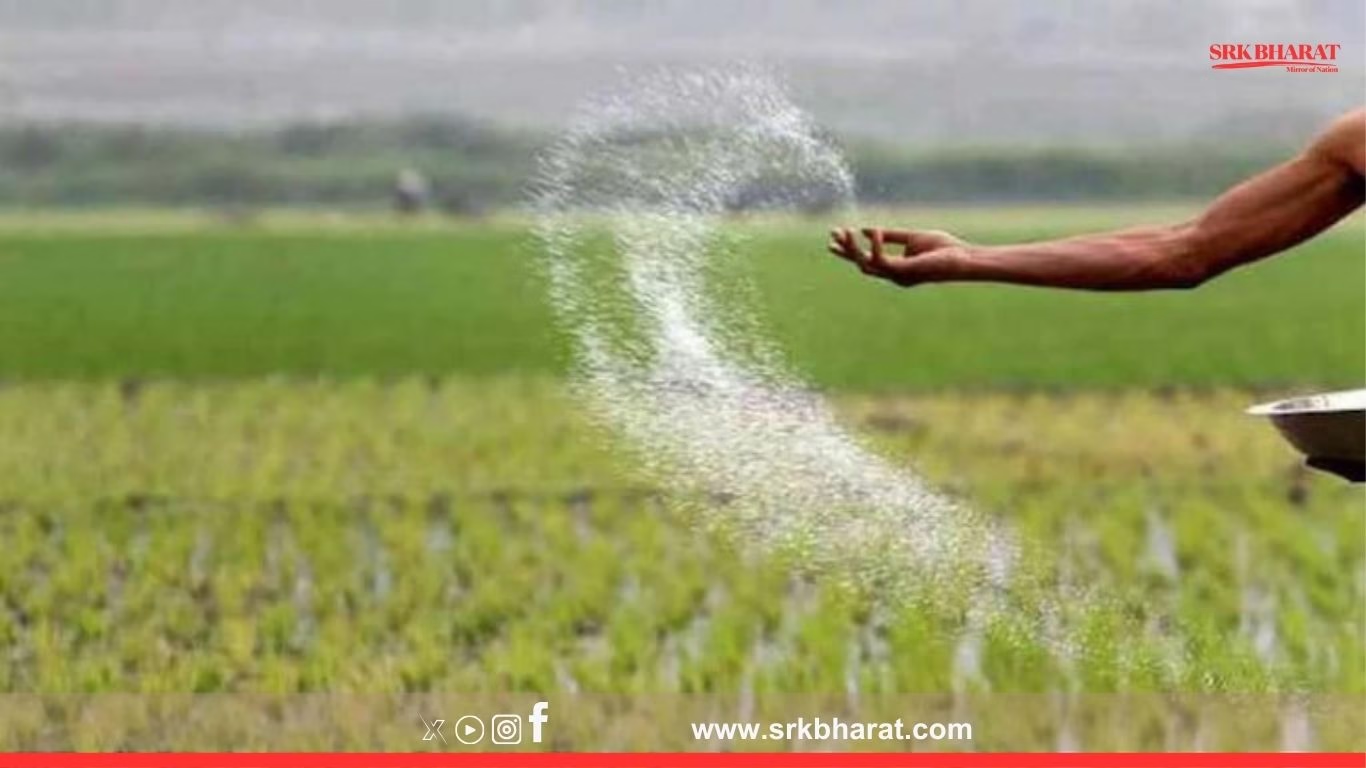
India has taken a decisive step toward agricultural resilience and fertilizer self-sufficiency by securing long-term supply agreements with Saudi Arabia and Morocco, two of the world’s leading producers of phosphate-based fertilizers. The move comes at a time when global supply chains remain volatile due to the Red Sea crisis, the Russia-Ukraine war, and rising geopolitical tensions in the Middle East.
The Ministry of Chemicals and Fertilizers confirmed that the country’s fertilizer availability remains robust during the ongoing Kharif 2025 season, with domestic production and strategic imports working in tandem to meet demand. These developments are part of the government’s broader Atmanirbhar Bharat agenda, aimed at reducing dependency on external sources and shielding farmers from global price shocks.
🧭 Strategic Partnerships with Saudi Arabia and Morocco
India’s fertilizer importers—including IPL, Kribhco, Coromandel, NFL, HURL, PPL, RFC, and FACT—have signed multi-year offtake agreements with Saudi Arabia and Morocco to ensure uninterrupted supply of critical nutrients like DAP (Di-Ammonium Phosphate), NPS (Nitrogen-Phosphorus-Sulphur), and TSP (Triple Super Phosphate).
| Partner Country | Fertilizer Type | Quantity Secured (LMT) | Agreement Duration | Pricing Model |
|---|---|---|---|---|
| Saudi Arabia | DAP, NPS | 31 | 5 years (2025–2030) | Spot-based |
| Morocco | DAP, TSP | 25 | Till Dec 2025 | Formula-based |
These deals not only stabilize India’s import pipeline but also open avenues for customized fertilizer development and joint research initiatives.
📊 Domestic Production Surge: Urea, DAP, and NPKs
India’s domestic fertilizer production has seen a significant uptick over the past decade. According to the Ministry, urea output rose by 35% from 227.15 LMT in 2013–14 to 306.67 LMT in 2024–25. Similarly, DAP and NPK production increased by 44%, reflecting the success of capacity expansion and modernization efforts.
| Fertilizer Type | Production in 2013–14 (LMT) | Production in 2024–25 (LMT) | Growth (%) |
|---|---|---|---|
| Urea | 227.15 | 306.67 | +35% |
| DAP | 38.5 | 55.5 | +44% |
| NPK | 45.2 | 65.1 | +44% |
This surge has helped India maintain a comfortable buffer stock, even as global prices fluctuate and shipping routes face disruptions.
🔍 Kharif 2025 Fertilizer Availability vs Demand
| Fertilizer Type | Availability (LMT) | Pro-rata Requirement (LMT) | Sales (LMT) |
|---|---|---|---|
| Urea | 183 | 143 | 155 |
| DAP | 49 | 45 | 47 |
| NPK | 97 | 58 | 63 |
Despite longer shipping routes and elevated costs, India’s supply has consistently outpaced demand, ensuring timely access for farmers across states.
🧠 Subsidy Shield for Farmers
To protect farmers from global price volatility, the government continues to offer heavy subsidies on fertilizers. Under the current scheme, urea is sold at ₹242 per 45-kg bag, while DAP is priced at ₹1,350. These rates include coverage for import costs, GST, and price hikes.
| Fertilizer Type | MRP (₹/45-kg bag) | Subsidy Coverage Includes |
|---|---|---|
| Urea | ₹242 | Import cost, GST, freight, markup |
| DAP | ₹1,350 | International price, GST, logistics |
The subsidy framework ensures affordability and equitable access, especially for small and marginal farmers.
📉 Crackdown on Black Marketing and Diversion
Since April 2025, the Ministry has intensified enforcement under the Essential Commodities Act to curb illegal diversion and hoarding of fertilizers.
| Enforcement Metric | Number Recorded |
|---|---|
| Inspections Conducted | 2,00,000+ |
| Show-Cause Notices Issued | 7,900+ |
| License Actions Taken | 3,600+ |
| FIRs Registered | 311 |
These actions reinforce the government’s commitment to transparency and accountability in fertilizer distribution.
🧠 Focus on Sustainable Agriculture: PM-PRANAM Initiative
Union Minister Jagat Prakash Nadda has emphasized the need to reduce reliance on chemical fertilizers and promote sustainable practices. The PM-PRANAM (Programme for Restoration, Awareness Generation, Nourishment, and Amelioration of Mother-Earth) initiative incentivizes states that reduce chemical fertilizer usage and adopt organic alternatives.
| PM-PRANAM Objective | Implementation Strategy |
|---|---|
| Reduce chemical fertilizer use | State-level targets and incentives |
| Promote organic farming | Training, certification, market linkage |
| Encourage balanced nutrition | Customized fertilizer blends |
States demonstrating measurable reductions in urea and DAP usage will be eligible for financial incentives under this program.
📌 Conclusion
India’s strategic fertilizer diplomacy with Saudi Arabia and Morocco, coupled with robust domestic production and a strong subsidy regime, has positioned the country to weather global supply chain disruptions. As the Kharif 2025 season progresses, farmers across India are benefiting from timely, affordable, and sustainable access to essential nutrients.
With a renewed focus on self-reliance, enforcement, and ecological balance, India’s fertilizer policy is evolving into a model of resilience and reform—ensuring food security and farmer welfare in an increasingly uncertain global landscape.
—
Disclaimer: This article is based on publicly available government statements and media reports as of August 23, 2025. It is intended for informational purposes only and does not constitute agricultural, financial, or policy advice.