



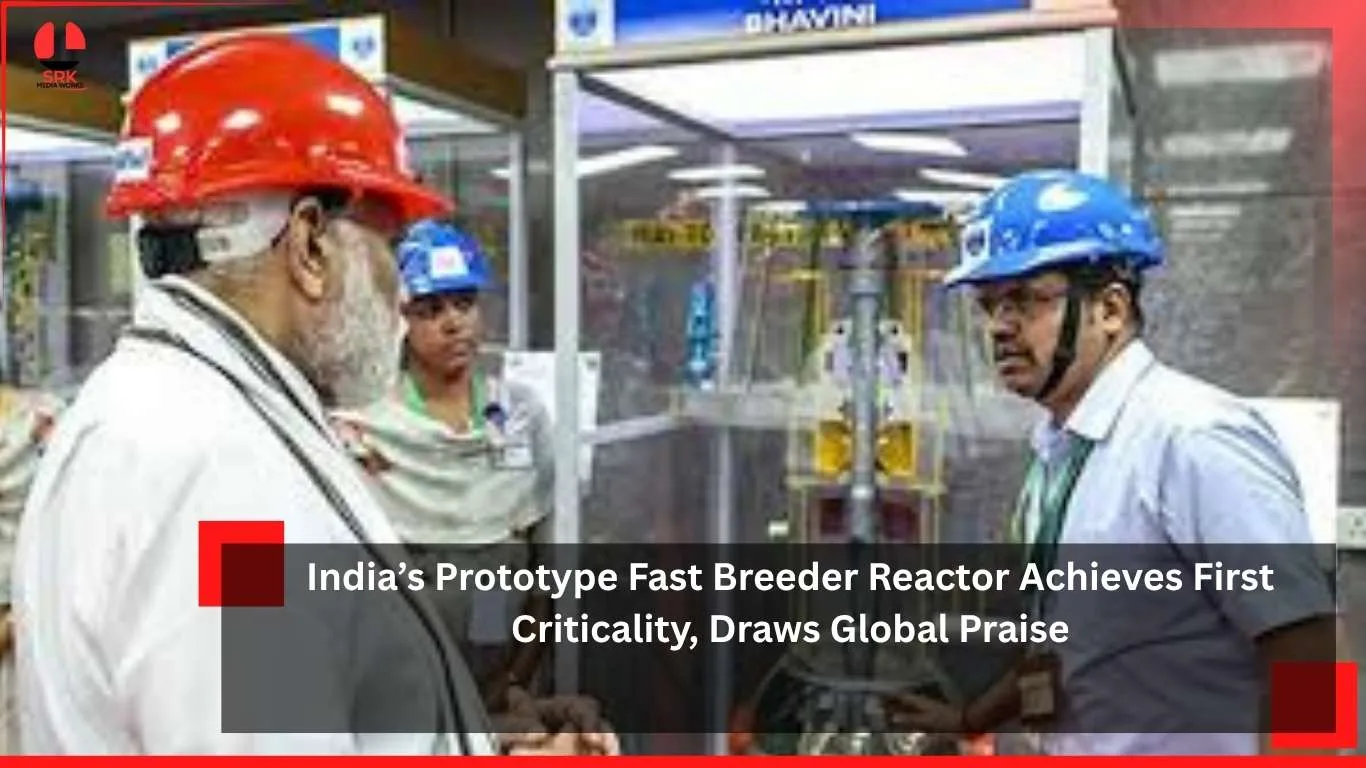
India has achieved a historic milestone with its Prototype Fast Breeder Reactor (PFBR) reaching first criticality, marking a significant leap in nuclear technology. The achievement has drawn global praise, positioning India among the select nations capable of advancing fast breeder reactor technology.
What First Criticality Means
- Definition: First criticality refers to the point at which a nuclear reactor achieves a self-sustaining chain reaction.
- Significance: It marks the operational readiness of the reactor and validates years of research and engineering.
- Global Context: Only a handful of countries have successfully developed fast breeder reactors.
India’s Nuclear Journey
India’s nuclear program has long focused on self-reliance and innovation.
- Three-Stage Program: Designed to maximize energy from limited uranium resources.
- PFBR Role: Integral to the second stage, using plutonium fuel and breeding more fissile material.
- Strategic Importance: Enhances India’s energy security and technological independence.
Technical Highlights of PFBR
| Feature | Specification | Importance |
|---|---|---|
| Reactor Type | Fast Breeder | Produces more fuel than it consumes |
| Fuel | Plutonium-uranium mix | Efficient use of resources |
| Coolant | Liquid sodium | High thermal efficiency |
| Capacity | 500 MWe | Supports large-scale power generation |
Global Reactions
- International Praise: Nuclear experts worldwide hailed India’s achievement as a technological breakthrough.
- Strategic Recognition: Countries acknowledged India’s growing role in advanced nuclear technology.
- Collaborative Opportunities: Potential for partnerships in nuclear research and energy projects.
Economic and Energy Implications
India’s PFBR achievement has far-reaching economic and energy consequences.
- Energy Security: Reduces dependence on imported fuel.
- Cost Efficiency: Breeder reactors maximize resource utilization.
- Industrial Growth: Reliable power supports manufacturing and infrastructure.
Energy Impact Analysis
| Factor | India’s Gain | Global Effect |
|---|---|---|
| Fuel Utilization | Enhanced | Sets new benchmarks |
| Energy Security | Strengthened | Inspires other nations |
| Industrial Growth | Supported | Expands global partnerships |
Strategic Importance
The PFBR strengthens India’s position in global nuclear diplomacy.
- Technological Leadership: Demonstrates advanced capabilities.
- Geopolitical Leverage: Enhances India’s standing in energy negotiations.
- Regional Influence: Positions India as a leader in South Asia’s energy landscape.
Comparative Pivot Analysis
| Dimension | India’s Achievement | Global View | Future Outlook |
|---|---|---|---|
| Military | Civilian focus | Positive | Peaceful use emphasized |
| Political | Strategic autonomy | Recognition | Stronger global role |
| Economic | Energy security | Benchmark | Industrial expansion |
| Social | National pride | Admiration | Inspires youth in science |
Challenges Ahead
Despite the success, challenges remain.
- Safety Concerns: Sodium coolant requires careful handling.
- Operational Efficiency: Long-term performance must be validated.
- Public Perception: Nuclear energy continues to face skepticism.
Conclusion
India’s Prototype Fast Breeder Reactor achieving first criticality is a landmark achievement that has drawn global praise. It strengthens India’s energy security, enhances technological leadership, and underscores the nation’s commitment to innovation. While challenges remain, the PFBR represents a bold step toward a sustainable and self-reliant energy future.
Disclaimer
This article is based on available information and analysis of nuclear energy developments. It does not represent official government positions or verified technical data. Readers are advised to treat the content as an overview of claims and perspectives, and to consult multiple sources before drawing conclusions about sensitive technological advancements.