





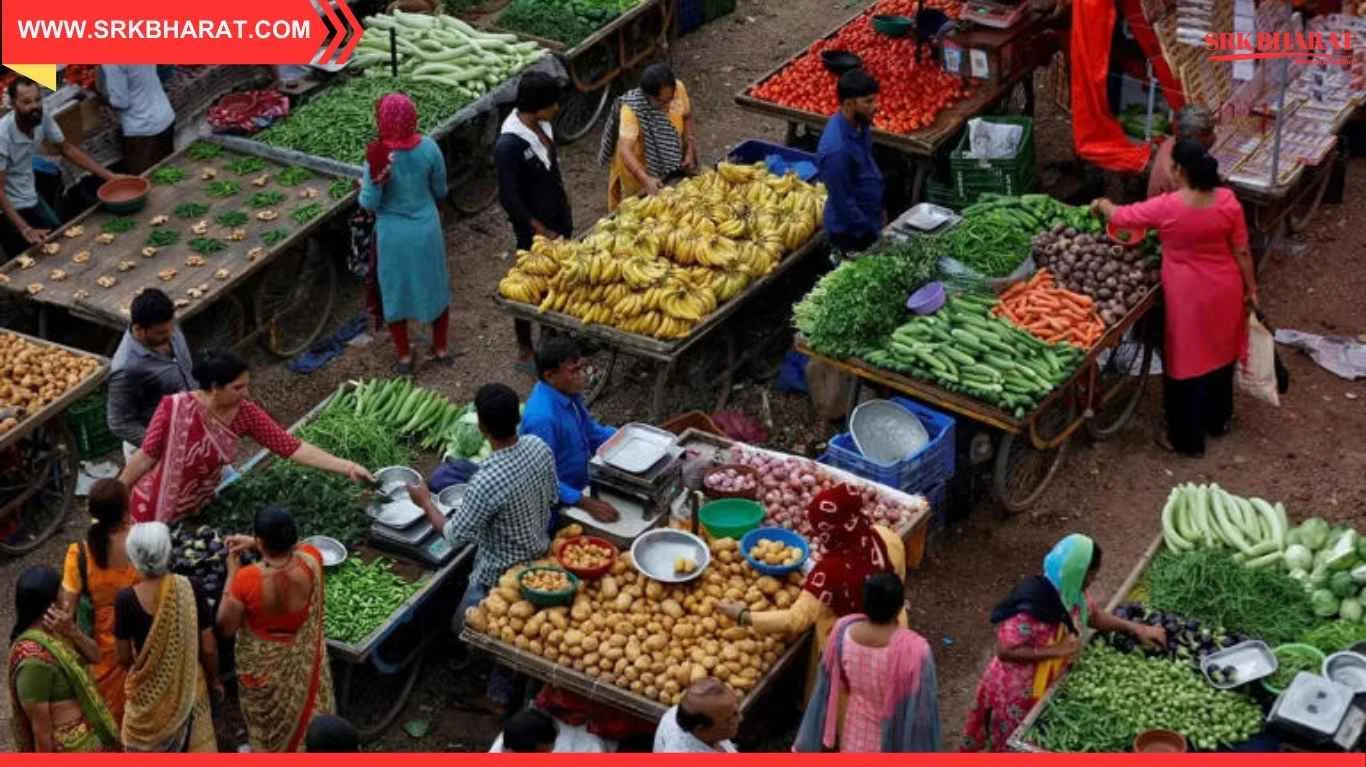
India’s retail inflation, measured by the Consumer Price Index (CPI), rose to 0.71% in November 2025, marking a sharp uptick from the record low of 0.25% in October. Although inflation quickened, it remained below the Reserve Bank of India’s (RBI) medium‑term target of 4% for the 10th consecutive month, offering continued relief to consumers and policymakers.
The rise in inflation was primarily driven by firming food prices, especially vegetables, eggs, meat, and spices, along with a mild increase in fuel and housing inflation. Despite the uptick, food inflation remained in the negative zone at –3.91%, narrowing from –5.02% in October. This indicates that while food prices are still lower than last year, the pace of decline has slowed.
Economists attribute the rise to the fading base effect, which had previously suppressed inflation in categories like vegetables and pulses. The November data reflects a normalization of prices after months of unusually steep declines.
📊 India’s Inflation Snapshot: November 2025
| Indicator | October 2025 | November 2025 | Trend |
|---|---|---|---|
| CPI Inflation | 0.25% | 0.71% | ↑ Rising |
| Food Inflation (CFPI) | –5.02% | –3.91% | ↑ Narrowing decline |
| Vegetable Inflation | –27.57% | –22.20% | ↑ Prices firming |
| Fuel & Light Inflation | 1.98% | 2.32% | ↑ Rising slightly |
| Housing Inflation | 2.96% | 2.95% | ↓ Marginal dip |
🔍 What Drove the Inflation Uptick?
| Category | November Trend | Reason | Impact |
|---|---|---|---|
| Vegetables | Prices firmed | Base effect fading; supply adjustments | Higher food basket contribution |
| Protein Items | Prices rose | Seasonal demand | Mild upward pressure |
| Fuel | Inflation increased | Global price fluctuations | Higher household expenses |
| Housing | Slight dip | Stable rental market | Minimal impact |
| Rural Inflation | Rose from –0.25% to 0.10% | Food price normalization | Rural cost pressures rising |
| Urban Inflation | Rose from 0.88% to 1.40% | Higher food & fuel prices | Stronger inflationary push |
🥕 Food Inflation: Still Negative, But Rising
Food inflation remained in deflation at –3.91%, but the decline was much smaller than October’s –5.02% . This narrowing deflation indicates that food prices are stabilizing after months of steep drops.
Key contributors:
- Vegetables: Prices fell 22.20% YoY, compared to 27.57% in October
- Eggs, meat, spices: Prices firmed up, contributing to the overall rise
- Pulses: Base effect fading, reducing deflationary pressure
Economists note that the base effect, which had kept food inflation artificially low, is now normalizing, leading to a more realistic price trajectory.
🛢️ Fuel & Light Inflation: Mild Increase
Fuel and light inflation rose from 1.98% in October to 2.32% in November. This reflects:
- Higher global crude prices
- Seasonal demand
- Adjustments in domestic fuel pricing
While the increase is modest, it adds to household expenditure pressures.
🏠 Housing Inflation: Stable and Low
Housing inflation remained stable at 2.95%, marginally lower than October’s 2.96%.
This stability indicates:
- A balanced rental market
- No major supply shocks
- Controlled urban housing costs
Housing remains one of the most stable components of the CPI basket.
🌾 Rural vs Urban Inflation: Urban Areas See Sharper Rise
| Region | October 2025 | November 2025 | Trend |
|---|---|---|---|
| Rural | –0.25% | 0.10% | ↑ Rising from deflation |
| Urban | 0.88% | 1.40% | ↑ Strong increase |
Urban inflation rose more sharply due to:
- Higher food prices
- Increased fuel consumption
- Seasonal demand
Rural inflation, while rising, remains subdued.
📈 Inflation Still Below RBI Target for 10th Straight Month
Despite the uptick, inflation remains well below the RBI’s 4% target for the 10th consecutive month. This gives the central bank room to maintain its current monetary stance.
The RBI has projected:
- 2.0% inflation for FY26
- GDP growth of 7.3% for FY26
These projections reflect confidence in India’s economic resilience.
🧮 13‑Month Inflation Trend (CPI & CFPI)
The National Statistics Office (NSO) released a 13‑month inflation chart showing:
- A consistent downward trend in CPI since early 2025
- Food inflation remaining negative for multiple months
- A slight uptick in November due to base effect normalization
This long‑term trend indicates that inflationary pressures remain under control.
🧭 Why Inflation Rose in November: Expert Insights
Economists attribute the rise to:
- Base effect fading in vegetables and pulses
- Seasonal firming of protein‑rich foods
- Fuel price adjustments
- Urban consumption rebound
Crisil’s Principal Economist noted that the base effect, which had suppressed inflation in key food categories, is now easing, leading to a more realistic inflation reading.
🛒 Category‑Wise Inflation Breakdown
| Category | Inflation Trend (Nov 2025) | Key Drivers |
|---|---|---|
| Food & Beverages | –3.91% | Vegetables, pulses base effect fading |
| Cereals | Stable | Adequate supply |
| Meat & Fish | Rising | Seasonal demand |
| Eggs | Rising | Supply adjustments |
| Milk | Stable | Controlled pricing |
| Oils & Fats | Negative | Global price correction |
| Fuel & Light | 2.32% | Global crude prices |
| Clothing & Footwear | Stable | Mild seasonal rise |
| Housing | 2.95% | Stable rentals |
| Miscellaneous | Mild rise | Services demand |
🧩 What This Means for Consumers
1. Food Prices May Rise Gradually
While still in deflation, food prices are firming up.
2. Fuel Costs Could Add Pressure
Higher fuel inflation may impact transportation and household budgets.
3. Urban Households Feel More Pressure
Urban inflation rose more sharply than rural inflation.
4. Overall Inflation Still Comfortable
At 0.71%, inflation remains historically low.
🏦 Implications for RBI’s Monetary Policy
The RBI is likely to:
- Maintain its current policy stance
- Monitor food inflation closely
- Watch global crude price movements
With inflation far below target, the central bank has room to support growth.
🔮 Outlook for December and Early 2026
Economists expect:
- Mild inflation rise due to winter vegetable prices
- Continued negative food inflation, but narrowing
- Stable fuel inflation unless global crude spikes
- Overall CPI to remain below 2% in early 2026
The base effect will continue to influence readings.
📝 Conclusion
India’s retail inflation rising to 0.71% in November from 0.25% in October marks a shift from record lows but remains comfortably below the RBI’s target. The uptick is driven by firming food prices, mild fuel inflation, and fading base effects. Despite the rise, inflation remains historically low, offering relief to households and policymakers.
With strong GDP projections and controlled inflation, India’s economic outlook remains robust. The coming months will determine whether food prices stabilize or continue to firm, shaping the inflation trajectory for early 2026.
🛡️ Disclaimer
This article is based on publicly available inflation data, government releases, and verified economic reports. It is intended solely for informational and editorial purposes, offering an analytical overview of India’s retail inflation trends and their implications for consumers and policymakers.