




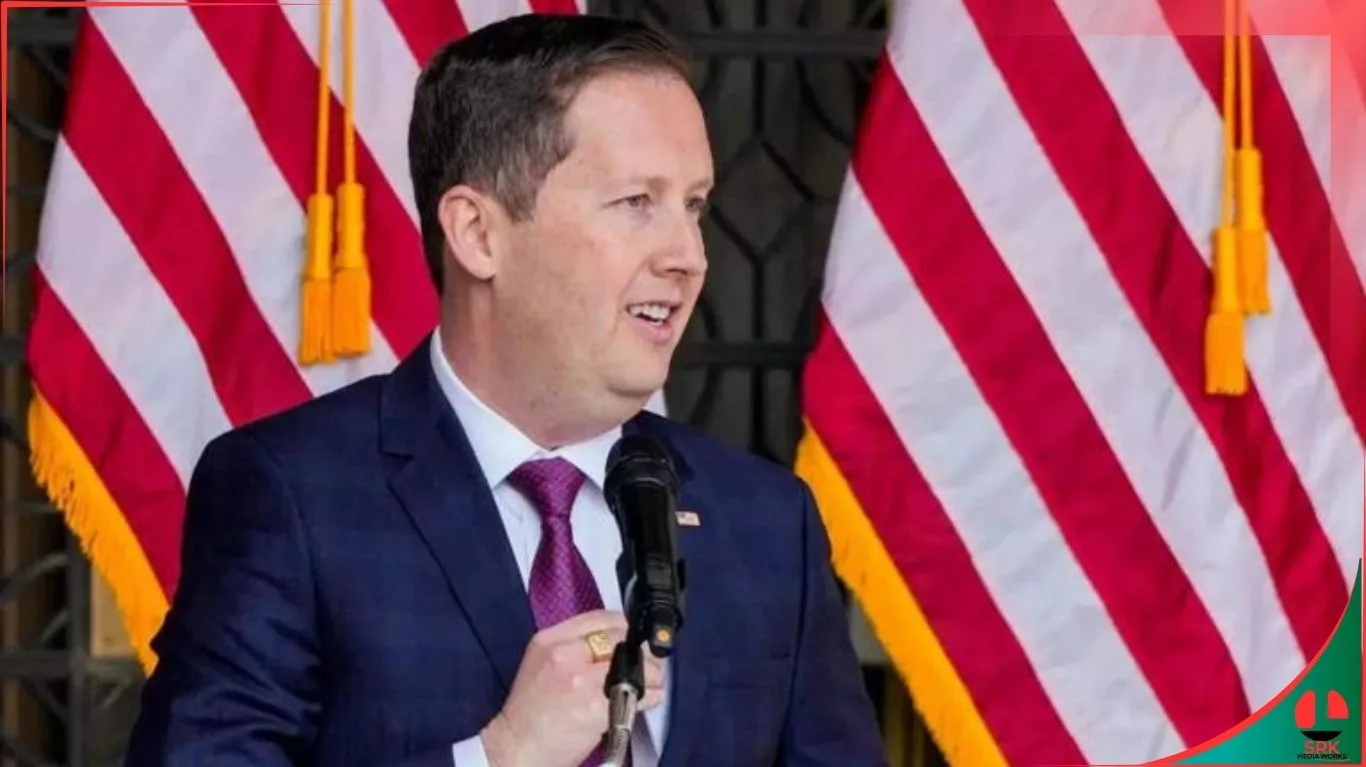
India’s growing presence in the global semiconductor supply chain has been described as “essential” by US Ambassador to India Sergio Gor, who highlighted New Delhi’s strategic importance amid rising competition from neighboring countries. Speaking at the inauguration of Micron Technology’s Assembly, Testing, Marking and Packaging (ATMP) plant in Sanand, Gujarat, Gor emphasized that India offers a secure and reliable alternative in a sector critical to global technology and economic stability.
Background of the Statement
- Micron Technology Plant: The US-based semiconductor giant launched its new facility in Gujarat, inaugurated by Prime Minister Narendra Modi.
- Global Competition: Countries in Asia are pushing aggressively to dominate legacy chip production, raising concerns about supply chain vulnerabilities.
- India’s Position: With government-backed initiatives and foreign investment, India is positioning itself as a trusted hub for semiconductor manufacturing and packaging.
Key Highlights from US Envoy’s Remarks
- Strategic Reliability: India is seen as a dependable partner in a sector where geopolitical risks are high.
- Essential Role: India’s participation is not just welcome but necessary for balancing global supply chains.
- Leadership Support: Gor credited India’s leadership under Prime Minister Modi for creating a conducive environment for semiconductor investments.
India’s Semiconductor Strategy
| Initiative | Description | Impact |
|---|---|---|
| India Semiconductor Mission | Government program to boost chip manufacturing | Attracts global investors |
| Micron ATMP Plant | US-backed facility in Gujarat | Strengthens packaging and testing capacity |
| Incentives & Subsidies | Financial support for semiconductor projects | Encourages domestic and foreign firms |
| Talent Development | Training engineers and researchers | Builds skilled workforce |
| Strategic Partnerships | Collaborations with US, Japan, Taiwan | Enhances global integration |
Comparative Analysis of Global Semiconductor Players
| Country | Focus Area | Strengths | Risks |
|---|---|---|---|
| India | Packaging, testing, talent development | Reliable partner, growing ecosystem | Needs infrastructure scale-up |
| China | Legacy chip production | Large-scale manufacturing | Geopolitical tensions, trust deficit |
| Taiwan | Advanced chip design | Cutting-edge technology | Vulnerable to regional conflict |
| US | Innovation, R&D | Strong design and IP | Outsourcing manufacturing |
| South Korea | Memory chips | Established industry | Competition with China |
Implications for India
- Economic Growth: Semiconductor investments will boost GDP and create high-skilled jobs.
- Strategic Autonomy: Reduces dependence on imports and strengthens India’s tech sovereignty.
- Global Partnerships: Enhances India’s role in US-led supply chain diversification.
- Regional Balance: Counters China’s dominance in legacy chip production.
Public and Industry Reaction
- Indian Officials: Welcomed the US envoy’s remarks as validation of India’s semiconductor mission.
- Industry Leaders: Expressed optimism about India’s ability to scale up production and attract more global players.
- Analysts: Noted that India’s reliability and neutrality make it a preferred partner in a geopolitically sensitive sector.
Conclusion
India’s role in the semiconductor supply chain has been recognized as essential by the US envoy, underscoring the country’s growing importance in a sector that underpins global technology. With strategic investments, government support, and international partnerships, India is poised to become a key player in balancing global supply chains. As competition intensifies, India’s reliability and innovation-driven approach could redefine the future of semiconductor manufacturing.
Disclaimer
This article is based on publicly available information and aims to highlight India’s role in the global semiconductor supply chain as emphasized by the US envoy. It does not intend to criticize or promote any individual, country, or organization. The content is for informational and educational purposes only, reflecting broader issues in technology, trade, and global supply chain security.