





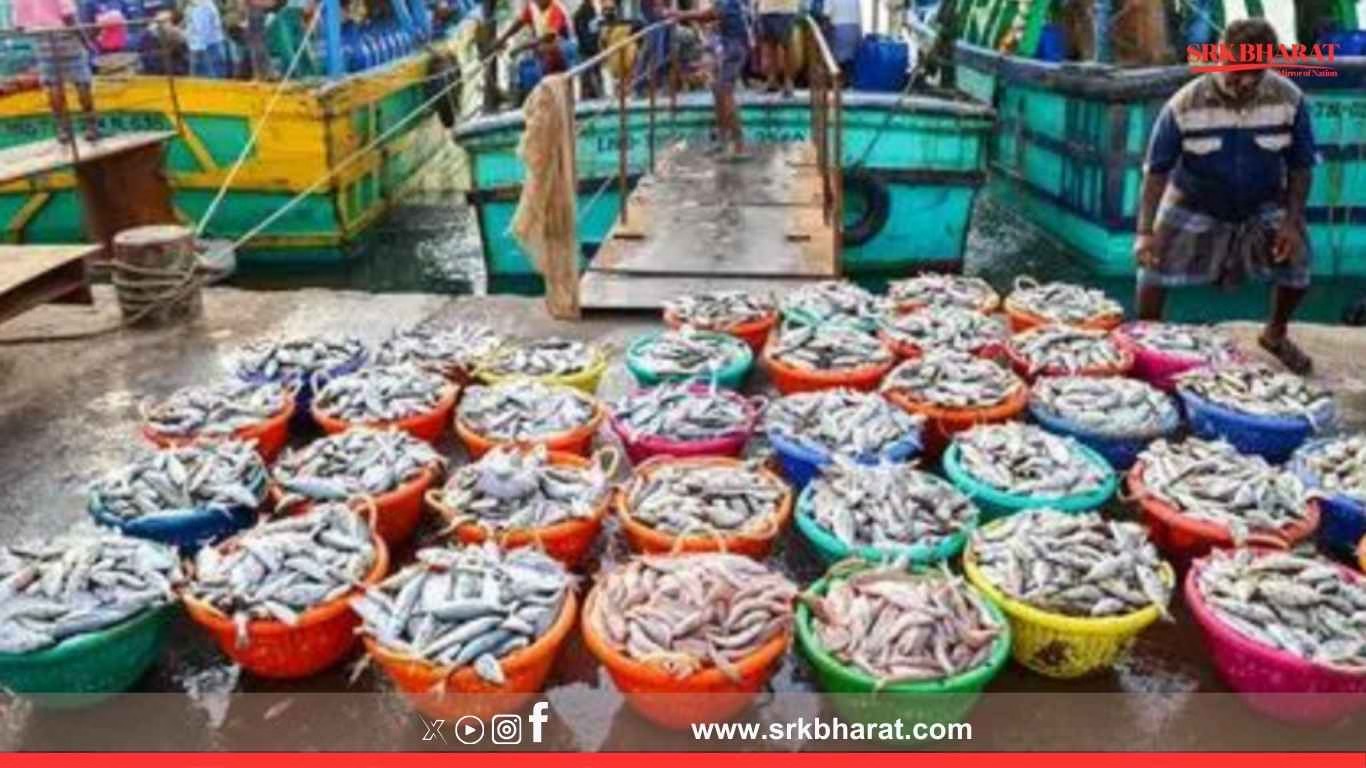
India’s shrimp export industry is bracing for a sharp contraction of 15–18% in FY26 following the United States’ decision to hike import tariffs to a staggering 58.26% from August 27, 2025. According to a detailed report by Crisil Ratings, the move threatens nearly $5 billion worth of annual trade, with the US accounting for 48% of India’s shrimp exports.
The tariff escalation—part of former President Donald Trump’s broader trade policy—includes a 50% reciprocal duty, a 5.77% countervailing duty, and a 2.49% anti-dumping levy. The cumulative burden has rendered Indian shrimp exports to the US commercially unviable, prompting exporters to front-load shipments in Q1 and now scramble for alternative markets.
🧭 Key Impact Metrics of US Tariff Hike on Indian Shrimp Sector
| Indicator | FY25 Value / Status | FY26 Projection / Impact |
|---|---|---|
| Total Shrimp Export Value | $5 billion | $4.1–4.25 billion (15–18% decline) |
| Share of US in Exports | 48% | Expected to drop below 30% |
| Revenue Decline | Flat for 4 years | 18–20% YoY drop |
| Operating Profit Margin | 6.5–7% | 5–5.5% (decadal low) |
| Interest Coverage Ratio | 4.8x | 3.3x |
| Debt Protection Metrics | Stable | Under pressure |
Crisil’s analysis of 63 rated exporters—representing 55% of industry revenues—warns that the combination of lower volumes, subdued margins, and reduced capacity utilization will weaken credit profiles across the sector.
🔍 Why the US Market Matters for Indian Shrimp Exporters
The US has long been the most lucrative destination for Indian shrimp due to:
- Stable demand and repeat customer approvals
- Higher margins on value-added and large shrimp varieties
- Efficient distribution networks and evolved infrastructure
Despite previous duties, exporters continued supplying to the US, with buyers absorbing part of the cost. However, the latest hike places India at a competitive disadvantage compared to Ecuador, Vietnam, Indonesia, and Thailand—countries facing significantly lower tariff barriers.
| Country | US Tariff Rate (%) | Competitive Position vs India |
|---|---|---|
| India | 58.26 | High disadvantage |
| Ecuador | ~25 | Advantage |
| Vietnam | ~20 | Advantage |
| Indonesia | ~18 | Advantage |
| Thailand | ~22 | Advantage |
📉 Financial Stress and Farmer Impact
The tariff shock is expected to ripple down to shrimp farmers, who already face high upfront costs for land lease, seed, feed, aeration equipment, electricity, and pond management. Falling business volumes will discourage investment in shrimp culture, further straining the supply chain.
| Cost Component | Farmer Burden (₹/acre) | Risk Due to Tariff Shock |
|---|---|---|
| Land Lease | ₹1.2–1.5 lakh | High |
| Seed & Feed | ₹80,000–₹1 lakh | High |
| Aeration & Biosecurity | ₹50,000–₹70,000 | High |
| Electricity & Maintenance | ₹40,000–₹60,000 | Moderate |
Shrinking sales of premium shrimp varieties—mostly exported to the US—will further erode margins and reduce capacity utilization across processing units.
🔥 Diversification Strategy: New Markets and Product Mix
To mitigate losses, Indian processors are pivoting toward alternative markets such as:
- United Kingdom (via India–UK FTA)
- China
- Russia
- European Union
- Japan
The Marine Products Export Development Authority (MPEDA) has already initiated trade delegations to Vietnam, Japan, and China, with encouraging feedback from buyers.
| Market | Entry Strategy | Potential Volume Recovery |
|---|---|---|
| UK | FTA leverage, premium products | Moderate |
| China | Bulk orders, lower margins | High |
| Russia | Strategic realignment | Moderate |
| EU & Japan | Sustainability-focused sourcing | High |
Exporters are also tweaking their product mix to focus on smaller shrimp varieties and frozen formats that appeal to diversified markets.
🧠 Expert Opinions on Shrimp Export Outlook
| Expert Name | Role | Comment |
|---|---|---|
| Rahul Guha | Senior Director, Crisil Ratings | “The headwinds will impact processors and discourage farmers from investing.” |
| DV Swamy | Chairman, MPEDA | “We’re confident the sector will navigate this challenge successfully.” |
| K.N. Raghavan | Secretary-General, SEAI | “We need government and financial support to manage cash flow constraints.” |
Industry leaders are calling for urgent policy support, including export incentives, credit relief, and infrastructure upgrades to stabilize the sector.
📌 Conclusion
India’s shrimp export industry is facing one of its toughest years, with a 15–18% volume decline and nearly $1 billion in trade at risk due to the steep US tariff hike. While exporters are actively diversifying markets and adjusting product strategies, the loss of the US market—once the backbone of India’s seafood exports—will have lasting financial and operational consequences.
As the sector navigates this crisis, coordinated efforts between processors, farmers, trade bodies, and the government will be essential to protect livelihoods and preserve India’s global standing in seafood exports.
—
Disclaimer: This article is based on publicly available news reports and official statements as of September 1, 2025. It is intended for informational purposes only and does not constitute trade, financial, or policy advice.