


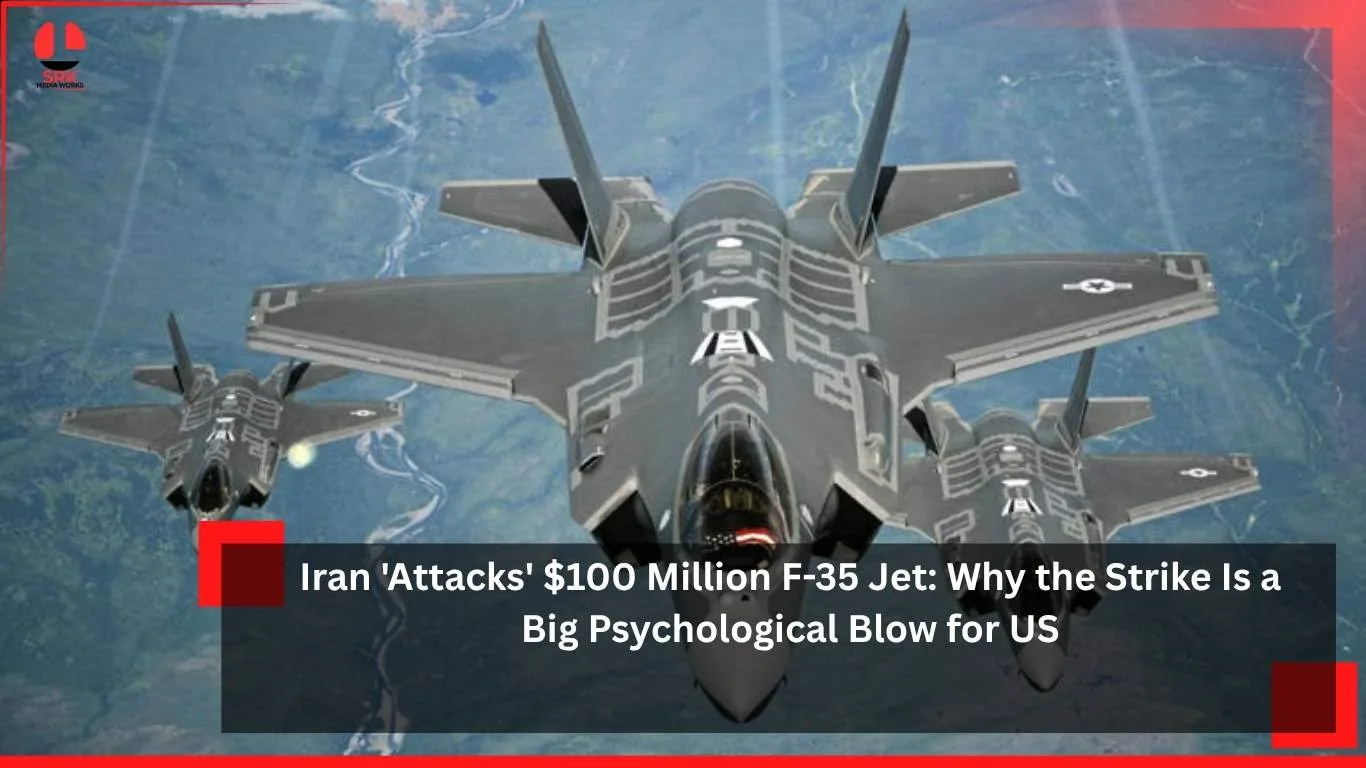
The recent reports of Iran targeting a U.S. F-35 fighter jet, valued at approximately $100 million, have sent shockwaves through military and geopolitical circles. While the extent of the damage remains under scrutiny, the symbolic impact of such a strike is undeniable. The F-35 is not just a combat aircraft—it represents American technological superiority, military dominance, and strategic deterrence. Iran’s ability to challenge this symbol is being viewed as a major psychological blow to the United States and its allies.
Background of the Incident
The F-35 Lightning II is one of the most advanced stealth fighter jets in the world, designed to evade radar detection and dominate aerial combat. Iran’s reported strike against this aircraft is significant because it challenges the perception of invulnerability that the F-35 carries.
For decades, U.S. air power has been seen as untouchable in the Middle East. This incident, whether fully successful or not, undermines that narrative and emboldens adversaries who seek to counter American influence.
Why the Strike Matters
- Symbolic Value: The F-35 is a symbol of U.S. military superiority. Damaging or targeting it sends a message that even advanced technology is vulnerable.
- Psychological Impact: The strike boosts Iran’s morale and signals to its allies that American dominance can be challenged.
- Strategic Consequences: If Iran can threaten advanced U.S. assets, it raises questions about the safety of other military deployments in the region.
Comparative Analysis of Military Assets
| Aircraft | Country | Cost per Unit | Strategic Role | Vulnerability |
|---|---|---|---|---|
| F-35 Lightning II | United States | ~$100M | Stealth, multi-role fighter | Targeted by Iran |
| Su-57 | Russia | ~$50M | Advanced stealth fighter | Limited deployment |
| J-20 | China | ~$70M | Stealth air superiority | Expanding fleet |
| F-16 | United States | ~$30M | Versatile combat aircraft | Widely used, less stealth |
Psychological Blow to the US
The United States has long relied on the perception of technological superiority to deter adversaries. The reported strike challenges this perception in several ways:
- Credibility of deterrence: Allies may question U.S. ability to protect assets.
- Boost for Iran: Demonstrates resilience against sanctions and military pressure.
- Global perception: Rivals like Russia and China may interpret this as a weakening of U.S. dominance.
Regional Implications
The Middle East is already a volatile region, and this incident adds fuel to ongoing tensions:
- Iran’s confidence: Strengthens its position in negotiations and regional conflicts.
- Gulf states’ anxiety: Allies like Saudi Arabia and UAE may worry about their own vulnerability.
- Israel’s calculations: Raises concerns about Iran’s growing military capabilities.
Economic and Strategic Costs
| Factor | Short-Term Impact | Long-Term Risk |
|---|---|---|
| Military prestige | Damaged reputation | Reduced deterrence |
| Financial cost | Loss of $100M asset | Increased defense spending |
| Diplomatic fallout | Strained alliances | Shift in global power balance |
Global Reactions
- United States: Likely to downplay the incident while reinforcing military presence.
- Iran: Celebrates the strike as proof of its defensive strength.
- Russia and China: May use the incident to highlight U.S. vulnerabilities.
- Europe: Concerned about escalation and energy security.
Future Outlook
The strike on the F-35 is not just about one aircraft—it represents a broader shift in global military dynamics. The U.S. may respond with increased military deployments, cyber operations, or diplomatic pressure. However, the psychological damage has already been done. Iran has demonstrated that even the most advanced American technology can be challenged, reshaping perceptions of power in the region.
Analytical Summary
Iran’s reported attack on a $100 million F-35 jet is a watershed moment in modern military history. While the physical damage may be limited, the psychological impact is profound. It undermines U.S. deterrence, boosts Iran’s confidence, and reshapes global perceptions of military power. The incident highlights the vulnerability of even the most advanced systems and signals a new era of asymmetric warfare where symbolism can be as powerful as actual destruction.
Disclaimer
This article is based on publicly available reports and analytical perspectives. It does not represent official statements from the United States, Iran, or other governments. The content is intended for informational purposes only and should not be construed as definitive or authoritative on sensitive military or geopolitical matters.