


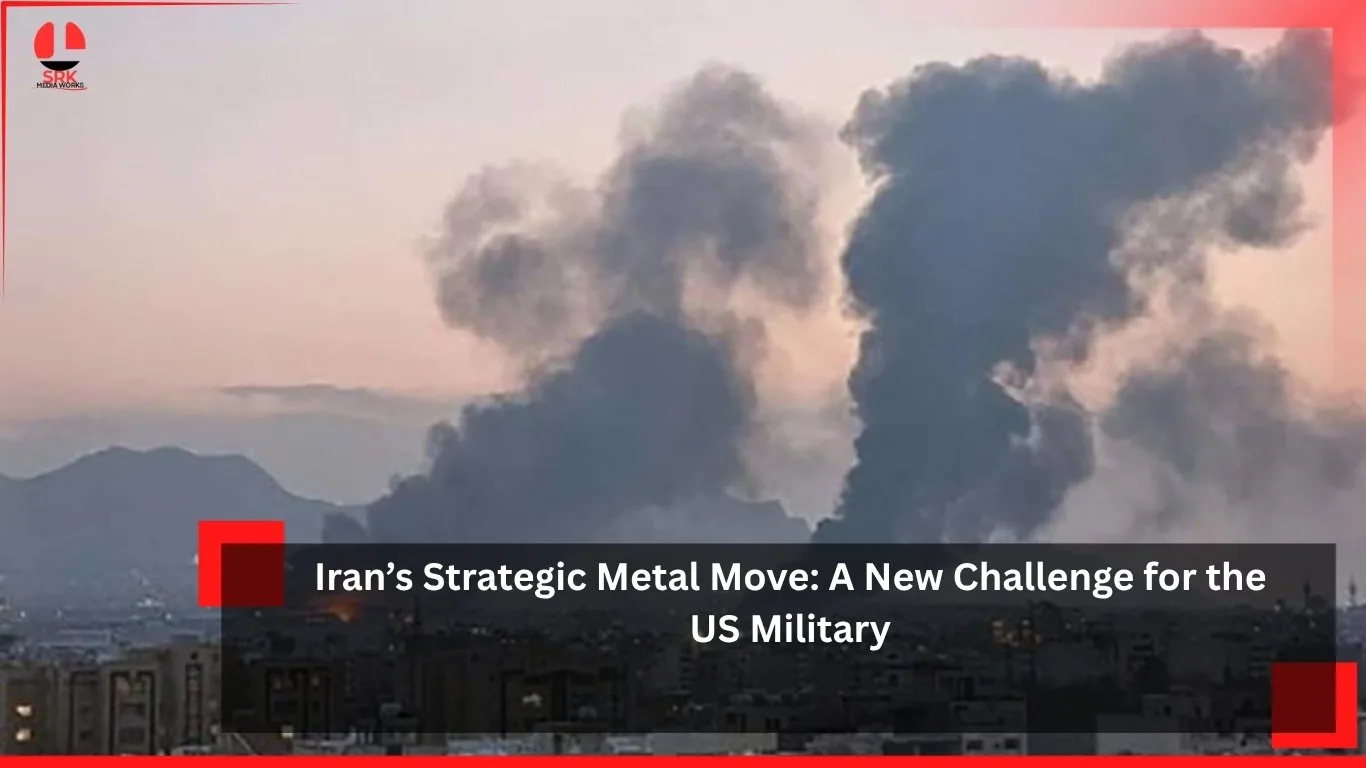
Iran may have discovered a new way to challenge the United States military, not through conventional weapons or direct confrontation, but by leveraging control over a critical metal that the US cannot afford to ignore. This development has sparked intense debate among analysts, policymakers, and defense experts, who warn that resource-based strategies could reshape the future of global military power.
Background: Metals as Strategic Assets
Modern militaries depend heavily on advanced metals and rare earth elements for weapons systems, aircraft, naval vessels, and electronics. These materials are essential for producing high-strength alloys, stealth technology, and precision-guided weaponry. If Iran gains influence over the supply or distribution of such metals, it could indirectly weaken US military readiness.
Iran’s Potential Leverage
Iran’s geographic position and resource base give it unique opportunities. By focusing on metals critical to defense industries, Iran could:
- Restrict exports to US allies.
- Partner with rival powers to redirect supply chains.
- Use resource diplomacy as leverage in negotiations.
This approach would not involve direct military confrontation but could still undermine US capabilities by creating bottlenecks in production.
Global Reactions
United States
- Defense analysts are concerned about vulnerabilities in supply chains.
- Policymakers are exploring diversification of imports and domestic production.
Allies
- European and Asian partners are monitoring the situation closely.
- Some nations are considering joint strategies to secure alternative sources.
Rivals
- Countries like Russia and China may view Iran’s move as an opportunity to strengthen alliances.
Comparative Analysis of Strategic Metals
| Metal | Military Use | Vulnerability if Controlled |
|---|---|---|
| Titanium | Aircraft, submarines, missiles | High |
| Rare Earths | Electronics, radar, guidance systems | Severe |
| Tungsten | Armor-piercing ammunition | Moderate |
| Nickel | Alloys for naval vessels | Moderate |
Stakeholder Perspectives
| Stakeholder Group | Support for Iran’s Strategy | Opposition to Iran’s Strategy |
|---|---|---|
| Iranian Govt | Strong | None |
| US Military | None | Strong |
| Global Allies | Limited | Strong |
| Rival Powers | Moderate | Weak |
Pivot Analysis of Future Scenarios
| Scenario | Likelihood | Impact |
|---|---|---|
| Iran Controls Supply Chains | Moderate | Severe |
| US Diversifies Sources | High | Stabilizing |
| Global Cooperation | Moderate | Balanced |
| Escalation of Tensions | High | Severe |
Broader Implications
This development highlights the growing importance of resource diplomacy in global security. Military power is no longer defined solely by weapons and troops but also by control over the materials that make advanced defense systems possible. Iran’s potential strategy could inspire other nations to explore similar approaches, reshaping the landscape of international conflict.
Challenges for the US
- Supply Chain Vulnerability: Reliance on foreign metals exposes the US to geopolitical risks.
- Economic Costs: Diversifying sources or boosting domestic production requires significant investment.
- Strategic Rivalries: Rivals may exploit US vulnerabilities by aligning with resource-rich nations.
- Technological Dependence: Advanced systems cannot function without critical metals.
Opportunities for the US
- Strengthening domestic mining and refining industries.
- Building alliances with resource-rich nations.
- Investing in recycling and alternative materials.
- Enhancing research into substitutes for rare metals.
Conclusion
Iran’s potential use of strategic metals as leverage against the US military represents a new dimension of geopolitical competition. By focusing on resources rather than direct confrontation, Iran could challenge American military dominance in subtle but powerful ways. The situation underscores the need for the US and its allies to secure supply chains, diversify sources, and prepare for a future where resource diplomacy plays a central role in global security.
Disclaimer
This article is based on analytical interpretations and public discussions regarding Iran’s potential strategy involving critical metals. No official confirmation has been provided by Iran or the United States. The content is intended for informational and analytical purposes only, not as verified fact. Readers are encouraged to follow official updates for accurate information.