




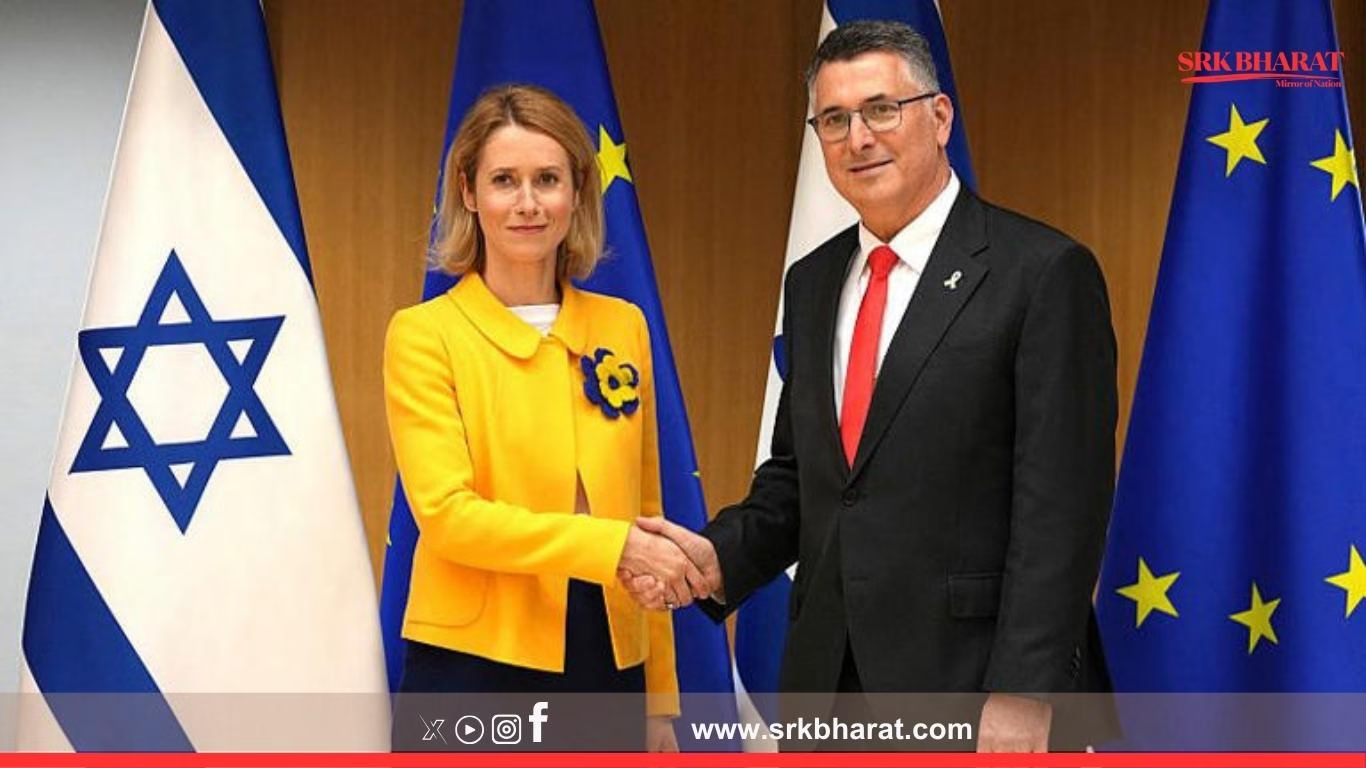
In a rare development amid fraught diplomatic equations, Israel and Palestine have agreed to participate in a high-level meeting hosted by the European Union (EU) in Brussels this month. The meeting, aimed at reviving channels of communication, will take place despite souring ties between the EU and both sides in recent months over escalating violence, civilian casualties, and human rights concerns in the Gaza conflict.
What Is The Meeting About?
The upcoming Brussels gathering will bring together senior Israeli and Palestinian representatives alongside EU foreign ministers and Middle East policy envoys. Key objectives include:
- Reinstating stalled political dialogues between Israel and the Palestinian Authority.
- Exploring frameworks for humanitarian access, ceasefire monitoring, and economic recovery in Gaza.
- Addressing EU concerns about Israel’s settlement expansions and Palestinian governance reforms.
The meeting will also review the current Middle East Peace Process under the broader EU Neighborhood and Enlargement Policy framework, signalling renewed European attempts to stabilise the region through multilateral engagement.
Backdrop: Why Are EU-Israel-Palestine Relations Tense?
1. EU-Israel Friction
Relations between Brussels and Israel have faced strain due to:
- Continued settlement expansion in the West Bank, which the EU deems illegal under international law.
- EU’s diplomatic criticism of Israel’s military operations in Gaza, citing disproportionate civilian impact.
- Israel’s recent restrictions on EU humanitarian aid convoys entering Gaza, worsening relations further.
2. EU-Palestine Challenges
With the Palestinian Authority, tensions revolve around:
- Delays in administrative reforms demanded by EU donors.
- Concerns over corruption, internal political rifts, and the weakening of governance structures in West Bank territories.
- Human rights and security cooperation gaps affecting joint EU-PA projects.
Key Focus Areas Of The Brussels Meeting
| Discussion Theme | Expected Deliberations |
|---|---|
| Humanitarian Aid | Facilitating uninterrupted flow of EU humanitarian assistance into Gaza. |
| Ceasefire Monitoring | Establishing mechanisms to ensure adherence to fragile ceasefire understandings brokered earlier this year. |
| Economic Recovery | Mobilising EU financial support packages for Palestinian reconstruction efforts. |
| Settlement Issues | EU reiteration of opposition to new Israeli settlements in occupied territories. |
| Governance Reforms | Encouraging Palestinian Authority to initiate reforms for continued international funding. |
Why Did Israel And Palestine Agree To Attend?
Despite ongoing friction, diplomatic analysts cite several drivers behind their decision:
Israel’s Strategic Calculus
- Maintaining EU trade relations and access to research and defence partnerships.
- Presenting a diplomatic stance amid rising international criticism of Gaza operations.
Palestinian Authority’s Motivation
- Securing urgent financial aid and reconstruction funds.
- Reaffirming political legitimacy through international recognition.
- Gaining leverage in future negotiations via direct EU backing.
Statements From Key Stakeholders
EU Foreign Affairs Chief Josep Borrell
“We remain committed to a negotiated two-state solution, and this meeting is a vital step towards restoring dialogue and ensuring humanitarian dignity for all civilians affected.”
Israeli Foreign Ministry Official
“Israel values its ties with the EU. While we have policy disagreements, forums like Brussels are critical for coordination on security, trade, and regional stability.”
Palestinian Authority Representative
“Our focus is to secure European support for Gaza’s recovery and to reiterate Palestinian sovereignty rights within internationally recognised borders.”
Implications For The Middle East Peace Process
The meeting is unlikely to produce breakthrough agreements, but experts believe it will:
- Reduce diplomatic isolation for both Israel and Palestine amid escalating regional tensions.
- Create channels for technical-level coordination on aid delivery, border management, and security de-escalation.
- Offer EU a renewed role in mediating future negotiations as US mediation remains largely dormant under current administration priorities.
European Union’s Strategic Position
The EU is keen to reassert itself as a diplomatic power broker in the Middle East. Recent geopolitical shifts, including:
- The Abraham Accords normalising Israeli ties with several Arab nations.
- Rising tensions in Lebanon and Syria.
- Shifts in US focus towards Indo-Pacific security.
These developments have motivated Brussels to convene this meeting to prevent further deterioration in Israeli-Palestinian relations that could destabilise Europe’s southern neighbourhood.
What Happens Next?
| Timeline | Planned Actions |
|---|---|
| Mid-July | High-level meeting in Brussels; press briefings expected post discussions. |
| August 2025 | Follow-up EU technical delegation to Israel and West Bank to review implementation of humanitarian frameworks. |
| September 2025 | Possible EU-hosted donor conference for Gaza reconstruction, conditional on security guarantees and governance reforms. |
Expert Views
Middle East Policy Analyst
“This meeting is a diplomatic test for the EU. Its success depends on delivering concrete humanitarian commitments while persuading both sides to resume broader peace dialogues.”
Geopolitical Commentator
“Israel and Palestine’s willingness to attend reflects pragmatic recognition that engagement with the EU remains indispensable for aid, trade, and legitimacy.”
Potential Challenges Ahead
- Israeli political instability, with coalition tensions affecting foreign policy continuity.
- Palestinian internal divisions between West Bank and Gaza leadership structures.
- Security escalations if ceasefire violations or settlement expansions intensify before follow-up negotiations.
Conclusion
The decision by Israel and Palestine to join the upcoming Brussels meeting despite tense relations marks a cautious yet significant step towards reviving diplomatic engagement. While deep-rooted political differences remain, the forum offers an opportunity to alleviate humanitarian distress, strengthen economic recovery frameworks, and reinstate structured political dialogue under European mediation. The coming weeks will reveal whether this initiative can deliver incremental progress towards the long-elusive goal of sustainable peace in the region.
Disclaimer: This news content is based on official statements, expert commentary, and diplomatic developments available at the time of publication. It is intended for informational purposes only and does not constitute geopolitical advice or policy guidance. Readers are advised to follow further EU, Israeli, and Palestinian government releases for confirmed outcomes and subsequent negotiations.