
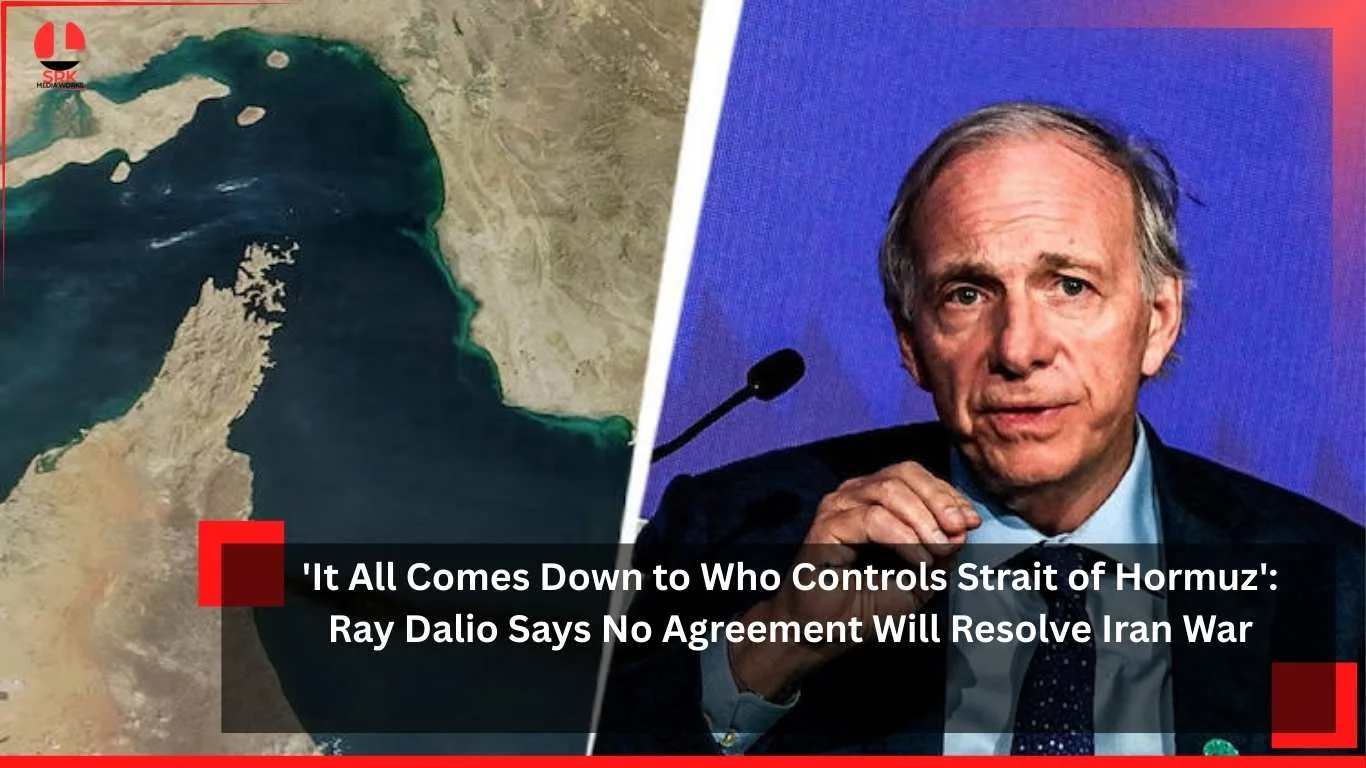
Renowned investor and hedge fund manager Ray Dalio has weighed in on the escalating Iran war, warning that no diplomatic agreement will truly resolve the conflict unless control over the Strait of Hormuz is addressed. Dalio’s remarks highlight the critical role of this narrow waterway in global energy security and underscore the economic risks tied to Middle Eastern instability.
Background of Dalio’s Statement
Ray Dalio, founder of Bridgewater Associates, has long been known for his insights into global macroeconomics and geopolitical risks. His latest comments came during a discussion on the economic fallout of the Iran war. Dalio emphasized that the Strait of Hormuz — through which nearly 20% of the world’s oil passes — is the central issue, not just political agreements or ceasefires.
According to Dalio, unless there is clarity on who controls the strait and how its security is guaranteed, markets will remain volatile and the war will continue to threaten global stability.
Why the Strait of Hormuz Matters
- Energy Lifeline: Nearly one-fifth of global oil and gas exports pass through the strait.
- Geopolitical Flashpoint: Iran has repeatedly threatened to block the strait during conflicts.
- Global Trade: Disruption would affect shipping routes and energy supplies worldwide.
- Economic Impact: Any instability in the strait directly influences oil prices and stock markets.
Dalio’s Key Points
- No Agreement Can Solve It: Diplomatic deals may pause fighting but won’t resolve the core issue of control.
- Markets React to Control: Investors focus on who secures the strait, not just political rhetoric.
- Long-Term Risk: Without a stable arrangement, volatility in oil and global markets will persist.
- Strategic Balance: The strait’s control determines the balance of power in the Middle East.
Comparative Analysis of Stakeholder Positions
| Stakeholder | Position on Strait of Hormuz | Implication |
|---|---|---|
| Iran | Claims strategic leverage | Threatens global energy security |
| United States | Seeks to ensure free passage | Military presence escalates tensions |
| Gulf States | Depend on strait for exports | Vulnerable to disruptions |
| Global Markets | Fear instability | Oil prices surge, stock markets volatile |
| Investors | Seek clarity on control | Hedge against risk with safe assets |
Pivot Analysis of Global Impact
| Factor | Positive for Stability | Negative for Instability | Neutral/Global Impact |
|---|---|---|---|
| Energy Security | Free passage guaranteed | Oil supply disrupted | Global prices volatile |
| Diplomacy | Agreements backed by enforcement | Ceasefires without control | Highlights fragility of peace |
| Markets | Confidence restored | Panic selling, downturns | Safe havens gain traction |
| Geopolitics | Balance of power maintained | Escalation of conflict | Global alliances tested |
Historical Context
The Strait of Hormuz has been at the center of global conflicts for decades. From the Iran-Iraq war to US-Iran tensions, control of the strait has repeatedly emerged as a decisive factor. Previous attempts at peace have faltered whenever threats to block or disrupt the strait resurfaced. Dalio’s remarks echo this historical reality, stressing that agreements without addressing the strait’s control are temporary fixes at best.
Possible Scenarios
- US-Led Security: The US and allies secure the strait, ensuring free passage.
- Iranian Leverage: Iran continues to use the strait as a bargaining chip.
- Global Coalition: International forces establish joint control to stabilize trade.
- Escalation: Renewed conflict leads to disruption of oil supplies and market collapse.
Public and Political Reactions
- Investors: Many echoed Dalio’s concerns, shifting funds to gold and bonds.
- Energy Analysts: Agreed that the strait is the key determinant of global oil prices.
- Political Leaders: Divided, with some calling for military presence and others urging diplomacy.
- Global Citizens: Expressed worry about rising fuel costs and economic instability.
Conclusion
Ray Dalio’s warning that “it all comes down to who controls the Strait of Hormuz” underscores the centrality of this waterway in the Iran war and global economic stability. While diplomatic agreements may offer temporary relief, the long-term resolution lies in securing the strait and ensuring uninterrupted energy flows. As tensions escalate, Dalio’s insights serve as a reminder that geopolitics and economics are inseparably linked, with the Strait of Hormuz at the heart of both.
Disclaimer
This article is based on public statements and speculative analysis regarding Ray Dalio’s views on the Iran war and the Strait of Hormuz. The details of military actions and economic consequences remain subject to verification. The content is intended for informational and analytical purposes only.