

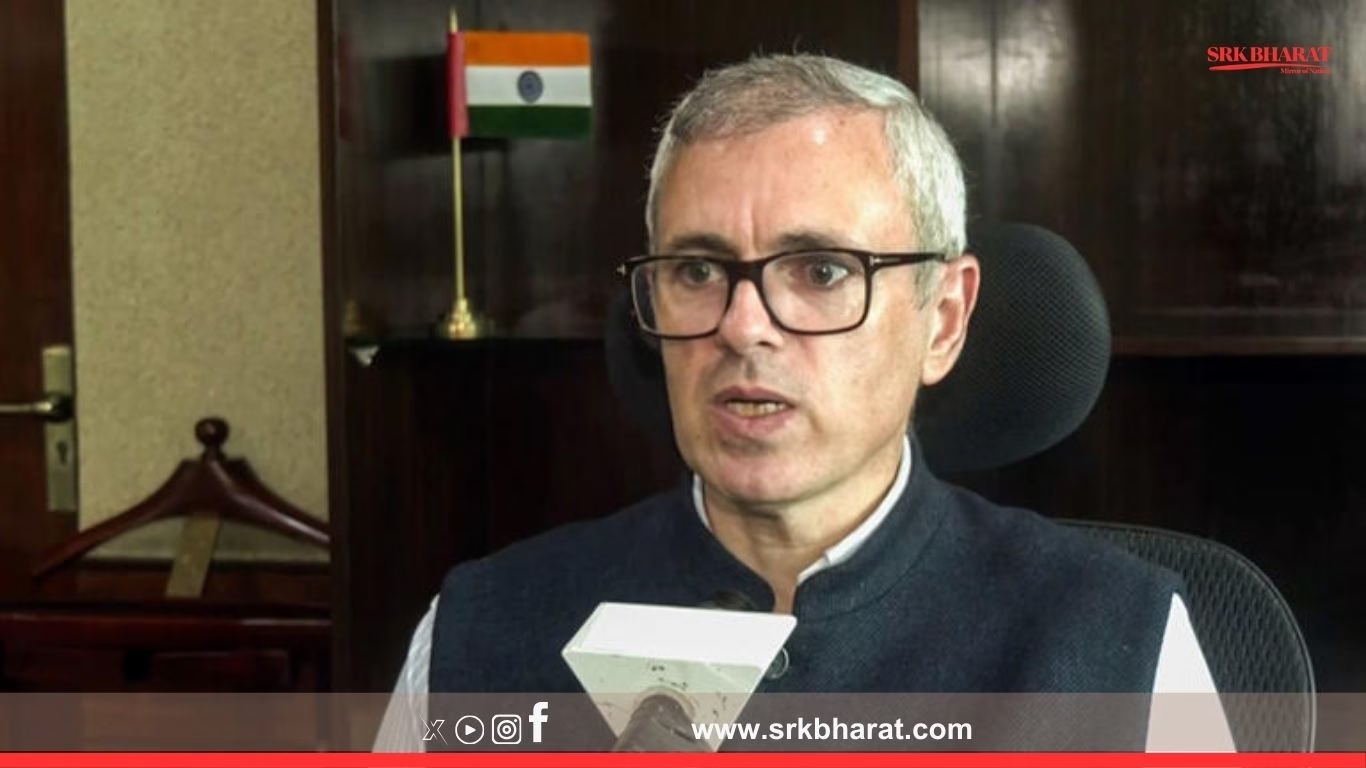
A political and religious controversy has erupted in Jammu and Kashmir after the installation of a foundation plaque bearing the Ashoka emblem at the revered Hazratbal Shrine in Srinagar. The move, initiated by the Jammu & Kashmir Waqf Board as part of a renovation project, has drawn sharp criticism from Chief Minister Omar Abdullah, who called the decision “unnecessary” and accused the Board of provoking religious sentiments.
The emblem, placed inside the shrine that houses a relic of Prophet Muhammad, was vandalised by worshippers on September 5, triggering detentions and a heated debate over the intersection of national symbols and religious spaces. Omar Abdullah, invoking the legacy of his grandfather Sheikh Abdullah—popularly known as Sher-e-Kashmir—questioned the rationale behind the emblem’s placement, stating that even the shrine’s founder never felt the need to inscribe his name on it.
🧭 Timeline of the Hazratbal Emblem Controversy
| Date | Event Description | Outcome / Reaction |
|---|---|---|
| Sept 5, 2025 | Ashoka emblem plaque installed at Hazratbal Shrine | Worshippers vandalise plaque |
| Sept 6, 2025 | Detentions begin; over 50 questioned | FIR registered, PSA invoked |
| Sept 8, 2025 | Omar Abdullah criticizes Waqf Board | Calls move “unnecessary” and “provocative” |
| Sept 9, 2025 | PDP demands FIR against Waqf Chairperson | Accuses Board of hurting religious sentiments |
The controversy has sparked widespread outrage, with political parties, religious groups, and civil society weighing in.
🔍 Key Quotes from Omar Abdullah and Political Leaders
| Leader Name | Statement / Position | Implication |
|---|---|---|
| Omar Abdullah | “Sher-e-Kashmir established Hazratbal… never put his name on it.” | Questions need for emblem at religious site |
| Iltija Mufti (PDP) | “This is not about nationalism, it’s about religious sensitivity.” | Calls for FIR against Waqf Chairperson |
| Aga Syed Ruhullah Mehdi (NC MP) | “This is a misplaced test of nationalism.” | Demands release of detained worshippers |
| Darakhshan Andrabi (Waqf Chairperson) | “This is damage to the Constitution.” | Defends emblem, calls vandalism ‘terrorism’ |
The debate has shifted from legality to symbolism, with calls for empathy and constitutional balance.
📉 Political Reactions and Stakeholder Positions
| Party / Entity | Position on Emblem Installation | Action Taken / Demanded |
|---|---|---|
| National Conference | Opposed; calls move provocative | CM Omar demands apology from Waqf Board |
| PDP | Strongly opposed; calls for FIR | Attempted to file police complaint |
| BJP | Supports emblem; calls vandalism anti-national | Demands strict action against miscreants |
| Waqf Board | Defends installation; invokes PSA | No apology issued; calls for legal action |
The issue has polarized political discourse, with nationalism and religious sentiment clashing.
🔥 Why the Emblem Sparked Controversy
- Religious Sensitivity: Islamic principles prohibit depictions of figures or symbols in sacred spaces, and many worshippers viewed the Ashoka emblem as inappropriate.
- Symbolic Placement: Critics argue the emblem’s location inside the shrine was provocative, not the emblem itself.
- Historical Legacy: Sheikh Abdullah, who established the shrine, never inscribed his name or political symbols, maintaining its sanctity.
- Legal Overreach: The invocation of the Public Safety Act (PSA) against worshippers has been widely condemned as disproportionate.
The controversy reflects deeper tensions between administrative decisions and community sentiments.
🧠 Expert Commentary on the Hazratbal Emblem Row
| Expert Name | Role | Comment |
|---|---|---|
| Meera Iyer | Constitutional Analyst | “The emblem is a national symbol, but its placement must respect religious contexts.” |
| Rajiv Bansal | Political Strategist | “Omar’s invocation of Sher-e-Kashmir is a powerful reminder of legacy and restraint.” |
| Dr. Rakesh Sinha | Historian of Kashmir Politics | “This controversy could reshape the role of religious boards in public spaces.” |
Experts agree that the issue must be resolved through dialogue, not detentions.
📦 Hazratbal Shrine: Historical and Cultural Significance
| Attribute | Description |
|---|---|
| Location | Srinagar, Jammu & Kashmir |
| Established By | Sheikh Abdullah (Sher-e-Kashmir) |
| Religious Importance | Houses relic of Prophet Muhammad |
| Managed By | Jammu & Kashmir Waqf Board |
| Renovation Timeline | 2024–2025 |
The shrine is one of the most revered Islamic sites in India and a symbol of Kashmir’s spiritual heritage.
📅 Legal and Administrative Developments
| Event | Date | Strategic Importance |
|---|---|---|
| FIR Against Vandalism | Sept 6, 2025 | Legal action initiated |
| PSA Invoked | Sept 7, 2025 | Detentions of over 50 individuals |
| PDP FIR Demand | Sept 8, 2025 | No response from police yet |
| CM’s Call for Apology | Sept 9, 2025 | Political pressure mounts on Waqf Board |
The legal response has been criticized for targeting worshippers while ignoring administrative accountability.
📌 Conclusion
The Hazratbal emblem controversy has ignited a complex debate over the role of national symbols in religious spaces. Omar Abdullah’s sharp criticism of the Waqf Board and his invocation of Sher-e-Kashmir’s legacy have added historical weight to the issue. As political parties clash and legal actions unfold, the need for empathy, constitutional balance, and respectful dialogue becomes paramount. Whether the Waqf Board apologizes or doubles down, the incident has already reshaped the contours of religious governance in Jammu & Kashmir.
—
Disclaimer: This article is based on publicly available news reports, political statements, and expert commentary as of September 9, 2025. It is intended for informational purposes only and does not constitute legal or political advice.

Thank you for your sharing. I am worried that I lack creative ideas. It is your article that makes me full of hope. Thank you. But, I have a question, can you help me? https://accounts.binance.com/id/register-person?ref=UM6SMJM3
Your article helped me a lot, is there any more related content? Thanks!