


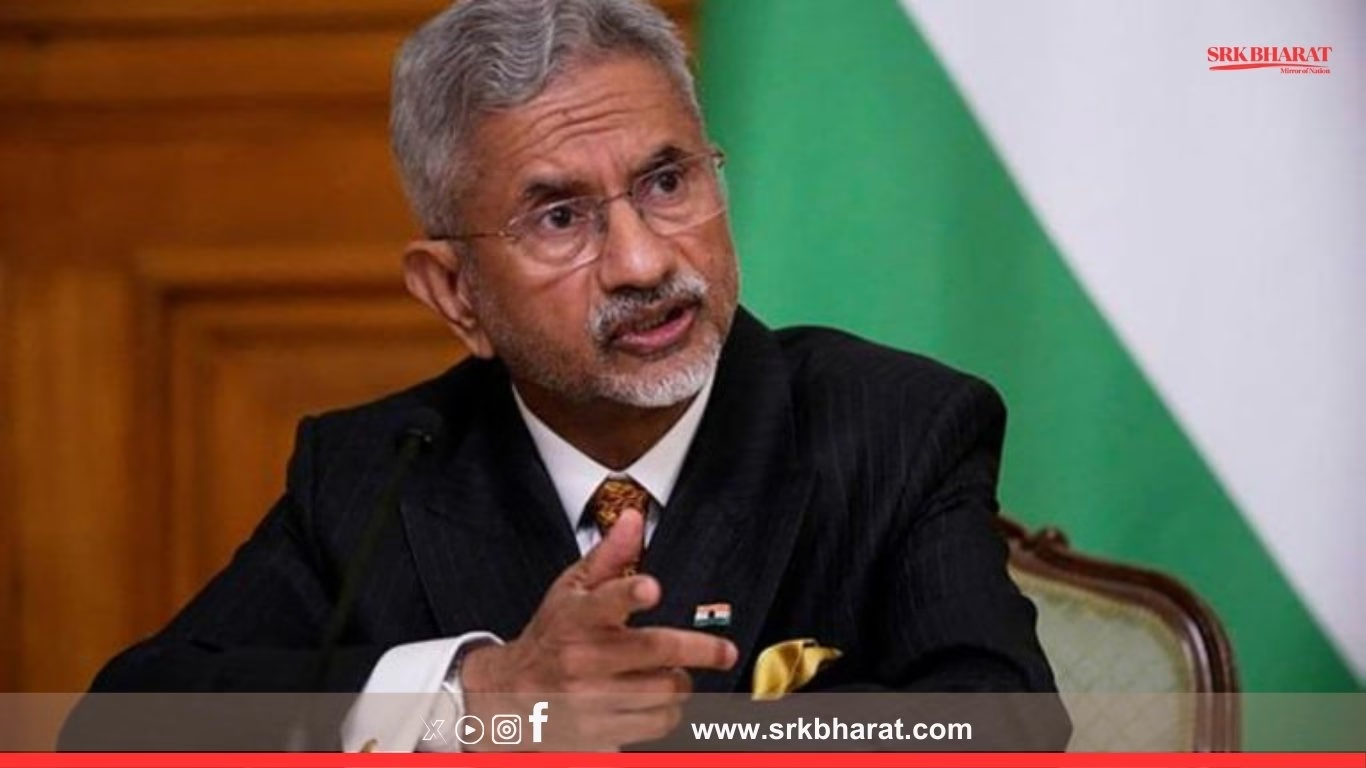
India’s External Affairs Minister S. Jaishankar has raised serious concerns over the growing trend of linking trade measures to non-trade matters, calling for a fair, transparent, and predictable global trade environment at the BRICS Leaders’ Summit 2025. Representing Prime Minister Narendra Modi at the virtual summit hosted by Brazil’s President Luiz Inácio Lula da Silva, Jaishankar’s remarks were seen as a veiled critique of the United States’ recent tariff escalations targeting India and Brazil.
The summit, held on September 8, 2025, comes amid heightened global tensions over trade protectionism, supply chain disruptions, and geopolitical realignments. Jaishankar’s speech emphasized the need for BRICS nations to lead by example, particularly in reviewing internal trade flows and addressing imbalances that disproportionately affect India.
🧭 Key Highlights from Jaishankar’s BRICS Address
| Theme | Jaishankar’s Position | Strategic Implication |
|---|---|---|
| Trade Measures vs Non-Trade Issues | “Increasing barriers and complicating transactions will not help. Neither would the linking of trade measures to non-trade matters.” | Critique of US tariffs linked to Russian oil imports |
| Global Trade Environment | “The world seeks a stable and predictable environment for trade and investment.” | Call for rules-based multilateralism |
| BRICS Trade Deficits | “India’s biggest deficits are with BRICS partners. We’ve been pressing for expeditious solutions.” | Push for intra-BRICS trade reform |
| Supply Chain Resilience | “We must create more resilient, reliable, redundant and shorter supply chains.” | Strategic diversification amid global shocks |
| Multilateral System Reform | “The multilateral system appears to be failing the world.” | Urgency for institutional reform |
Jaishankar’s remarks were widely interpreted as a balancing act between India’s BRICS commitments and its strategic ties with Washington.
🔍 Context: US Tariffs and India’s Tightrope Diplomacy
The US administration under President Donald Trump recently imposed a 50% tariff on Indian imports, citing India’s continued purchase of Russian oil and alleged unfair trade practices. Brazil faced similar penalties, prompting Lula to convene the BRICS summit to coordinate responses.
India’s decision to send Jaishankar instead of Modi was seen as a diplomatic signal—maintaining BRICS solidarity while avoiding direct confrontation with the US. Analysts suggest this move gives India space to recalibrate its trade strategy without jeopardizing its bilateral ties with Washington.
📉 India’s Trade Deficit with BRICS Partners (FY 2024–25)
| Country | Imports from India ($B) | Exports to India ($B) | Trade Deficit ($B) |
|---|---|---|---|
| China | 18.5 | 118.6 | 100.1 |
| Russia | 6.2 | 11.4 | 5.2 |
| Brazil | 2.1 | 4.3 | 2.2 |
| South Africa | 1.4 | 2.6 | 1.2 |
| UAE | 3.8 | 5.1 | 1.3 |
India’s deficits with BRICS nations remain a key concern, especially with China and Russia.
🔥 Strategic Takeaways from the BRICS Summit
- India’s Call for Trade Decoupling: Jaishankar’s emphasis on separating trade from political agendas is a direct response to punitive tariffs and conditional trade policies.
- Push for Intra-BRICS Reform: India urged BRICS members to review internal trade flows and address asymmetries that disadvantage developing economies.
- Multilateralism Under Stress: The minister highlighted the failure of global institutions to address pandemic recovery, climate crises, and trade volatility.
- Supply Chain Realignment: India advocated for shorter, diversified supply chains to mitigate future disruptions.
These themes reflect India’s evolving role as a voice for the Global South amid shifting global power dynamics.
🧠 Expert Commentary on Jaishankar’s BRICS Speech
| Expert Name | Role | Comment |
|---|---|---|
| Meera Iyer | Trade Policy Analyst | “Jaishankar’s speech was a masterclass in strategic diplomacy—firm yet non-confrontational.” |
| Rajiv Bansal | Global Trade Consultant | “India’s push for decoupling trade from politics is timely and necessary.” |
| Dr. Rakesh Sinha | Historian of Multilateralism | “This summit marks a turning point in India’s BRICS engagement strategy.” |
Experts agree that India’s nuanced approach could shape the bloc’s future direction, especially as it prepares to chair BRICS in 2026.
📦 India’s Strategic Priorities in BRICS
| Priority Area | Description | Expected Outcome |
|---|---|---|
| Trade Deficit Reduction | Bilateral reviews with China, Russia, Brazil | Improved balance and market access |
| Supply Chain Resilience | Diversification and nearshoring initiatives | Reduced dependency on single-source imports |
| Multilateral Reform | Push for UN, WTO, IMF restructuring | Greater voice for developing nations |
| Climate Cooperation | Green finance and technology transfer | Sustainable development alignment |
India’s agenda reflects a blend of economic pragmatism and geopolitical foresight.
📅 Upcoming Diplomatic Milestones
| Event | Date | Strategic Importance |
|---|---|---|
| UN General Assembly | September 2025 | India likely to skip amid tariff tensions |
| India’s BRICS Chairmanship | January 2026 | Opportunity to set reform agenda |
| G20 Trade Ministers’ Meet | October 2025 | Platform to push for WTO-centric trade |
| WTO Ministerial Conference | March 2026 | India to seek resolution on food security |
These events will test India’s ability to balance multilateral commitments with bilateral pressures.
📌 Conclusion
At the BRICS Leaders’ Summit 2025, External Affairs Minister S. Jaishankar delivered a pointed yet diplomatic critique of the growing trend of linking trade measures to non-trade matters. His remarks, set against the backdrop of US-imposed tariffs and global economic instability, underscore India’s call for fair, transparent, and rules-based trade practices. As India prepares to lead BRICS in 2026, Jaishankar’s speech may well define the bloc’s future trajectory—anchored in economic sovereignty and strategic cooperation.
—
Disclaimer: This article is based on publicly available summit transcripts, news reports, and expert commentary as of September 9, 2025. It is intended for informational purposes only and does not constitute diplomatic or investment advice.