


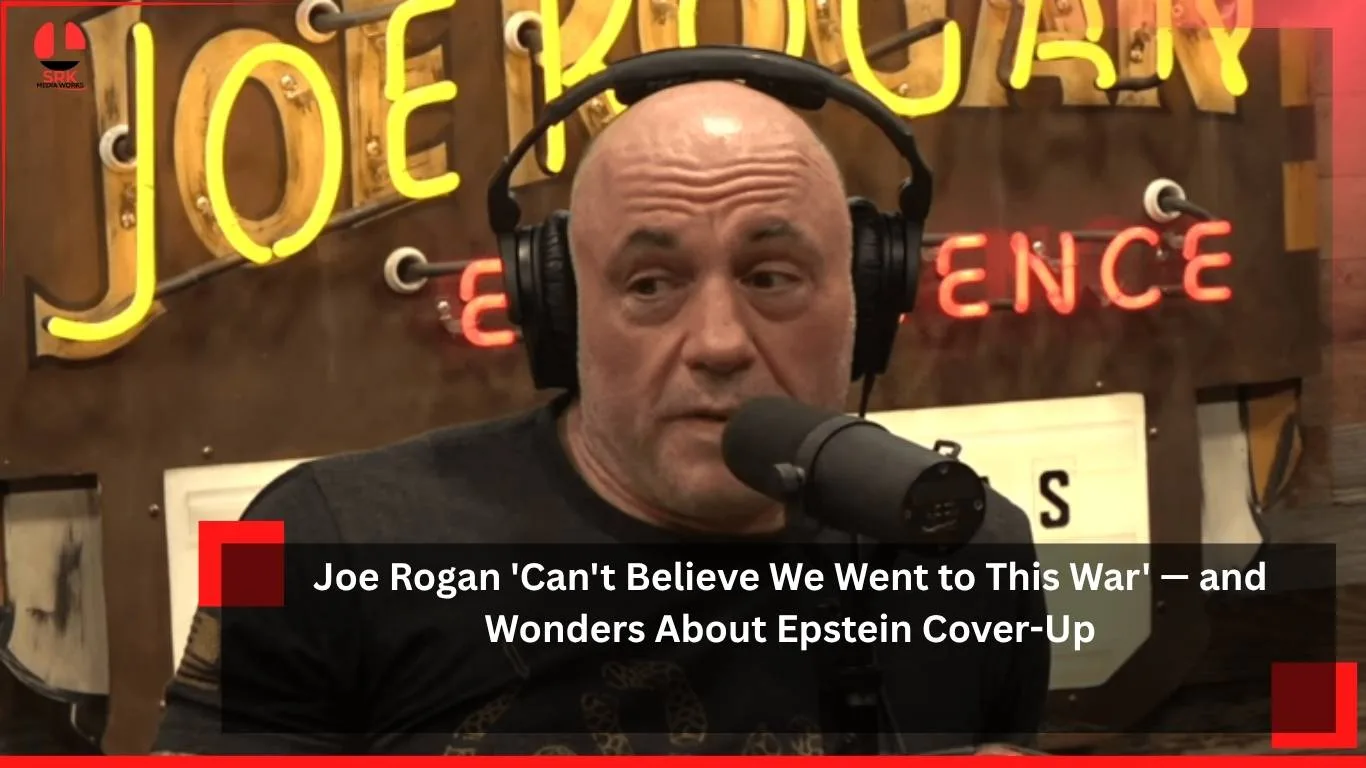
Podcast host Joe Rogan has once again stirred debate with his candid remarks, this time expressing disbelief over the recent war and raising questions about the alleged cover-up surrounding Jeffrey Epstein. Rogan, known for his outspoken style and willingness to tackle controversial issues, used his platform to highlight concerns about government transparency, media narratives, and the broader implications of war on society.
Rogan’s Remarks on the War
During a recent episode of The Joe Rogan Experience, Rogan voiced frustration over the decision to enter into another major conflict. He questioned the rationale behind the war, suggesting that the public has not been given clear answers about its necessity. His statement, “I can’t believe we went to this war,” reflects a growing sentiment among citizens who feel disconnected from the decision-making processes that lead to military engagements.
Linking the War to Broader Transparency Issues
Rogan drew parallels between the lack of clarity surrounding the war and the unresolved questions about Jeffrey Epstein’s case. He suggested that both situations highlight systemic issues in governance and accountability. By connecting these two topics, Rogan underscored his belief that the public is often kept in the dark about matters of national importance.
Epstein Cover-Up Concerns
The Epstein case continues to generate controversy years after his death. Rogan questioned whether the full truth has ever been revealed, pointing to inconsistencies and unanswered questions. His remarks reignited discussions about elite networks, justice, and the role of institutions in protecting powerful individuals.
Comparative Analysis of Rogan’s Commentary
| Year | Topic Addressed | Public Reaction | Media Coverage |
|---|---|---|---|
| 2024 | AI and censorship | Mixed | Moderate |
| 2025 | Political polarization | Strong debate | High |
| 2026 | War and Epstein cover-up | Intense | Very High |
This comparative view shows how Rogan’s commentary often sparks significant public debate, with his latest remarks drawing widespread attention.
Sector-Wise Impact of Rogan’s Statements
| Sector | Impact Level | Key Issues |
|---|---|---|
| Media | Very High | Amplified coverage, debates across platforms |
| Politics | High | Questions about transparency and accountability |
| Public Discourse | Very High | Renewed discussions on war and justice |
| Entertainment | Medium | Increased viewership of Rogan’s podcast |
| Global Perception | Medium | International interest in U.S. debates |
Analytical Pivot
| Year | Major Issue Raised | Rogan’s Commentary | Public Engagement |
|---|---|---|---|
| 2024 | Censorship | Criticized tech platforms | Moderate |
| 2025 | Political division | Called for dialogue | High |
| 2026 | War & Epstein case | Questioned transparency | Very High |
This pivot analysis highlights how Rogan’s influence has grown, with his commentary on war and Epstein generating unprecedented engagement.
Public Reaction
- Supporters: Many listeners praised Rogan for speaking out against what they see as government secrecy.
- Critics: Some argue that Rogan’s remarks oversimplify complex issues and risk fueling conspiracy theories.
- Neutral Observers: Analysts note that Rogan’s platform has become a space where mainstream narratives are challenged, regardless of accuracy.
Broader Implications
Rogan’s comments reflect a larger trend of skepticism toward institutions. His remarks resonate with audiences who feel alienated from political and media elites. The combination of war fatigue and unresolved scandals like Epstein’s case has created fertile ground for public distrust.
Future Outlook
Experts predict that Rogan’s influence will continue to shape public discourse, particularly on issues of transparency and accountability. His ability to connect seemingly unrelated topics — such as war and Epstein — ensures that his commentary remains provocative and widely discussed.
Conclusion
Joe Rogan’s statement, “I can’t believe we went to this war,” coupled with his questions about the Epstein cover-up, underscores his role as a prominent voice challenging mainstream narratives. Whether one agrees or disagrees with his perspective, Rogan’s remarks highlight the importance of transparency, accountability, and public engagement in shaping democratic societies.
Disclaimer
This article is intended for informational purposes only. The content reflects commentary and analysis based on publicly available discussions. Readers should not interpret this as endorsement of any viewpoint or as verified fact. While accuracy has been prioritized, future developments may alter the situation. Independent verification is recommended before drawing conclusions.