


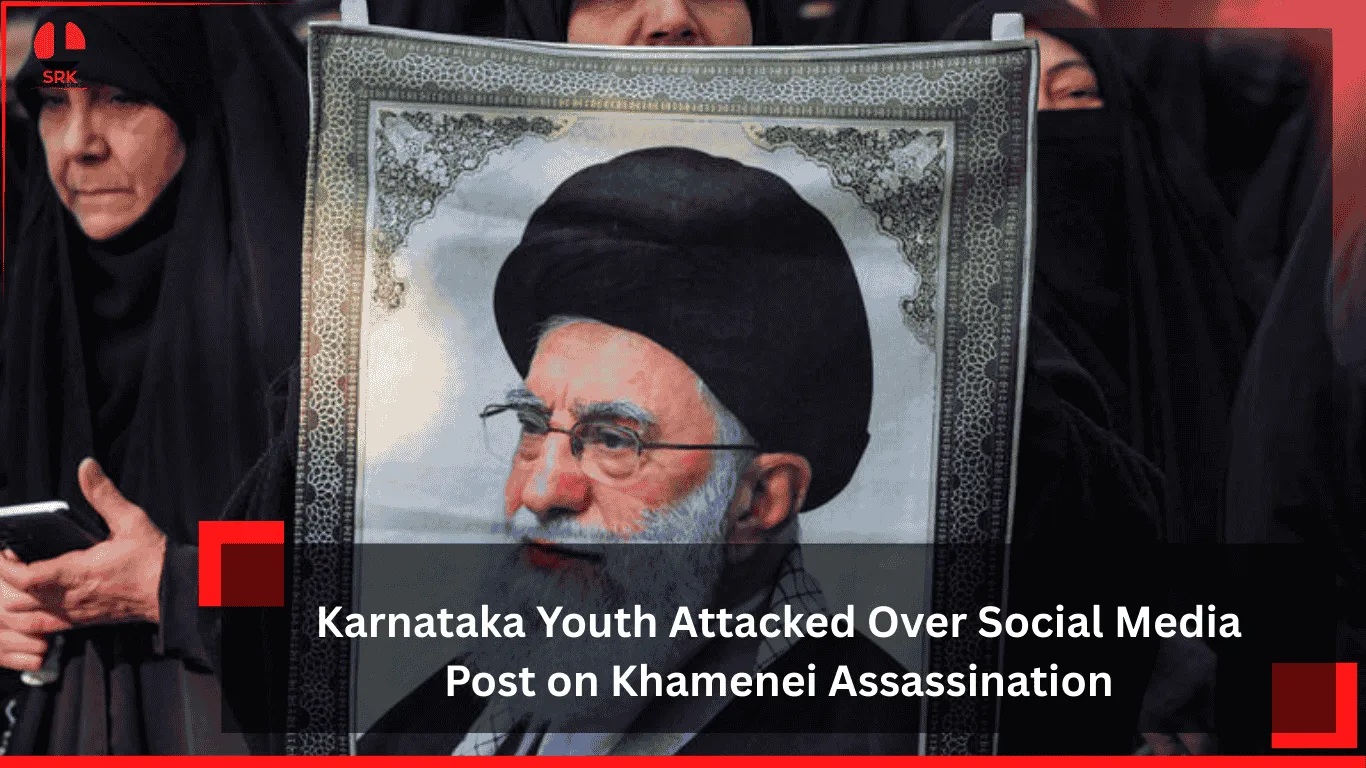
A disturbing incident has emerged from Karnataka where a young man was reportedly attacked following a controversial social media post related to the assassination of Iran’s Supreme Leader Ayatollah Ali Khamenei. The episode highlights the growing risks associated with online expression, the intersection of global politics with local sensitivities, and the urgent need for digital responsibility and communal harmony.
Incident Overview
- Trigger: The youth’s post on social media referencing Khamenei’s assassination sparked outrage among certain groups.
- Attack: He was physically assaulted by individuals who claimed the post was offensive and disrespectful.
- Aftermath: Local authorities intervened, and the matter is under investigation to determine the extent of communal tensions and legal violations.
Strategic Importance of the Case
- Freedom of Expression: The incident raises questions about the limits of free speech in a digital age.
- Global-Local Link: A geopolitical event in Iran has directly influenced social dynamics in India, showing how interconnected the world has become.
- Law and Order: The attack underscores the need for stronger mechanisms to prevent violence stemming from online disputes.
Comparative Analysis of Similar Incidents
| Incident Location | Trigger Event | Outcome | Broader Impact |
|---|---|---|---|
| Karnataka (India) | Post on Khamenei assassination | Youth attacked, police probe | Communal tension |
| Delhi (India) | Post on religious figure | Online outrage, FIR filed | Digital responsibility debate |
| France | Cartoon controversy | Violent protests | Global free speech debate |
| Bangladesh | Social media post on politics | Arrests, clashes | Political censorship concerns |
Social and Political Impact Projection
| Factor | Short-Term Impact | Long-Term Impact |
|---|---|---|
| Local Community | Heightened tension | Need for reconciliation |
| Law Enforcement | Immediate intervention | Stronger cyber monitoring |
| Social Media Platforms | Increased scrutiny | Calls for stricter regulation |
| Youth Engagement | Fear of expression | Push for digital literacy |
Broader Context
- Digital Age Risks: Social media posts can quickly escalate into real-world conflicts, especially when tied to sensitive religious or political issues.
- Global Sensitivities: Events in Iran, Afghanistan, or other regions often resonate strongly in South Asia due to cultural and religious ties.
- Policy Challenge: Governments face the dual challenge of protecting free speech while preventing violence.
Expert Insights
Analysts argue that the Karnataka incident reflects the volatility of online discourse in a polarized environment. While freedom of expression is a constitutional right, it must be exercised responsibly to avoid inflaming communal sentiments. Experts also stress the importance of law enforcement agencies acting swiftly to prevent escalation.
Future Outlook
- Legal Action: Authorities are expected to pursue charges against the attackers while also examining whether the post violated any laws.
- Community Dialogue: Local leaders may initiate peace-building measures to prevent further unrest.
- Digital Regulation: The incident could reignite debates on stricter monitoring of social media platforms in India.
Conclusion
The attack on a Karnataka youth over a social media post on Khamenei’s assassination highlights the fragile balance between free speech and communal harmony. As global events increasingly influence local dynamics, the need for responsible digital behavior and proactive law enforcement becomes more urgent. This incident serves as a reminder that online actions can have serious offline consequences, demanding caution, empathy, and accountability from all stakeholders.
Disclaimer
This article is intended for informational purposes only and should not be construed as legal or political advice. Incidents involving violence and communal tensions are sensitive matters subject to ongoing investigation. Readers are encouraged to follow official updates and exercise caution when engaging in discussions on sensitive topics.