



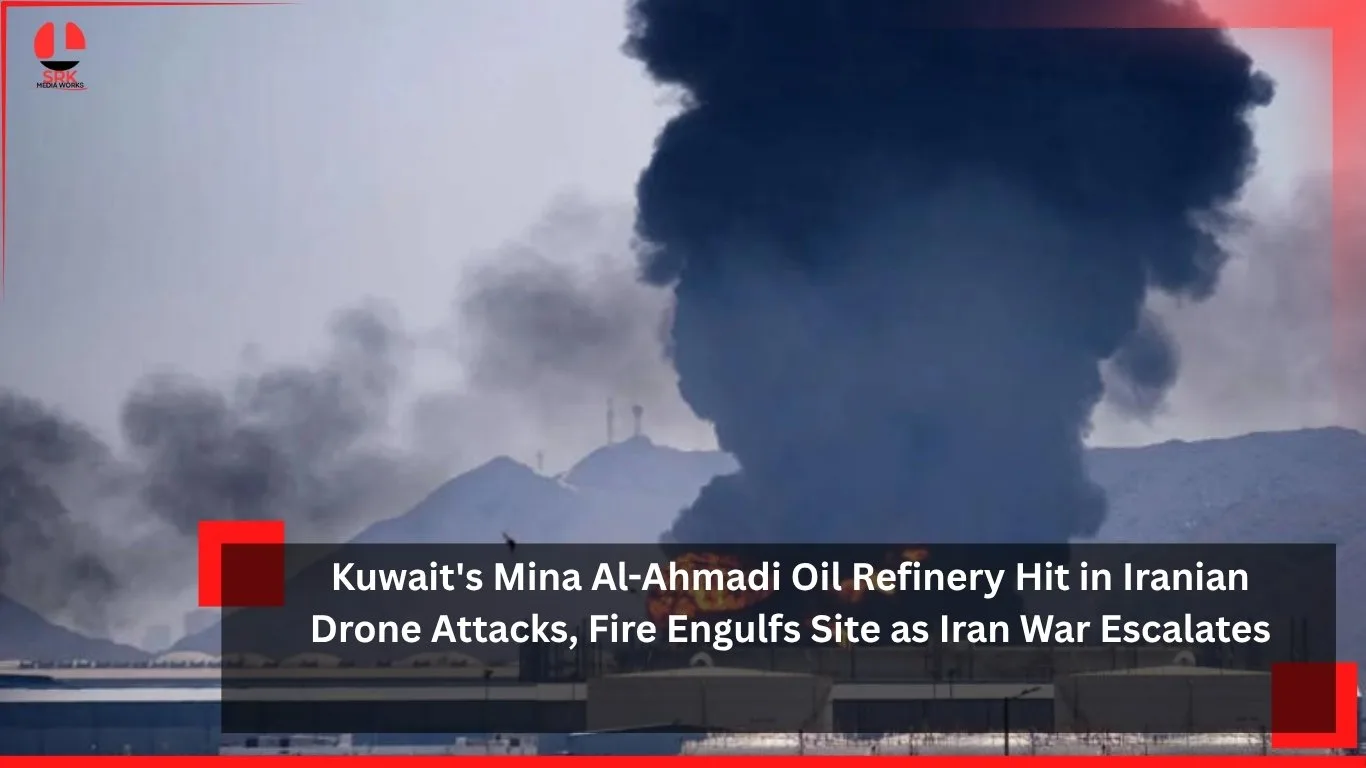
The escalating war involving Iran has taken a dramatic turn with reports confirming that Kuwait’s Mina Al-Ahmadi oil refinery was struck by Iranian drone attacks. The assault triggered massive fires across the site, threatening one of the Gulf’s most critical energy hubs. This incident underscores the vulnerability of regional infrastructure and highlights the growing risks to global energy security as the conflict intensifies.
Background of Mina Al-Ahmadi Refinery
Mina Al-Ahmadi is one of Kuwait’s largest and most strategically important oil refineries. Established in the mid-20th century, it plays a vital role in refining crude oil and producing petroleum products for both domestic use and international export. Its location along the Persian Gulf makes it a key target in times of regional conflict.
Details of the Drone Attack
Iranian drones reportedly penetrated Kuwaiti airspace and struck multiple sections of the refinery. The attack caused:
- Massive fires engulfing storage tanks and processing units.
- Disruption of operations, halting production temporarily.
- Casualties among workers, though exact numbers remain unclear.
- Emergency response mobilization, with firefighters and military units deployed to contain the blaze.
Strategic Importance of the Attack
The strike on Mina Al-Ahmadi carries both tactical and symbolic weight:
- Energy disruption: Kuwait is a major oil exporter, and damage to its refinery impacts global supply.
- Regional escalation: Expands the war beyond Iran’s immediate adversaries.
- Psychological impact: Demonstrates Iran’s ability to strike critical infrastructure deep in the Gulf.
Comparative Analysis of Regional Energy Vulnerabilities
| Country | Key Facility | Vulnerability | Strategic Impact |
|---|---|---|---|
| Kuwait | Mina Al-Ahmadi Refinery | High | Global oil supply disruption |
| Saudi Arabia | Abqaiq Processing Plant | High | Target of past drone attacks |
| UAE | Jebel Ali Port | Moderate | Trade and logistics hub |
| Qatar | LNG Terminals | High | Critical for global gas exports |
Economic Consequences
The attack has immediate and long-term economic implications:
- Oil prices surged globally due to fears of supply shortages.
- Insurance premiums for shipping and energy infrastructure increased.
- Regional economies face uncertainty as investors reassess risks.
- Global inflation pressures may rise due to higher energy costs.
Crisis Impact Assessment
| Factor | Short-Term Impact | Long-Term Risk |
|---|---|---|
| Energy supply | Immediate disruption | Prolonged instability |
| Global markets | Volatility | Investor flight from Gulf assets |
| Regional security | Heightened tensions | Expanded conflict zone |
| Public morale | Fear and uncertainty | Decline in confidence in stability |
Regional and Global Reactions
- Kuwait: Condemned the attack, vowed to strengthen defenses, and appealed for international support.
- Iran: Justified the strike as retaliation against Gulf states supporting U.S. and Israeli operations.
- Saudi Arabia and UAE: Expressed solidarity with Kuwait, warning of collective defense measures.
- United States and Europe: Called for de-escalation but pledged to protect energy routes.
- Global markets: Reacted with sharp increases in oil futures and energy-related stocks.
Future Outlook
The attack on Mina Al-Ahmadi signals that the Iran war is entering a new phase, where energy infrastructure across the Gulf is at risk. The future will depend on:
- Kuwait’s recovery efforts: Restoring refinery operations quickly.
- Regional defense coordination: Gulf states may enhance joint military strategies.
- Global diplomacy: Efforts to mediate and prevent further escalation.
- Energy diversification: Nations may accelerate moves to reduce reliance on Gulf oil.
Analytical Summary
The Iranian drone attack on Kuwait’s Mina Al-Ahmadi refinery represents a major escalation in the ongoing conflict. Beyond the immediate destruction and fires, the strike has far-reaching implications for energy security, regional stability, and global markets. As the war expands, the vulnerability of critical infrastructure across the Gulf becomes increasingly evident, raising fears of a prolonged crisis with worldwide repercussions.
Disclaimer
This article is based on publicly available reports and analytical perspectives. It does not represent official statements from the governments of Kuwait, Iran, or other international authorities. The content is intended for informational purposes only and should not be construed as definitive or authoritative on sensitive geopolitical or economic matters.