





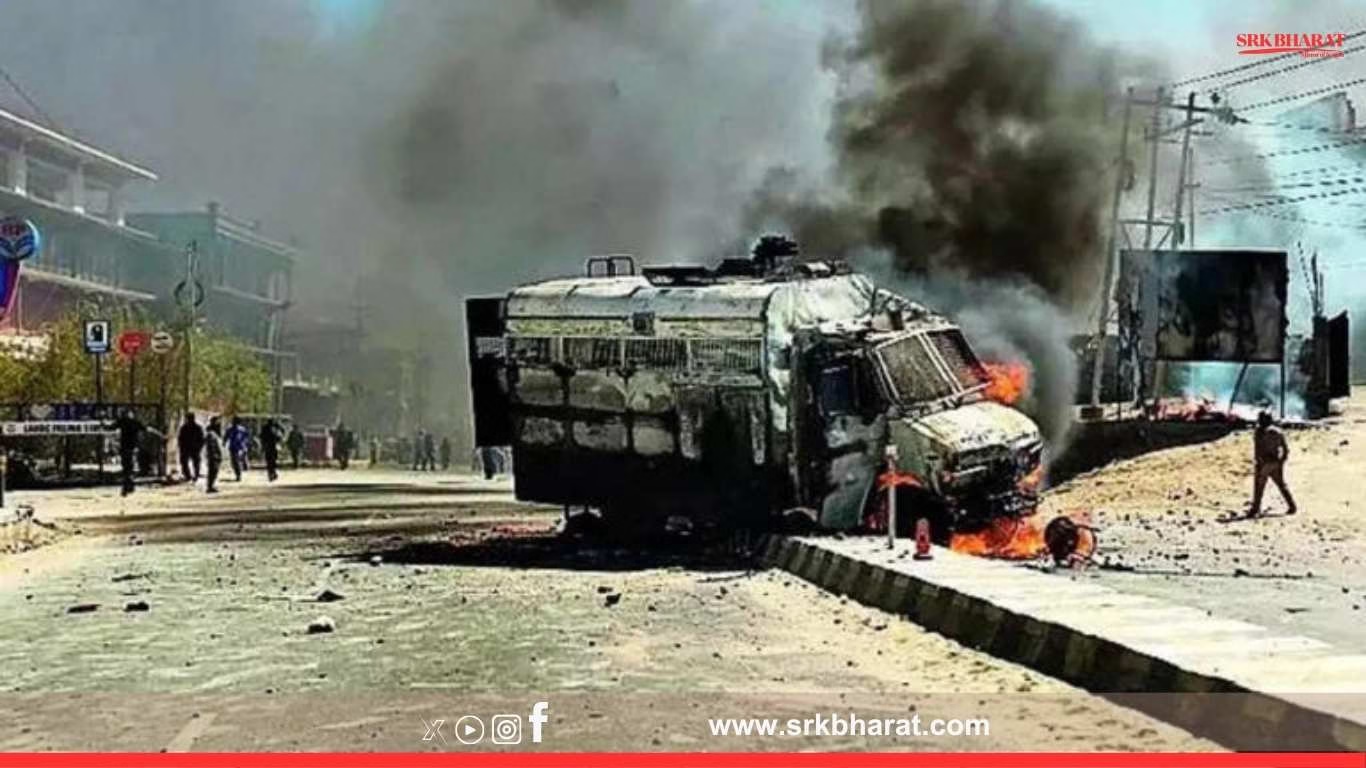
The Union government has expressed concern and surprise over the recent outbreak of violence in Ladakh, which claimed four lives and left dozens injured, despite what officials describe as “unprecedented” development in the region since its reorganization as a Union Territory in 2019. The unrest, which erupted on September 24, 2025, has triggered curfews, internet shutdowns, and a renewed debate over governance, autonomy, and identity in the high-altitude Himalayan region.
Senior government officials said they were “intrigued” by the scale and intensity of the protests, especially given the extensive infrastructure, connectivity, and livelihood initiatives undertaken over the past six years. “It is ironical that fringe elements succeeded in provoking unrest when the region has seen historic progress since being carved out of Jammu and Kashmir,” a top official told reporters.
However, local leaders and activists argue that the violence stems not from a lack of development, but from deeper frustrations over political disenfranchisement, land rights, and the absence of constitutional safeguards under the Sixth Schedule.
Ladakh Development Milestones Since 2019
| Sector | Key Initiatives | Impact on Region |
|---|---|---|
| Connectivity | Darbuk–Shyok–DBO road, Zoji-La tunnel, BharatNet | Strategic access, digital inclusion |
| Education | University of Ladakh, Sindhu Central University | Expanded higher education capacity |
| Healthcare | First medical college with 100 MBBS seats | Improved access to medical training |
| Livelihood | PM Vishwakarma scheme for artisans | Credit and toolkits for 4,000+ workers |
| Tourism | Hanle Dark Sky Reserve, sound shows in Leh/Kargil | Tourist arrivals doubled since 2019 |
| Energy | Transmission lines to Nubra, Zanskar, Changthang | Grid connectivity for remote areas |
Despite these achievements, the protests—led largely by youth and civil society groups—have highlighted a growing disconnect between Delhi’s development narrative and Ladakh’s demand for political autonomy. Climate activist Sonam Wangchuk, who was arrested during the protests, said, “Development without dignity is hollow. Ladakhis want a say in their future, not just roads and buildings.”
The violence, which erupted after months of peaceful sit-ins and memorandums, was triggered by the Centre’s continued reluctance to grant Ladakh statehood or include it under the Sixth Schedule of the Constitution, which would provide tribal and environmental protections. Protesters also raised concerns about unchecked industrialization, land acquisition by outsiders, and the erosion of Ladakh’s cultural identity.
Root Causes of Ladakh Unrest – Local Perspective
| Issue Area | Protesters’ Concerns | Government Response |
|---|---|---|
| Political Autonomy | No legislature, centralised decision-making | UT status without elected assembly |
| Land Rights | Fear of land grabs, loss of tribal ownership | No Sixth Schedule protection |
| Environmental Safeguards | Fragile ecosystem under threat | No constitutional guarantees |
| Cultural Identity | Dilution of local traditions and languages | Limited policy engagement |
| Youth Representation | Lack of employment and voice in governance | Skill schemes, but no political space |
The deaths of four protesters—identified as Tsewang Tharchin, Jigmet Dorjay, Stanzin Namgyal, and Rinchen Dadul—have intensified calls for accountability. Civil society groups have demanded a judicial inquiry into the police response and the arrest of Wangchuk, who had previously supported the UT status in 2019.
Social media platforms have become a battleground of narratives, with hashtags like #LadakhDemandsJustice, #SixthScheduleNow, and #DevelopmentVsDignity trending across India. While some users praised the government’s infrastructure push, others questioned the lack of democratic engagement.
Public Sentiment – Social Media Buzz on Ladakh Violence
| Platform | Engagement Level | Sentiment (%) | Top Hashtags |
|---|---|---|---|
| Twitter/X | 2.1M mentions | 76% critical | #LadakhDemandsJustice #SixthScheduleNow |
| 1.9M interactions | 72% reflective | #DevelopmentVsDignity #LadakhUnrest | |
| 1.7M views | 80% emotional | #SonamWangchukArrest #LadakhYouthVoice | |
| YouTube | 1.5M views | 78% analytical | #LadakhExplained #UTStatusDebate |
Political analysts believe the unrest in Ladakh is a warning sign for the Centre to recalibrate its approach. “Development is necessary, but not sufficient. Without political inclusion and cultural respect, infrastructure alone cannot guarantee peace,” said Dr. Radhika Menon, senior fellow at the Centre for Federal Studies.
The Ministry of Home Affairs has reportedly initiated consultations with Ladakh Autonomous Hill Development Councils (LAHDCs) in Leh and Kargil, but no formal roadmap has been announced. Meanwhile, curfews remain in place, and internet services are suspended in several areas.
Ladakh Governance Timeline – From UT Status to Unrest
| Year | Event Description | Outcome/Impact |
|---|---|---|
| 2019 | UT status granted under J&K Reorganisation Act | Initial celebration, no legislature |
| 2020–2022 | Infrastructure and tourism boom | Economic gains, limited political voice |
| 2023 | Sixth Schedule demand intensifies | Memorandums submitted, no action |
| 2024 | Peaceful protests and sit-ins | Youth-led mobilization |
| Sept 2025 | Violent clashes and deaths | Curfew imposed, national attention |
As Ladakh stands at a crossroads, the government faces a complex challenge: balancing development with democratic aspirations. The region’s strategic importance, ecological fragility, and cultural uniqueness demand a nuanced policy response—one that goes beyond roads and tunnels to include rights, representation, and respect.
Disclaimer: This article is based on publicly available government statements, verified media reports, and expert commentary. It does not constitute legal advice or political endorsement. All quotes are attributed to public figures and institutions as per coverage. The content is intended for editorial and informational purposes only.

1 x bet 1 x bet .