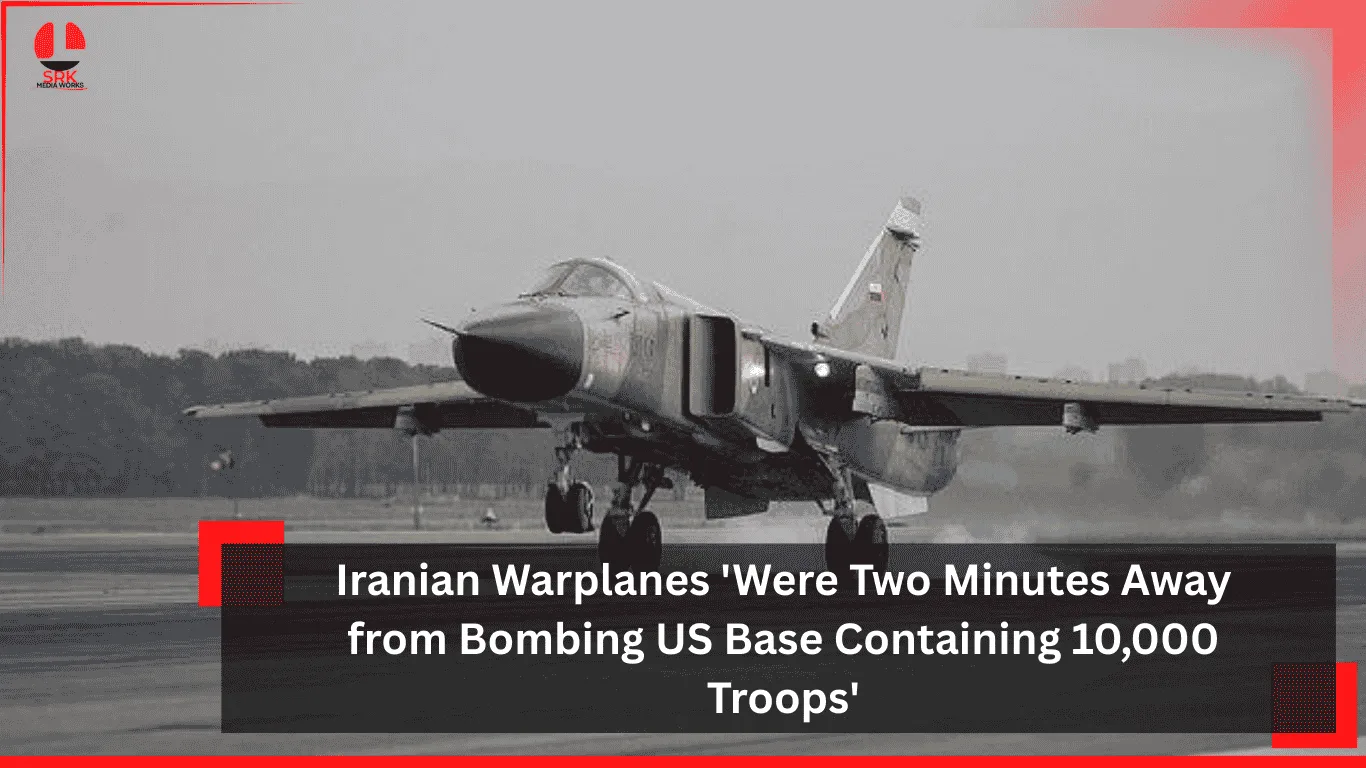


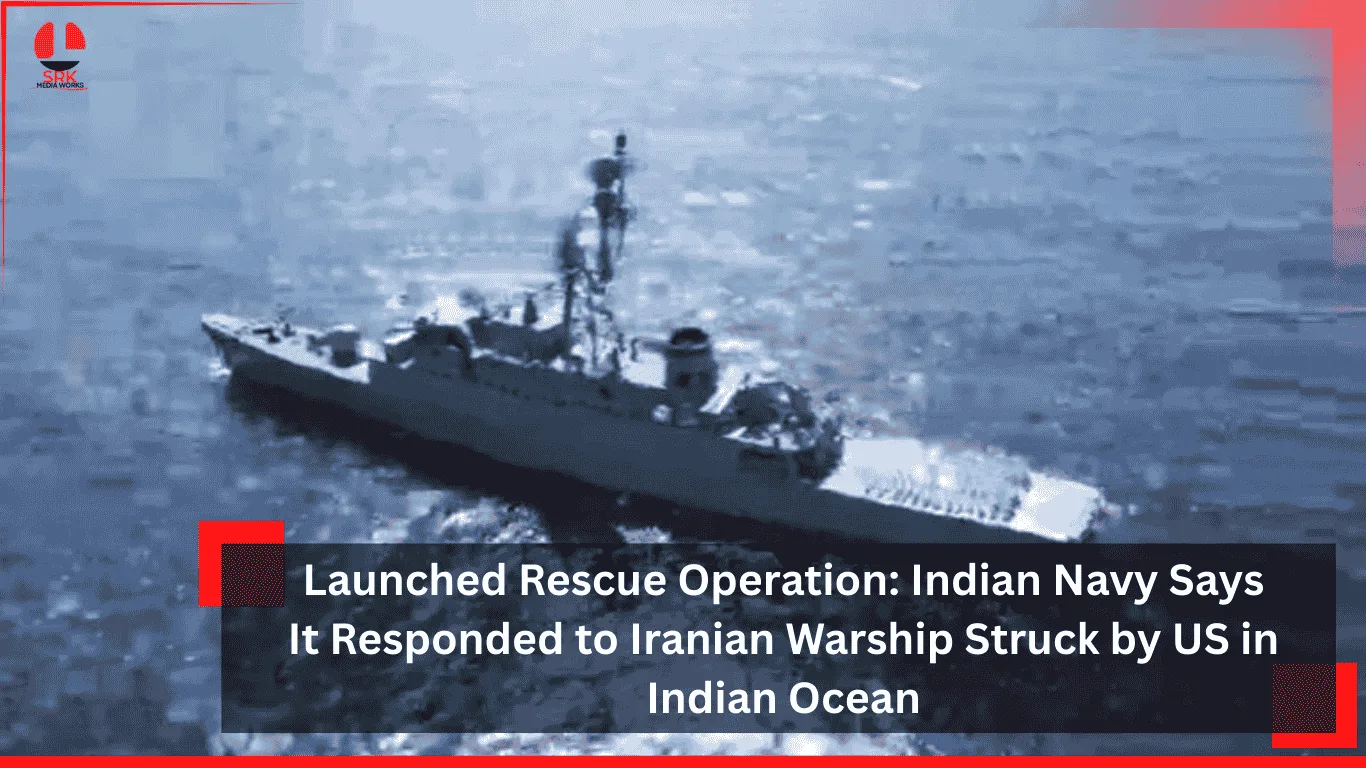
A dramatic incident unfolded in the Indian Ocean as the Indian Navy confirmed that it launched a rescue operation after reports of an Iranian warship being struck by US forces. This development has added a new layer of complexity to maritime security in the region, raising questions about international naval engagements, geopolitical tensions, and India’s role as a stabilizing force in the Indian Ocean.
Background of the Incident
According to defense sources, the Iranian warship was reportedly hit during a confrontation involving US naval forces. The Indian Navy, which maintains a strong presence in the Indian Ocean, quickly dispatched ships and helicopters to provide humanitarian assistance and assess the situation.
India’s response underscores its commitment to maritime safety and its role as a responsible regional power. The incident also highlights the volatile nature of naval operations in contested waters, where multiple nations operate simultaneously.
Importance of the Indian Ocean
The Indian Ocean is one of the most strategically significant maritime zones in the world.
- Trade Routes: Over 80% of global maritime oil trade passes through the Indian Ocean.
- Military Presence: Navies from India, the US, China, and regional powers regularly patrol these waters.
- Geopolitical Hotspot: The ocean connects the Middle East, Africa, and Asia, making it a focal point for global security.
Indian Navy’s Role in Rescue Operations
The Indian Navy has a long history of conducting humanitarian and rescue missions. Its swift response in this case demonstrates its operational readiness and humanitarian commitment.
Key Elements of the Rescue Mission
- Deployment of INS destroyers and frigates for immediate assistance.
- Use of naval helicopters for aerial reconnaissance.
- Coordination with regional maritime authorities to ensure safe passage.
- Provision of medical aid and evacuation support for affected personnel.
Comparative Naval Strength in the Indian Ocean
| Country | Naval Assets in Indian Ocean | Strategic Focus | Recent Operations |
|---|---|---|---|
| India | 150+ ships, 300 aircraft | Regional security, humanitarian aid | Anti-piracy, rescue missions |
| US | Carrier strike groups | Global dominance, deterrence | Freedom of navigation patrols |
| Iran | Limited fleet | Regional defense | Escorting oil tankers |
| China | Expanding presence | Trade security, influence | Djibouti base operations |
This comparison shows India’s balanced approach, combining military strength with humanitarian missions.
Geopolitical Implications
The incident has far-reaching consequences:
- India-US Relations: India’s rescue of an Iranian vessel struck by US forces could create diplomatic sensitivities.
- Iran-India Ties: Iran may view India’s assistance as a gesture of goodwill, strengthening bilateral relations.
- Regional Stability: India’s proactive role reinforces its image as a stabilizing power in the Indian Ocean.
- Global Perception: The international community may see India as a neutral mediator in maritime conflicts.
Historical Context of Naval Engagements
The Indian Ocean has witnessed several high-profile naval incidents:
| Year | Incident | Nations Involved | Outcome |
|---|---|---|---|
| 2008 | Somali piracy surge | India, US, EU | Joint anti-piracy patrols |
| 2019 | Tanker attacks near Hormuz | Iran, US | Heightened tensions |
| 2021 | Chinese submarine patrols | China, India | Increased surveillance |
| 2026 | Iranian warship struck | Iran, US, India | Rescue mission launched |
This timeline illustrates the recurring nature of maritime tensions in the region.
Expert Opinions
- Defense Analysts: Stress that India’s involvement is humanitarian, not political.
- Maritime Experts: Highlight the need for stronger international naval coordination.
- Diplomatic Voices: Suggest India could act as a mediator between Iran and the US.
Possible Causes of the Incident
- Miscommunication: Naval confrontations often arise from misinterpreted signals.
- Strategic Posturing: US forces may have acted to deter Iranian presence.
- Escalation of Tensions: Broader geopolitical disputes could have spilled into naval operations.
India’s Strategic Position
India’s response reflects its broader maritime strategy:
- Humanitarian Leadership: Providing aid regardless of political alignments.
- Regional Security: Ensuring safe navigation in the Indian Ocean.
- Diplomatic Neutrality: Balancing relations with both the US and Iran.
Distribution of Indian Naval Assets
| Asset Type | Number | Role |
|---|---|---|
| Aircraft Carriers | 2 | Power projection |
| Destroyers | 10+ | Offensive/defensive operations |
| Frigates | 15+ | Escort and patrol |
| Submarines | 15+ | Stealth operations |
| Patrol Vessels | 50+ | Surveillance and rescue |
This distribution shows India’s ability to respond quickly to emergencies.
Broader Implications for Global Security
The incident could influence global naval strategies:
- US Strategy: May reassess its engagement rules in contested waters.
- Iran’s Response: Could seek diplomatic support from allies.
- India’s Role: Likely to be seen as a humanitarian leader in maritime crises.
- International Cooperation: May prompt calls for joint rescue protocols.
Conclusion
The Indian Navy’s announcement that it launched a rescue operation after an Iranian warship was struck by US forces in the Indian Ocean marks a significant moment in maritime history. It underscores India’s dual role as a military power and humanitarian actor, while highlighting the complexities of international naval engagements.
As tensions continue to simmer in the Indian Ocean, India’s balanced approach—combining strength with compassion—may prove vital in maintaining stability and ensuring safe seas for all.
Disclaimer
This article is based on available reports and expert analysis. The details of the incident are still under investigation, and official statements from the involved nations are awaited. Readers are advised to treat the information as preliminary until verified by authoritative sources.